Avoiding the 10 Most Common App Development Mistakes (Practical Guide)
-

- March 20th, 2026
- 354 views
Building a successful product requires avoiding the common app development mistakes that waste time, inflate costs, and damage user trust. This guide lists ten frequent errors across planning, architecture, security, and release, and gives concrete actions to prevent them.
- Intent: Informational
- Focus: 10 frequent development mistakes and how to avoid each
- Includes: SECURE checklist, practical tips, a short real-world scenario, and core cluster questions for further reading
Common app development mistakes: 10 to avoid
1. Skipping clear requirements and scope definition
Problem: Teams start coding without a clear product definition, leading to scope creep and wasted effort.
How to avoid: Create a lightweight requirements document and a Minimum Viable Product (MVP) plan before development. Use user stories, acceptance criteria, and a prioritized backlog. Review scope each sprint and freeze features for release windows.
2. Weak architecture and technical debt
Problem: Quick fixes and hard-coded solutions accumulate technical debt that slows future changes.
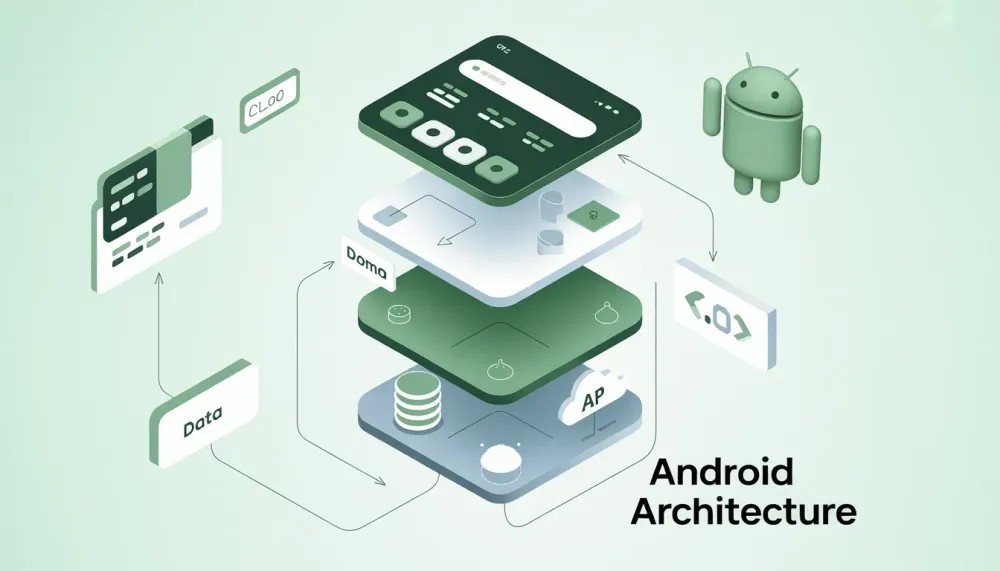
How to avoid: Invest time in modular architecture, API contracts, and simple design patterns. Enforce coding standards and conduct regular refactor sprints. Track technical debt as work items in the backlog so it is visible and scheduled.
3. Neglecting automated testing
Problem: Manual tests and sporadic QA cause regressions and unpredictable releases.
How to avoid: Implement a testing pyramid: unit tests, integration tests, and end-to-end tests. Integrate tests into CI pipelines so failures block merges. Start with high-value unit tests and expand coverage iteratively.
4. Poor performance and scalability planning
Problem: Apps that work in development fail under real user load or drain client resources.
How to avoid: Profile early with representative datasets, add caching strategically, and design APIs with pagination and rate limits. Use load testing tools during staging to validate scalability assumptions.
5. Ignoring security best practices
Problem: Sensitive data exposure, insecure authentication, and vulnerable third-party libraries risk breaches.
How to avoid: Follow established standards like the OWASP Mobile Top 10 for common threats. Use encryption at rest and in transit, validate inputs, and keep dependencies updated.
6. Bad API and contract management
Problem: Tight coupling and undocumented APIs block parallel work and break clients on change.
How to avoid: Define API contracts (OpenAPI/Swagger), version endpoints, and preserve backward compatibility. Provide mock servers so front-end and back-end teams can work in parallel.
7. Overlooking observability and monitoring
Problem: Failures are discovered by users rather than by alerts, making incidents longer and costlier.
How to avoid: Instrument apps with structured logging, metrics, and distributed traces. Set meaningful alerts and runbook playbooks for common incidents.
8. Skipping user testing and accessibility
Problem: Features that technically work still fail to meet user needs or exclude groups with disabilities.
How to avoid: Run simple usability tests early, include keyboard navigation and screen-reader checks, and follow WCAG basics for accessibility in front-end design.
9. Rushing releases without release management
Problem: Uncontrolled releases lead to rollback storms and missed rollback plans.
How to avoid: Use feature flags, staged rollouts, and automated deployments with canary or blue/green strategies. Keep a rollback plan and a clear pre-release checklist.
10. Neglecting documentation and onboarding
Problem: New developers and partners waste time understanding the codebase or APIs.
How to avoid: Maintain up-to-date README files, architecture diagrams, and onboarding checklists. Encourage documentation alongside code changes instead of as an afterthought.
SECURE checklist (named checklist)
Apply this simple SECURE checklist during planning and reviews:
- Specify: Clear requirements and success metrics.
- Error handling: Define graceful degradation and logging.
- Caching & contracts: API contracts and caching strategy.
- User testing: Usability and accessibility checks.
- Release plan: Feature flags and rollback procedures.
- Encryption & dependencies: Keep secrets secure and update libraries.
Practical example: A short real-world scenario
Scenario: A team shipped a social app MVP with basic photo upload and messaging. After launch, image uploads failed under peak traffic, users reported slow feeds, and a third-party image library introduced a vulnerability.
Resolution steps taken: prioritized fixing rate limiting and caching, added a background processing queue for uploads, patched the library and added dependency scanning, and introduced a canary rollout for new releases. These steps reduced incident frequency and improved recovery time.
Trade-offs and common mistakes
Trade-off: Speed vs. scalability. Early fast delivery may justify technical shortcuts for validation, but postponing architecture entirely creates heavier cost later. Balance by building a minimal, modular architecture and scheduling refactor work into sprints.
Common mistake: Treating documentation and tests as optional. They are investments that pay off as the team and user base grow.
Practical tips (actionable)
- Start with a 2-week discovery sprint that produces a prioritized backlog and acceptance criteria.
- Integrate automated tests and linting into the CI pipeline so each merge enforces quality gates.
- Adopt feature flags to separate deployment from release decisions.
- Run monthly dependency audits and schedule security patches into regular maintenance cycles.
- Use lightweight observability (logs + metrics) from Day 1 and validate alerts periodically.
Core cluster questions
- How should a team prioritize feature debt versus technical debt?
- What testing strategy prevents regressions in mobile and web apps?
- How to design APIs for backward compatibility and scalability?
- What minimal observability is required for a production launch?
- Which security checks should be mandatory before any release?
Common mistakes recap and quick checklist
Quick checklist to run before a release: requirements defined, tests passing in CI, performance smoke tests run, security scan passed, feature flags configured, documentation updated, rollback plan prepared.
FAQ
How to avoid common app development mistakes?
Prevent issues by enforcing simple processes: write clear acceptance criteria, add tests to CI, use versioned APIs, scan dependencies, and instrument observability. Make these activities part of the Definition of Done for each story.
What are the top security practices for apps before launch?
Use encrypted connections (TLS), secure storage for secrets, input validation, dependency scanning, and role-based access control. Consult security standards like OWASP guidance for detailed controls.
When is it appropriate to accept technical debt?
Accept technical debt deliberately for validated learning—capture it as backlog items with estimated cost and remediation plans. Avoid unknown or untracked debt that accumulates silently.
How much automated testing is enough for an MVP?
Start with unit tests for critical logic and integration tests for core flows. Add end-to-end tests for the most used user journeys. Expand coverage iteratively based on bug patterns.
What monitoring should be in place for a production app?
At minimum: uptime/availability checks, error rate alerts, response time percentiles, and basic business metrics (e.g., signups, purchases). Structured logs and dashboards speed diagnosis during incidents.