20x Prompt Systems Toolkit: Practical Steps to Build AI-Powered Digital Products
-

- March 03rd, 2026
- 228 views

Get a free topical map and start building content authority today.
Designing reliable prompt systems for digital products requires both strategy and repeatable process. This guide explains how to structure prompts, manage context, and package prompt-driven features so AI adds clear value without adding risk.
prompt systems for digital products: what to build and why
Prompt systems for digital products are repeatable, testable prompt patterns, templates, and operational rules that power features such as content generation, conversational assistants, personalization, and automated workflows. A good prompt system balances clarity, context management, safety constraints, and performance trade-offs to deliver consistent output from large language models (LLMs) and other generative models.
Key terms and related concepts
Relevant terms include LLM, prompt engineering, prompt templates, system messages, chain-of-thought, retrieval-augmented generation (RAG), temperature, fine-tuning, vector search, API orchestration, and UX microcopy. These components compose a prompt-driven product's architecture.
20x Prompt Systems Framework
The named framework below formalizes the steps needed to design and scale prompt-powered features.
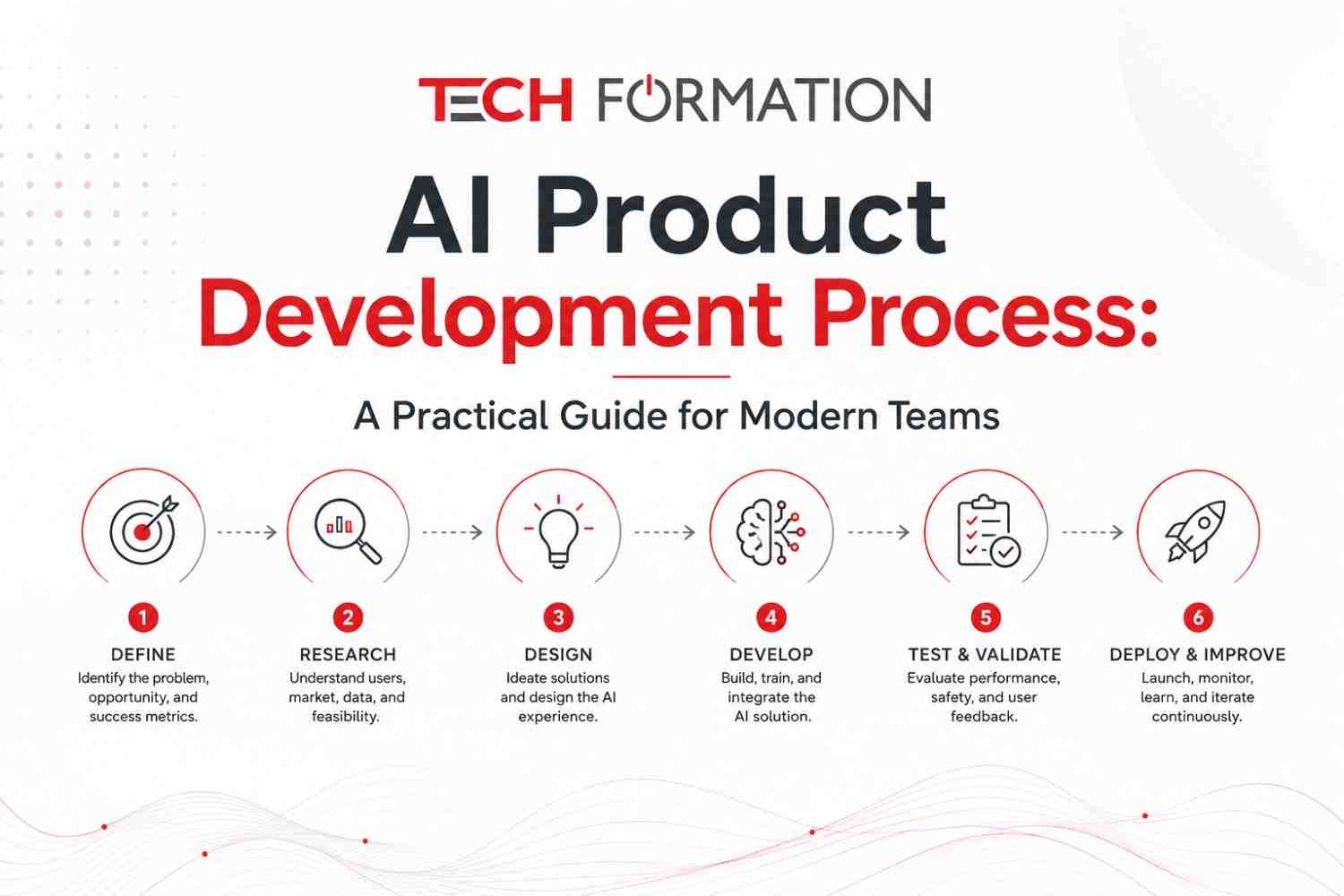
The 20x Prompt Systems Framework (5 stages)
- Discover: Define the user task, success criteria, and acceptable failure modes.
- Design: Draft modular prompt templates (system, instruction, examples, user) and decide what context to include from the product state.
- Prototype: Rapidly test variations, measuring relevance, correctness, and hallucination rate.
- Operationalize: Add constraints, safety filters, rate limits, caching, and monitoring.
- Scale & Iterate: Instrument usage, collect real examples, and evolve templates with A/B tests and user feedback.
Prompt engineering checklist (20x Prompt Systems Checklist)
- Define objective and success metrics (accuracy, helpfulness, safety).
- Create modular templates (system + user + examples).
- Limit context length; prioritize most relevant data.
- Set deterministic controls: temperature, top-p, max tokens.
- Implement validation and fallback responses.
- Log inputs/outputs for monitoring and privacy compliance.
Prototype scenario: building an AI content assistant
Scenario: A product team adds an AI content assistant that drafts marketing emails from bullets. Use the 20x framework: define email tone and legal constraints (Discover), build a system prompt with examples (Design), run 50 drafts to test variations (Prototype), add profanity filters and a human approval step (Operationalize), then instrument open rates and revise prompts weekly (Scale & Iterate). This demonstrates the interplay between UX, prompt templates, and operational controls.
Practical tips for prompt design and deployment
Actionable tips
- Start with a minimal template and add context only when necessary to reduce token usage and unpredictable behavior.
- Keep system messages explicit about role, format, and constraints (e.g., "Respond in JSON with keys: subject, body").
- Collect and label failure examples to inform guardrails and automatic rerouting to fallback flows.
- Use RAG (retrieval-augmented generation) when factual accuracy matters: supply verified snippets from a knowledge store rather than trusting the model alone.
- Monitor cost vs. latency when deciding how much context to include; cache repeated prompts to reduce API calls.
Integration patterns: AI prompt design workflow
An AI prompt design workflow connects product events to prompt templates, model selection, and post-processing. Example stages: event -> context assembly -> prompt rendering -> model call -> validation/filter -> presentation -> feedback logging. Use API orchestration or a server-side controller to keep secrets and rate limits controlled.
Trade-offs and common mistakes
Common mistakes
- Overloading prompts with irrelevant context, increasing cost and reducing reliability.
- Failing to define clear success metrics and rolling out without monitoring.
- Skipping human-in-the-loop controls for high-risk outputs.
- Assuming the model is a source of truth; not implementing RAG or verification for factual tasks.
Key trade-offs
Higher context and examples often improve output quality but increase latency and cost. Stronger safety filters reduce risky outputs but may reduce creativity or utility. Choosing between an open LLM vs. a specialized model affects maintenance and regulatory risk. Document these trade-offs as part of product requirements.
Standards and safety
Adopt recognized guidance to shape risk controls and documentation. For AI governance and risk management best practices, refer to authoritative frameworks such as the NIST AI Resource Hub for principles and recommended controls: https://www.nist.gov/ai.
Core cluster questions
- How to structure prompt templates for reusable components?
- What monitoring metrics matter for prompt-driven features?
- When should retrieval-augmented generation be used over raw prompting?
- How to design fallback flows for unsafe or low-confidence outputs?
- Which operational controls limit cost while preserving quality?
Metrics and monitoring
Track qualitative and quantitative signals: success rate, user satisfaction, correction rate, hallucination incidents, latency, and cost per query. Log prompts and responses with privacy-preserving redaction to enable root-cause analysis.
Final checklist before launch
- Templates reviewed and version-controlled.
- Safety and validation tests in place.
- Monitoring and alerting configured.
- Fallback and human-review options enabled.
- Privacy, retention, and compliance reviewed.
FAQ
What are prompt systems for digital products and why do they matter?
Prompt systems are the structured templates and operational rules that produce predictable AI outputs. They matter because consistency and safety are essential for user trust and product reliability.
How does an AI prompt design workflow reduce hallucinations?
By injecting verified context through RAG, using constrained output formats, and validating model responses against rules or external data sources, hallucination rates drop substantially.
What should a prompt engineering checklist include?
A checklist should include objective definitions, modular templates, context limits, deterministic settings (temperature/top-p), validation logic, logging, and compliance checks.
How to balance cost, latency, and quality when using prompt systems?
Prioritize what matters per use case: reduce context and cache results for routine tasks to cut cost and latency; reserve richer context and higher-cost models for high-value or high-risk tasks.
Can this toolkit be applied to chatbots, content tools, and search features?
Yes. The 20x Prompt Systems Framework and checklist are designed to be adapted across conversational assistants, automated content generators, and search-enhanced interfaces.