Best Acne Scar Treatments in Dubai: Proven Options, Costs, and Recovery
-
- Published Updated
- 488 views
Acne scar treatments Dubai offers a wide range of medical and aesthetic options to improve texture, depth, and pigmentation from past acne. This guide explains how each treatment works, realistic outcomes, downtime, and how to choose a clinic—so decisions are practical and evidence-informed.
- Common effective treatments: fractional CO2 and erbium lasers, microneedling with PRP, subcision, dermal fillers, TCA CROSS, and chemical peels.
- Best approach is often a combined protocol tailored to scar type and skin tone (e.g., subcision + fillers for rolling scars; laser or TCA CROSS for icepick scars).
- Expect multiple sessions, gradual improvement, and 1–2 weeks of variable downtime for aggressive procedures.
Detected intent: Informational
Overview: Understanding acne scar types and realistic goals
Scars fall into three practical categories: atrophic rolling, boxcar, and icepick scars. Treatment selection depends on depth, location, skin type, and prior procedures. The most consistent outcomes come from diagnosing scar type, mapping treatment zones, and setting measurable goals such as reduced depth, improved smoothness, or color correction.
Top acne scar treatments Dubai: what each option does
Below is a concise breakdown of commonly used therapies, expected results, and typical recovery.
Fractional CO2 and erbium lasers
- How they work: Ablative resurfacing removes microscopic columns of skin to stimulate collagen remodeling.
- Best for: Moderate to severe boxcar and rolling scars, skin texture improvement.
- Downtime: 5–14 days for full re-epithelialization; multiple sessions may be needed.
Microneedling and PRP (platelet-rich plasma)
Microneedling creates controlled micro-injuries to induce collagen; adding PRP can accelerate healing and may boost outcomes. This option suits mild to moderate scars and darker skin types better than aggressive lasers because of lower risk of pigment changes.
Subcision, fillers, and surgical lifts
Subcision releases tethered rolling scars. Hyaluronic acid or poly-L-lactic acid fillers restore volume for depressed scars. Combination treatments provide immediate contour improvement with longer-term collagen stimulation.
TCA CROSS and chemical peels
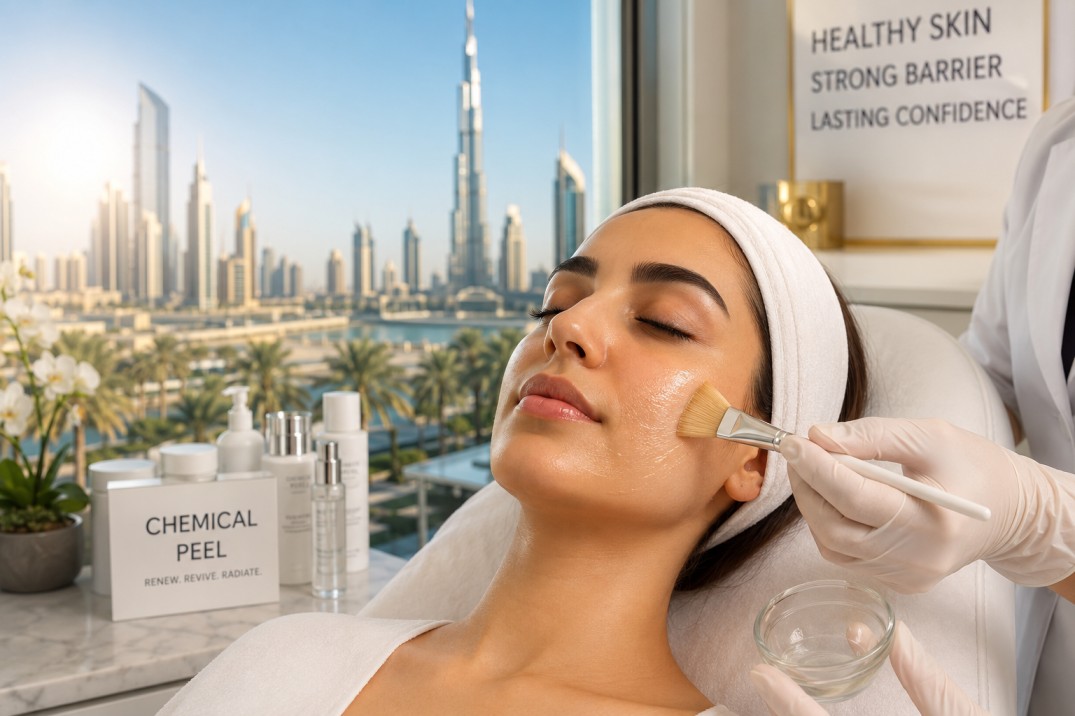
Localized high-strength trichloroacetic acid (TCA CROSS) is effective on icepick scars. Superficial to medium-depth chemical peels improve pigmentation and overall texture but are limited for deep scars.
Radiofrequency (RF) microneedling
Combines micro-injury with heat to stimulate collagen. Often chosen for moderate scarring with lower downtime than ablative lasers; suitable for some darker skin types when used conservatively.
Choosing a clinic and practitioner in Dubai
Look for board-certified dermatologists or plastic surgeons with documented before-and-after results for similar skin types. Confirm the clinic has emergency protocols, clear pricing, and realistic consent forms that list risks such as hyperpigmentation.
Authoritative sources and best-practice overviews can inform expectations—see the American Academy of Dermatology for general guidance on acne scars: American Academy of Dermatology on acne scarring.
SCARCARE checklist: a named decision framework
Use the SCARCARE checklist before committing to treatment:
- S — Scar assessment (type: rolling, boxcar, icepick)
- C — Colour and skin tone evaluation (risk of PIH)
- A — Aim setting (depth reduction, smoothness, pigmentation)
- R — Risk review (downtime, side effects)
- C — Combination planning (e.g., subcision + filler + laser)
- A — Aftercare plan and realistic timeline
- R — Review results and plan maintenance
- E — Estimate cost and session count
Practical example: a real-world treatment pathway
Scenario: A 30-year-old with mixed scarring—rolling depressions on the cheeks and shallow boxcar scars around the jawline. Effective protocol: perform subcision for tethered rolling scars, place temporary dermal filler to lift deep depressions, then schedule three sessions of RF microneedling spaced six weeks apart for collagen remodeling and surface smoothing. Expected timeline: visible lift after subcision/filler, progressive texture improvement over 3–6 months.
Practical tips: pre- and post-treatment actions
- Start sun protection and topical pigment control (e.g., sunscreen, azelaic acid or prescribed hydroquinone alternatives) before procedures to reduce post-inflammatory hyperpigmentation risk.
- Avoid isotretinoin within 6–12 months prior to invasive resurfacing unless cleared by a dermatologist.
- Follow wound-care instructions precisely after ablative treatments—keep treated areas clean, use prescribed emollients, and avoid direct sun until fully healed.
- Track progress with standardized photos and objective measurements (depth mapping where available) to guide further sessions.
Trade-offs and common mistakes
Choosing aggressive single-modality treatment
Risk: opting for the most powerful laser first can cause PIH, scarring, or prolonged downtime—especially on darker skin tones. Trade-off: faster visible change versus higher complication risk.
Overlooking combination therapy
Mistake: treating all scars identically. Trade-off: single treatment may give limited improvement; combining subcision, fillers, and resurfacing often yields best functional and cosmetic outcomes but requires staged planning and budget.
Expecting perfection
Realistic outcome: significant improvement rather than complete elimination. Scars remodel over months; setting measurable goals avoids disappointment.
Core cluster questions
- How many sessions are typically needed for laser scar resurfacing?
- When is subcision necessary for acne scars?
- What aftercare reduces post-inflammatory hyperpigmentation?
- How do fillers compare to permanent scar revision for depressed scars?
- Which treatments are safest for darker skin tones?
FAQ
Are acne scar treatments Dubai clinics suitable for all skin types?
Many clinics offer protocols tailored for different Fitzpatrick skin types. Non-ablative options, microneedling with PRP, and cautious use of RF-based devices are commonly used for darker skin to lower the risk of pigment changes. A qualified dermatologist should evaluate risk and recommend pre- and post-treatment pigment management.
How long before results are noticeable after treatment?
Some improvement appears within weeks (especially after fillers or subcision), while collagen remodeling from lasers or microneedling continues for 3–12 months. Full results usually require multiple sessions and time for tissue remodeling.
What are typical costs and downtime for advanced options?
Costs vary widely by clinic and device. Expect modest peels and microneedling to have minimal downtime (1–3 days), while ablative lasers may require 5–14 days. Accurate cost estimates should come from an in-person consultation that includes a treatment plan.
How to prevent acne scars from forming in the first place?
Early treatment of inflammatory acne with medical therapy, avoiding picking, and prompt dermatologist intervention for nodular lesions reduce scarring risk. Topical retinoids and professional acne management are preventative pillars.
What distinguishes microneedling and PRP Dubai options from laser resurfacing?
Microneedling + PRP is less ablative, typically safer for darker skin tones, and has lower downtime. Laser resurfacing can achieve more dramatic surface changes for deeper scars but carries higher PIH risk and longer recovery. Treatment choice depends on scar type, skin tone, and downtime tolerance.