Practical Guide to Auditing Consultancy in Dubai: Compliance and Business Value
-

- March 09th, 2026
- 556 views

Get a free topical map and start building content authority today.
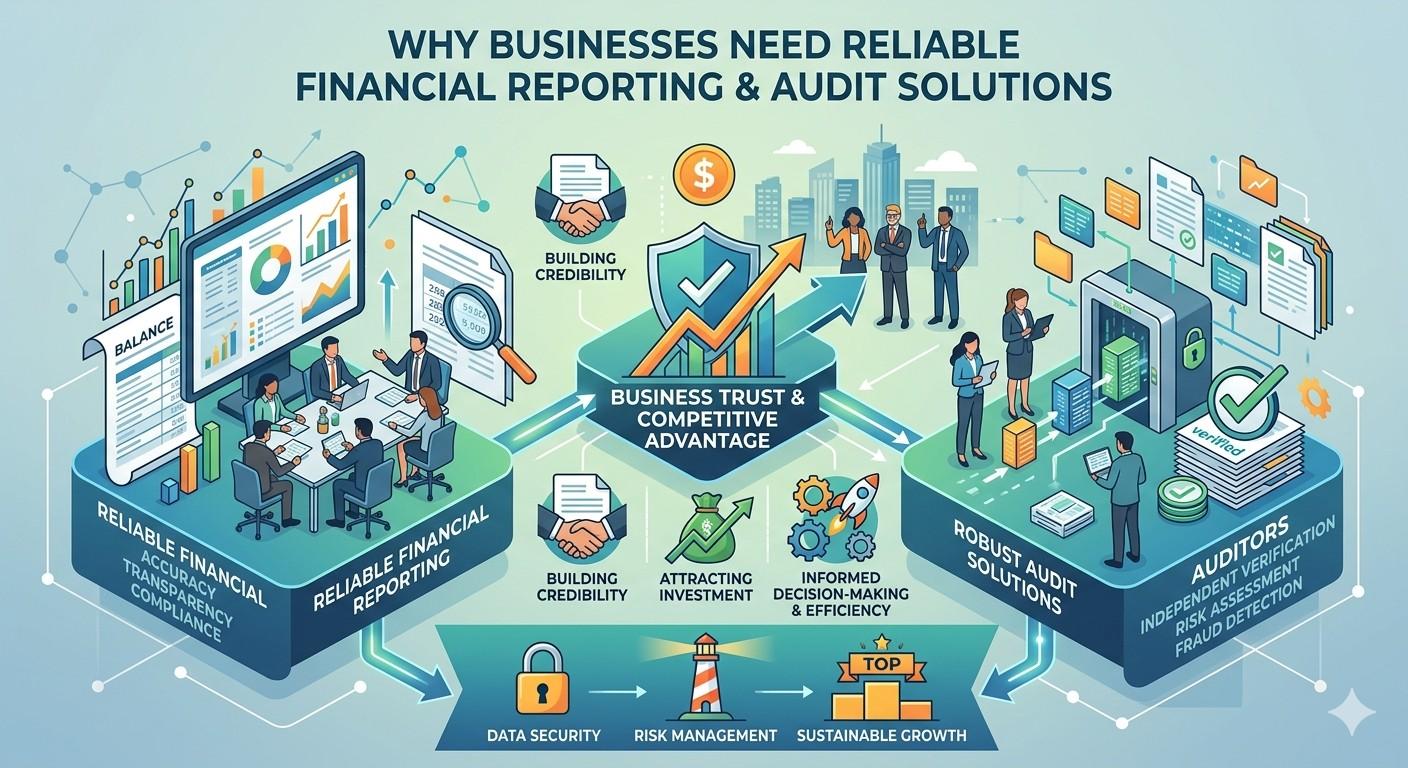
Auditing consultancy services Dubai help organizations meet statutory requirements, strengthen internal controls, and turn compliance into measurable business value. This guide explains what auditing consultancies do, the regulatory context in Dubai, and a clear framework to evaluate and engage services that reduce risk and improve performance.
Detected intent: Informational
- Primary focus: compliance with UAE audit and financial reporting rules plus practical value-add.
- Includes a named framework, a real-world example, practical tips, common mistakes, and five core cluster questions for further reading.
Auditing Consultancy Services Dubai: What these firms do
Auditing consultancy services Dubai provide statutory audit support, internal audit design, risk assessments, and assurance over financial reporting and tax processes. Typical engagements include statutory audits required under UAE company law, reviews to ensure statutory audit Dubai compliance, VAT compliance assessments, and internal control remediation plans.
Regulatory and professional standards to expect
Audits and assurance work in Dubai should follow international standards and local regulations. Key references include the International Standards on Auditing (ISA) issued by the International Auditing and Assurance Standards Board (IAASB) and UAE authorities such as the Federal Tax Authority (FTA) for VAT matters and relevant free-zone regulators (for example, the Dubai Financial Services Authority where applicable).
For globally recognized auditing standards see: International Standards on Auditing (ISA).
CLEAR Audit Framework: a named, practical model
Use the CLEAR Audit Framework to structure consultancy engagements and evaluate deliverables:
- Compliance mapping — align scope to UAE laws, IFRS requirements, and regulator expectations.
- Layered risk assessment — identify financial, operational, and compliance risks by materiality and likelihood.
- Evidence strategy — define tests of controls and substantive procedures that produce repeatable evidence.
- Actionable reporting — convert findings into prioritized remediation plans with owners and deadlines.
- Reinforcement & value tracking — measure improvement and link remediation to cost savings or risk reduction.
How to apply CLEAR (short checklist)
- Map required standards (ISA, IFRS, UAE FTA rules) to the audit scope.
- Rank top 5 risks and design focused testing for each.
- Agree on minimum evidence and sample sizes before fieldwork.
- Deliver a concise remediation roadmap with KPIs to track.
Real-world example: mid-market retail company in Dubai
A mid-sized retail chain in Dubai engaged an auditing consultancy to close gaps ahead of a statutory audit and a VAT inspection. Using the CLEAR Framework, the firm mapped VAT-controlled revenue streams, tested transaction-level controls, and recommended automated reconciliations. The result: fewer audit adjustments, a reduced risk of VAT penalties from the FTA, and a one-year improvement plan that reduced inventory shrinkage by an estimated 8%.
Practical tips for hiring and working with an auditing consultant
- Define the objective: specify whether the assignment is statutory audit support, internal audit setup, or a VAT compliance review.
- Require methodology and standards in the engagement letter (reference ISA/IFRS where relevant).
- Insist on named deliverables: a risk register, test matrix, executive summary, and remediation roadmap with timelines.
- Ask for CVs of engagement personnel and confirm experience with UAE regulators like the Federal Tax Authority or the relevant free-zone authority.
Trade-offs and common mistakes
Common mistakes include: scoping audits too broadly (wasting time and budget), ignoring materiality (leading to irrelevant findings), and failing to tie remediation to measurable business outcomes. Trade-offs often involve cost versus depth: a lightweight compliance review is cheaper but may miss operational weaknesses; a deep-dive assurance project costs more but provides stronger evidence and a clearer roadmap for value capture.
Core cluster questions (use these as internal link targets)
- What does an auditing consultant in Dubai do?
- How to select an audit consultancy for statutory audits in Dubai?
- How do auditing consultancies support VAT and tax compliance in Dubai?
- What are typical audit deliverables and remediation plans?
- How can audits be designed to improve business performance, not just compliance?
FAQ
What are auditing consultancy services Dubai and why are they needed?
Auditing consultancy services Dubai provide assurance, risk assessment, and compliance support to meet statutory audit requirements, VAT and tax obligations, and to strengthen controls. They are needed to reduce regulatory risk, produce reliable financial statements, and turn audit findings into operational improvements.
How do auditing consultancies help with statutory audit Dubai compliance?
Consultancies can prepare financial statements to IFRS, perform pre-audit health checks, address control gaps, and coordinate with statutory auditors. They document evidence, streamline reconciliation processes, and reduce the risk of audit adjustments and regulator penalties.
Can auditing consultancies assist with VAT and other tax issues?
Yes. Many firms provide VAT readiness assessments, transaction testing, and remediation to align accounting records with VAT returns and the Federal Tax Authority requirements, improving accuracy and defensibility during inspections.
What should be included in an engagement letter for audit consultancy work?
Include scope, standards to be followed (for example ISA/IFRS), deliverables, timelines, responsibilities, confidentiality clauses, fees, and escalation points. Clear scope reduces scope creep and aligns expectations.
How to measure value from an auditing consultancy engagement?
Track KPIs such as number of audit adjustments, time to close remediation items, reduction in control exceptions, and cost avoided (penalties, write-offs). Link improvements to operational metrics—inventory accuracy, billing disputes, or days to close month-end.