How AI Voice Agents Improve Customer Experience: Practical Guide and Checklist
-

- March 22nd, 2026
- 99 views
Introduction
AI voice agents for customer experience are automated conversational systems that handle voice interactions at scale, combining speech recognition, natural language understanding, and text-to-speech to resolve routine requests and route complex issues. Detected intent: Informational
This guide explains how AI voice agents improve customer experience, what to measure, and how to implement them responsibly. It includes a named VOICE checklist, practical tips, a short real-world scenario, trade-offs and common mistakes, five core cluster questions for internal linking, and a FAQ.
AI voice agents for customer experience: what they do and why they matter
AI voice agents sit at the intersection of conversational AI, interactive voice response (IVR), and contact center automation. Common capabilities include intent detection, slot-filling, caller authentication, sentiment analysis, and escalation to human agents with context. Brands use them to reduce average handle time (AHT), increase first-call resolution (FCR), and improve Net Promoter Score (NPS) without adding live agent headcount.
How they work
At a technical level, these systems combine automatic speech recognition (ASR) to transcribe speech, natural language understanding (NLU) to interpret intent, dialogue management to decide on actions, and text-to-speech (TTS) to respond. Integration with CRM and backend systems enables personalized responses, order lookup, and real-time updates.
Key benefits
- Scalability: handle peaks without long hold times.
- Consistency: apply policy and scripts uniformly.
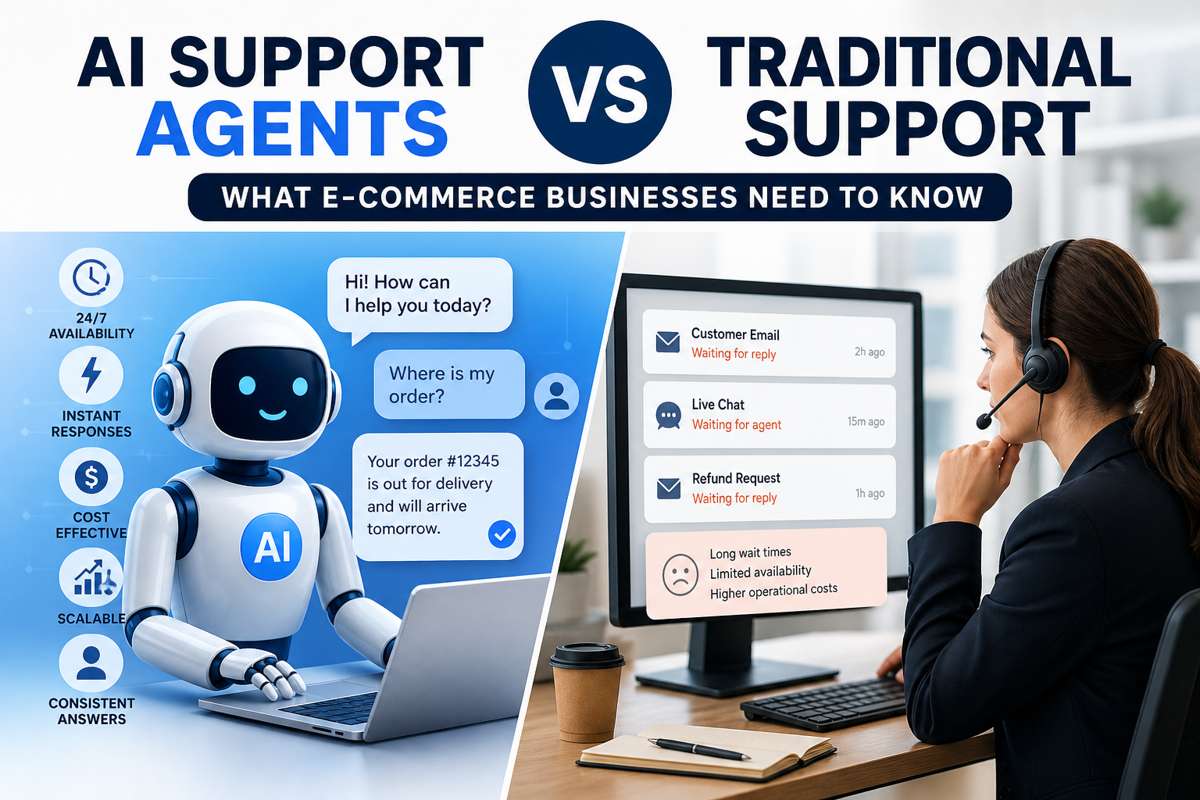
- Cost efficiency: reduce repeatable work handled by humans.
- Availability: 24/7 support for simple tasks and information lookup.
Implementation checklist: the VOICE framework
Use the VOICE checklist to plan implementation and governance. This named framework provides explicit steps to reduce risk and speed deployment.
- Validate intents: catalogue top 50 voice intents and map to outcomes.
- Optimize prompts: design short, confirmatory voice prompts with fallbacks.
- Integrate systems: connect CRM, billing, and authentication for context.
- Check escalation: define human handoff triggers and data transfer policies.
- Evaluate continuously: monitor KPIs and retrain models on new call data.
Compliance and standards
Follow recognized guidance on AI risk management and data protection. For example, refer to official resources such as NIST AI resources for best practices on governance and testing.
Designing user-centered voice experiences
Design should prioritize clarity, short dialogs, and predictable escalation paths. For voice AI, adopt service-quality models like RATER (Reliability, Assurance, Tangibles, Empathy, Responsiveness) to measure perceived service quality across automated and human touchpoints.
Conversation patterns to use
- One-turn confirmations for high-risk actions (payments, cancellations).
- Progressive disclosure for multi-step flows (billing, troubleshooting).
- Sentiment-aware prompts that reduce friction when callers are upset.
Practical tips for deployment
- Start with high-volume, low-complexity intents (balance checks, status updates) to show impact quickly.
- Use A/B testing on prompts and fallback strategies to improve FCR and CSAT.
- Instrument every call with event logging and transcripts to enable rapid iteration and model retraining.
- Build clear escalation metadata so human agents see intent, confidence score, and recent utterances before taking over.
Realistic metrics to track
- Average handle time (AHT) and containment rate (calls fully handled by the agent).
- First-call resolution (FCR) and call deflection percentage.
- Customer satisfaction (CSAT) and sentiment trends across channels.
Trade-offs and common mistakes
Implementing AI voice agents involves trade-offs that should be explicit in vendor and stakeholder conversations.
Common mistakes
- Over-automation: attempting to automate highly emotional or complex interactions that require human empathy.
- Poor fallback design: failing to provide a quick, dignified path to a human agent when confidence is low.
- Ignoring privacy: not masking or minimizing PII in transcript storage and model training.
Trade-offs to weigh
- Speed versus accuracy: faster responses may mean lower ASR confidence—measure both.
- Personalization versus privacy: deeper personalization requires more data, which increases compliance burden.
- Cost savings versus brand experience: aggressive cost-cutting by removing human options can hurt NPS.
Short real-world example
A regional utility company deployed AI voice agents to automate outage reporting and bill inquiries. Within three months, containment increased by 35%, average wait times fell by 50%, and live-agent queues were reduced so agents could focus on complex escalations. The company used the VOICE checklist, integrated CRM context, and logged call transcripts for monthly model retraining.
SEO and content planning: core cluster questions
Use these five core cluster questions as internal link targets or related article ideas:
- How to measure ROI from voice AI customer service deployments?
- What security and privacy controls are required for voice agent transcripts?
- Which intents are best to automate first with voice AI?
- How to design fallback flows that improve customer trust?
- What performance metrics demonstrate long-term impact for voice automation?
Related concepts and secondary keywords
Related terms that improve topical depth: conversational AI, speech-to-text, natural language understanding, IVR modernization, call deflection, sentiment analysis. Secondary keywords used in this guide include "voice AI customer service", "automated voice agents ROI", and "conversational IVR optimization" — include these when creating landing pages or technical documentation to capture long-tail search intent.
FAQ
How do AI voice agents for customer experience drive results?
They automate routine interactions, reduce wait times, and supply human agents with enriched context for escalations, improving containment, FCR, and CSAT when implemented with robust integration and governance.
What is the best way to measure success of voice AI deployments?
Track a combination of operational KPIs (AHT, containment rate), outcome metrics (FCR, CSAT/NPS), and model metrics (ASR error rate, intent confidence). Combine quantitative tracking with qualitative feedback from agent coaching and customer surveys.
Which security and privacy practices are essential for voice agents?
Implement least-privilege access to transcripts, pseudonymize or mask PII before storage, retain recordings only as long as required, and document data flows for compliance teams. Use secure APIs and encryption in transit and at rest.
How does voice AI compare to chatbots on web and mobile?
Voice AI is better for hands-free or phone-first experiences and can be faster for simple voice-native tasks. Chatbots are often richer for visual flows and complex multi-step forms. Both benefit from consistent intent schemas and shared backend integrations.
What are common deployment pitfalls to avoid?
Avoid launching without clear escalation paths, neglecting performance monitoring, and training models on unfiltered PII. Pilot with narrow intents, instrument heavily, and iterate on prompts and fallbacks based on live call data.