How to Use 3D Architectural Animation for Real Estate Video Marketing and Better Video Editing
-

- April 22nd, 2026
- 312 views
Introduction
The modern property buyer responds to motion, context, and storytelling. 3D architectural animation transforms static plans into walkable, believable experiences that improve listing engagement and sales outcomes. This guide explains how to combine 3D architectural animation, real estate video marketing strategies, and disciplined video editing to elevate projects from concept to conversion.
Use a RENDER checklist to plan production, focus animations on buyer decision cues (space, light, flow), and apply tight editing to keep watch time high. This article includes a practical workflow, a real-world example, actionable tips, common mistakes, and five core cluster questions for internal linking.
Detected intent: Informational
Why 3D Architectural Animation Matters for Real Estate
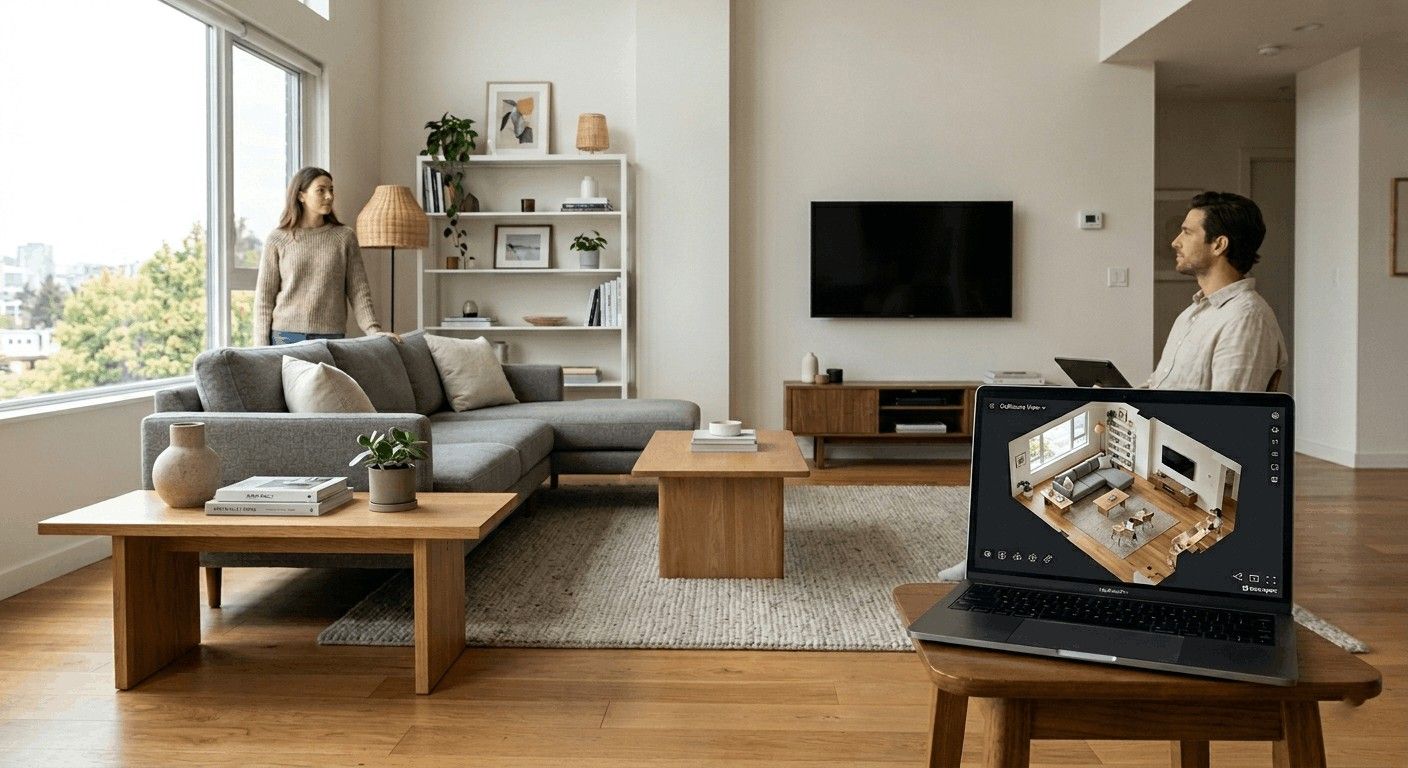
3D architectural animation converts architectural visualization into an immersive marketing asset that shows scale, circulation, materiality, and light over time. When combined with purposeful real estate video marketing strategies and careful video editing, animations increase listing engagement, improve lead quality, and shorten decision cycles by replacing ambiguity with clarity.
3D architectural animation: A practical production workflow
Delivering effective animations requires a repeatable workflow. The RENDER checklist below provides a named framework for consistent outcomes.
RENDER checklist (named framework)
- Research – Target audience, listing intent, competitive assets, and platform specs (social, MLS, landing page).
- Establish goals – Conversion, show-unit replacement, pre-sales, investor pitch, or construction coordination.
- Narrative – Define the user journey: approach, entrance, key spaces, amenity highlights, and closing call-to-action.
- Design & previsualization – Storyboard, camera paths, lighting schemes, and material palettes.
- Execute – Model, texture, animate, render with passes (beauty, AO, Z-depth), and export optimized frames.
- Refine – Composite, color grade, add motion graphics, captions, and finalize edits for multiple aspect ratios.
How to combine real estate video marketing strategies with animation and editing
Pairing animation with platform-conscious editing makes each asset perform better. For social feeds, use shorter cuts and vertical crops. For listing pages and investor pitches, present longer walkthroughs with measured pacing and annotated floor plans. Include concise calls-to-action and lead-capture links tailored to each distribution point.
Practical example: Pre-selling a condo development
Scenario: A developer needs presales before construction. A 90-second 3D architectural animation demonstrates unit layouts, amenity flows, and street context. The video is cut into a 30-second social teaser, a 60-second landing hero, and a set of 15-second Stories ads. Each version uses the same render passes but different edit points, captions, and call-to-action overlays to track which message converts.
Video editing and post-production techniques that improve results
Effective post-production turns renders into marketing tools. Use cut-level edits to retain momentum, apply color grading to match the design palette, and incorporate motion graphics to highlight dimensions or special features. Export multiple aspect ratios and bitrates optimized for web, mobile, and broadcast.
Architectural visualization video editing tips
- Keep the opening 3–5 seconds visually strong to reduce dropoff.
- Use sound design (ambient, footsteps, soft music) to sell scale and mood.
- Layer simple on-screen text for key facts: price range, floor area, and availability.
Practical tips to implement this approach
- Plan renders for edit: output separate passes (diffuse, specular, AO, Z-depth) so the compositing stage can fine-tune mood without re-rendering.
- Create platform-specific cuts before launching (square for Instagram feed, vertical for Stories/Reels, landscape for YouTube and listings).
- Track view-through and click metrics per version; prioritize edits that improve watch time and CTA clicks.
Trade-offs and common mistakes
Trade-offs: Higher-resolution, photoreal renders increase production time and cost but can improve conversion for premium projects. Quicker stylized animations lower costs and are effective for early-stage marketing. Common mistakes include overlong walkthroughs, poor pacing, missing context (no street or neighborhood view), and not exporting multiple aspect ratios. Avoid using heavy compression artifacts that undermine perceived quality.
Measuring success: what to track
Track platform-specific metrics: watch time, completion rate, click-through rate on CTAs, lead form submissions, and downstream conversion (site visits to appointments or deposits). Integrate campaign UTM parameters and pixels to attribute leads to video assets. For industry guidance on marketing practices and consumer expectations in real estate, refer to the National Association of Realtors for standards and research on listing effectiveness: National Association of Realtors.
Core cluster questions (for internal linking and content planning)
- How much does 3D architectural animation cost for a residential project?
- What is the typical production timeline for a real estate marketing video?
- Which video editing techniques increase watch time for property walkthroughs?
- How to optimize animated walkthroughs for social media and MLS listings?
- What render passes and file formats are best for compositing and fast turnaround?
Final checklist before publishing a real estate animation
- Confirm target aspect ratios and resolutions.
- Include title frames, location tags, and contact CTA overlays.
- Prepare shorter cutdowns and captions for silent autoplay environments.
- Verify all claims (floor areas, prices) with legal/compliance before release.
Conclusion
3D architectural animation is a high-impact asset when planned with clear goals, edited to platform expectations, and used inside focused real estate video marketing strategies. Apply the RENDER checklist, measure performance, and iterate on edits to maximize lead quality and conversion.
FAQ: What is 3D architectural animation and how can it help sell properties?
3D architectural animation is a time-based visualization that simulates walking through a property or viewing a project in context. It helps buyers understand scale, flow, and materials, which reduces uncertainty and increases engagement compared with photos alone.
FAQ: How long should a real estate video be for social platforms?
Keep social teasers to 15–30 seconds, mid-length listings to 45–60 seconds, and full walkthroughs up to 90–120 seconds depending on audience intent and platform. Always create multiple cuts optimized for each channel.
FAQ: What file formats are best for animated walkthroughs?
Deliver masters in high-bitrate H.264/H.265 or ProRes for archives and export web-ready MP4s at the platform-recommended codecs and bitrates. Provide render passes where possible for later rework.
FAQ: How to balance realism and production cost in animations?
Choose realism where it affects buyer perception (interior finishes, lighting) and use stylized treatments for contextual or quick-turn assets. Test a short, high-fidelity scene before committing to full-project photorealism.
FAQ: Can 3D architectural animation be used for off-plan sales?
Yes—animations are especially effective for off-plan sales because they make unbuilt spaces understandable and desirable. Include accurate floor plans, amenity context, and clear calls-to-action to capture early interest.