Master the Finance Phantom: Practical Guide to Online Trading Signals and Risk Control
-

- Published Updated
- 3,533 views
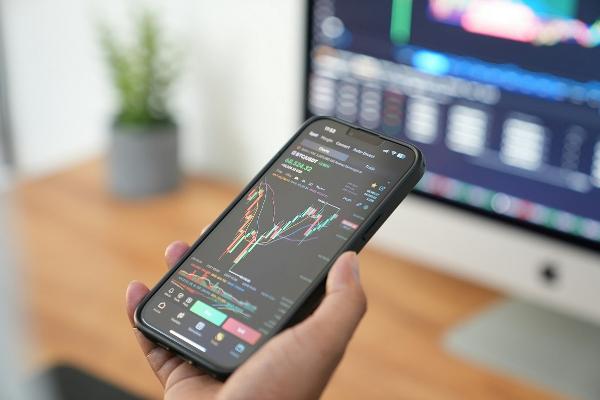
The term "Finance Phantom in online trading" describes recurring, misleading signals that appear in digital markets due to a mix of market microstructure quirks, behavioral biases, and transient liquidity. Traders who recognize the Finance Phantom separate true opportunity from noise by combining signal validation, disciplined risk control, and situational awareness.
Detected intent: Informational
This guide explains what the Finance Phantom looks like, presents the PHANTOM checklist framework for signal validation and risk control, gives a short real-world scenario, lists 5 core cluster questions for further reading, and offers 5 practical tips plus common mistakes to avoid. One authoritative resource on investor risk is linked.
How the Finance Phantom in online trading appears and why it matters
The Finance Phantom typically manifests as temporary price moves, false breakouts, or surprise liquidity gaps that lure traders into positions that quickly reverse. These phantom signals are driven by order routing latency, scheduled algorithmic sweeps, concentrated stop zones, and mass behavioral responses. Related concepts include market microstructure, slippage, behavioral finance, false breakouts, and algorithmic signals.
PHANTOM checklist: a named framework to validate signals and control risk
Use the PHANTOM checklist as a repeatable model to decide whether a trade signal is real or phantom.
- P — Price context: Confirm the move against trend, support/resistance, and volume profile.
- H — Horizon alignment: Match signal timeframe to trading timeframe (intraday, swing, positional).
- A — Activity verification: Check order flow, bid-ask spread, and sudden volume spikes.
- N — News and events: Rule out scheduled releases or corporate actions that cause transient moves.
- T — Trade sizing: Size positions using fixed risk percentages and realistic slippage assumptions.
- O — Order routing checks: Be aware of execution venue behavior and algorithmic liquidity patterns.
- M — Manage exits: Predefine stop-loss, take-profit, and conditions for manual exit if signal degrades.
Real-world example: a day-trading scenario
Scenario: A day trader sees a fast breakout on a mid-cap stock at 10:20 a.m. Volume surges briefly and the price spikes above resistance. The trader applies the PHANTOM checklist: price context shows a weak upstream trend, horizon alignment reveals the signal is only valid for a 1–2 minute scalping window, activity verification shows a thin bid-side with wide spread (suggesting sweep orders), and news checks are negative. The trader resists full-size entry, scales in with smaller risk, sets a tight stop, and exits when the spread widens—avoiding a common phantom trap where a sweep triggers stops then fades.
Behavioral trading signals and the role of risk management checklist
Recognizing behavioral trading signals—herding, overreaction, anchoring—helps in spotting Finance Phantoms. Pair that recognition with a risk management checklist: maximum percent risk per trade, maximum daily loss, expected slippage, and contingency plans. Regulators and investor-education resources emphasize risk awareness; see Investor.gov for official guidance on investment risk and investor protection.
Core cluster questions
- What patterns indicate a false breakout in digital markets?
- How does order book liquidity contribute to phantom price moves?
- Which risk controls reduce losses from transient algorithmic sweeps?
- How to adapt trade size and execution to market microstructure?
- What behavioral biases most often trigger overtrading after phantoms?
Practical tips (actionable)
- Always validate a signal across two independent data points (e.g., price+volume or price+order flow) before increasing position size.
- Use a pre-set risk percentage and calculate worst-case slippage to size entries conservatively.
- Prefer limit orders when entering thin markets to control execution price; use market orders selectively for exits if speed matters.
- Keep a short watchlist and avoid reacting to every cross-market spike—focus reduces exposure to correlated phantom moves.
- Backtest any automated filter for phantom detection over multiple market regimes and include execution simulation for slippage and fills.
Trade-offs and common mistakes
Trade-offs:
- Being overly cautious reduces false entries but may miss legitimate, fast opportunities.
- Heavy reliance on automation improves speed but can amplify systematic mistakes if the model misreads phantoms.
Common mistakes to avoid:
- Chasing thin-volume breakouts without checking spread and depth.
- Using oversized positions relative to realistic slippage and drawdown tolerance.
- Failing to correlate signals across related instruments (e.g., futures vs. underlying equity).
- Ignoring scheduled news and corporate events that temporarily distort prices.
How to monitor and iterate on your PHANTOM process
Track every trade flagged by the PHANTOM checklist: record why a signal looked real or phantom, capture entry/exit conditions, realized slippage, and outcome. Monthly review using simple performance metrics (win rate, average return per trade, max drawdown) drives incremental improvements. Include scenario-based drills: e.g., practice responding to flash liquidity withdrawals or calendar surprises in paper trading.
FAQ
What is the Finance Phantom in online trading and how can it be identified?
The Finance Phantom in online trading is a pattern of misleading market moves caused by temporary liquidity, algorithms, or crowd behavior. Identify it by checking volume confirmation, spread and depth, news flow, and whether the move aligns with broader trend context.
Can automated systems detect Finance Phantoms reliably?
Automation can flag patterns (e.g., sudden spread widening, order book imbalances) but must include execution-simulation and regular human review. Overfitting to a single regime is a common pitfall.
How should position size change when a potential phantom signal appears?
Reduce initial position size, set tighter stops, and scale in only after cross-validation. Treat phantom-prone setups as higher slippage scenarios and decrease risk accordingly.
Are there markets where Finance Phantoms are more common?
Thinly traded equities, low-liquidity FX crosses, and certain small-cap futures tend to show more phantom-like behavior due to sparse order books and concentrated liquidity providers.
How to include behavioral trading signals in a risk management checklist?
Add explicit checks for herd indicators (volume spikes with narrow participation), news-trigger flags, and fatigue/overtrading metrics. Pair these with hard risk limits like daily loss caps and enforced cooling-off periods to limit behavioral escalation.