Targeted Botox for Facial Asymmetry: Practical Treatment Guide
-

- Published Updated
- 893 views
Botox for facial asymmetry is a common, minimally invasive option to reduce visible imbalance caused by muscular hyperactivity. This guide explains how botulinum toxin can be used to target muscles, how to plan treatment, and what trade-offs to expect, so decisions are based on anatomy and measurable goals.
- Botox treats dynamic asymmetry by weakening overactive muscles on one side of the face to improve balance.
- Careful assessment, selective dosing, and follow-up are essential; use a structured framework to plan treatment.
- Not all asymmetry is muscular—structural, dental, or neurologic causes require different approaches.
Procedural
Botox for facial asymmetry: overview and how it works
Facial asymmetry can arise from muscular overactivity, prior surgery, trauma, dental occlusion, or congenital variation. When a dynamic, muscle-driven imbalance is identified, botulinum toxin (a neuromodulator) temporarily reduces activity at the neuromuscular junction to produce a more symmetrical appearance. Common target muscles include the zygomaticus major/minor, levator labii superioris, depressor anguli oris, masseter, and orbicularis oculi.
When Botox is appropriate
Botox is most effective for dynamic asymmetry—movement-related differences that become apparent with expression. It is not a primary treatment for skeletal or soft-tissue volume defects; in those cases, filler, surgery, orthodontics, or physical therapy may be needed first. Contraindications include active infection at injection sites, certain neuromuscular disorders, and specific allergies; consult published guidance and product labeling before treatment.
The FACE Assessment Framework (named checklist)
Use the FACE Assessment Framework to standardize planning and documentation:
- Find: Observe asymmetry at rest and in movement—photographs and video from multiple angles.
- Analyze: Identify contributing muscles, measure degree of pull, and assess non-muscular causes (dental, structural).
- Customize: Choose target muscles, plan doses and injection points, and set realistic symmetry goals with the patient.
- Execute & Evaluate: Inject with precise technique, schedule follow-up at 2 weeks and 6–12 weeks, and adjust dosing as needed.
Documentation checklist
- Baseline photos (rest, smile, eyebrow raise, pucker).
- Marked injection points and planned units per site.
- Consent noting expected duration and potential side effects.
Assessment, planning, and injection strategy
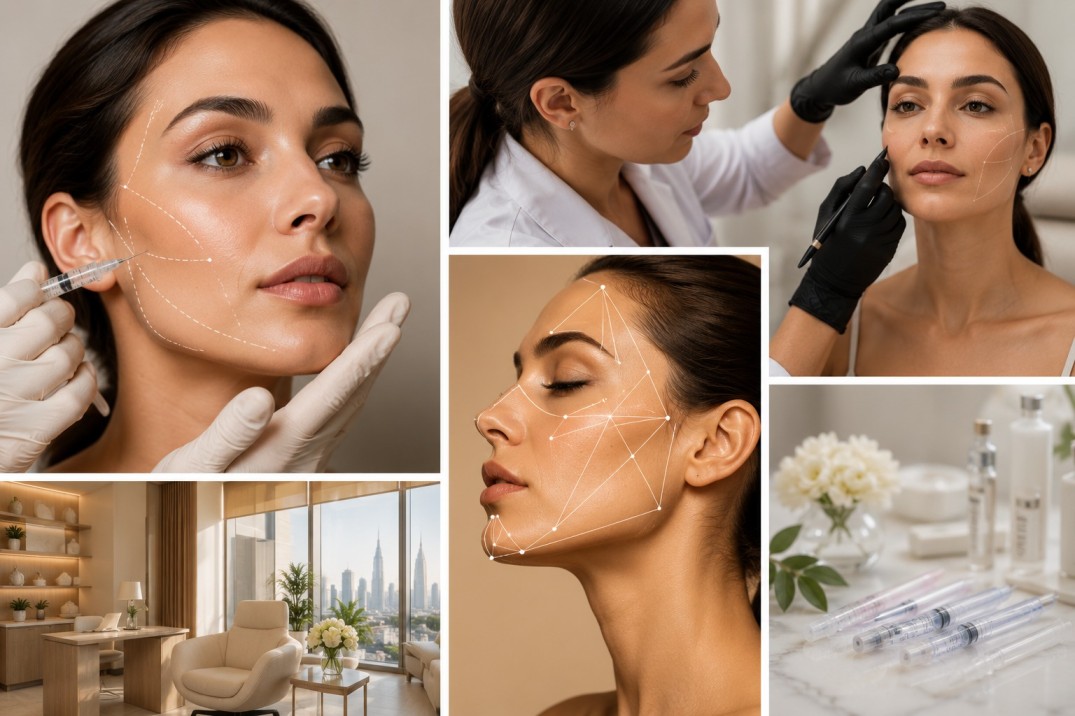
Begin with a structured facial motor exam. Record which side demonstrates stronger contraction, quantify asymmetry with photos and optional video, and palpate muscle bulk. For example, an asymmetric smile caused by overactivity of the zygomaticus on one side can often be balanced by a conservative dose of Botox to that muscle.
Dosing principles
- Start low and increase on follow-up rather than overtreating asymmetrically on the first visit.
- Prefer multiple small injection points for larger muscles (masseter) and single or paired points for smaller mimic muscles.
- Record exact units and lot numbers for reproducibility.
Injection technique and safety
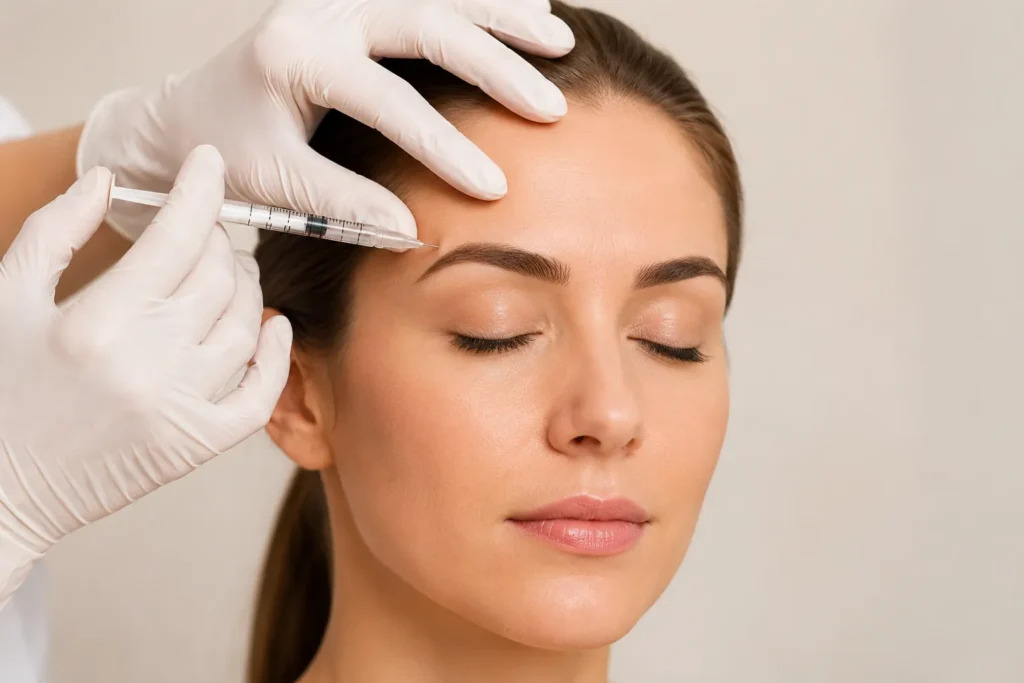
Use proper aseptic technique, aspirate when indicated, and inject at the correct depth for the targeted muscle. Consider electromyographic guidance or ultrasound for difficult cases or atypical anatomy. Counsel patients on common side effects: transient bruising, asymmetry that may require touch-up, or temporary weakness beyond the treatment area.
Real-world example: asymmetric smile scenario
Patient profile: a 42-year-old with a right-sided hyperactive zygomaticus major causing a pronounced right smile with visible gum show. Assessment shows stronger contraction on the right, no dental or structural cause, and good candidate for neuromodulator treatment. Treatment plan: mark two 2–3 mm points over the zygomaticus major and inject 2.5–4 units per point of onabotulinumtoxinA on the right only. Outcome: 10–14 days after treatment the smile balance improved, with mild reduction in smile amplitude but no speech or oral competence impairment. Follow-up at 8 weeks documented satisfaction and an option to adjust dose by 1–2 units if desired.
Practical tips for clinicians and patients
- Use video recording of expressions in addition to still photos—motion reveals asymmetry more clearly.
- Document and mark injection sites while the patient is animated to capture true muscle activity.
- When in doubt, treat conservatively on the stronger side and consider small contralateral adjustments only if necessary.
- Schedule a 2-week review for early adjustments and a 8–12 week review to evaluate full effect and plan maintenance.
Common mistakes and trade-offs
Overcorrection is the most frequent error—excessive weakening of one side can create the opposite asymmetry. Another mistake is treating presumed muscular asymmetry without ruling out structural causes; fillers or orthognathic approaches may be required instead. Trade-offs include temporary reduction in expressive amplitude and the need for maintenance injections every 3–6 months depending on product and dose.
Core cluster questions
- How is dosing determined for unilateral facial muscle overactivity?
- When should structural causes of asymmetry be evaluated before neuromodulator treatment?
- What follow-up schedule is recommended after treating facial asymmetry with Botox?
- Which facial muscles most commonly cause an asymmetric smile or eyebrow position?
- How should outcomes be documented and adjusted in subsequent treatments?
For safety and regulatory information about botulinum toxin products, consult official guidance such as the U.S. Food and Drug Administration resources on botulinum toxin products: FDA: Questions & Answers — Botulinum Toxin Products.
When to refer and multidisciplinary care
Refer to or collaborate with dental specialists, maxillofacial surgeons, or neurologists when asymmetry is suspected to stem from occlusion, skeletal differences, or neurologic disorders. Combined approaches—Botox plus filler, occlusal adjustment, or physical therapy—produce optimal results for many patients.
Outcome measurement and setting expectations
Use standardized photo sets and patient-reported outcome scales (e.g., a simple 0–10 satisfaction scale) to measure improvement. Discuss that results are temporary, typically lasting 3–4 months, and that fine-tuning is common during the first year of treatment.
Frequently asked questions
Can Botox for facial asymmetry fix an uneven smile?
Yes—when the uneven smile is due to overactivity of specific muscles (for example, the zygomaticus or levator labii), targeted Botox injections can reduce pull on the stronger side and improve symmetry. Proper assessment and conservative dosing reduce the risk of overcorrection.
How long does it take to see results after treatment for facial asymmetry?
Initial effects often appear within 3–7 days, with peak results around 10–14 days. Full neuromodulatory effect and optimal assessment for adjustment are typically at 2–8 weeks.
Are there non-muscular causes of facial asymmetry that Botox won’t fix?
Yes. Skeletal differences, soft-tissue volume loss, scarring, and dental occlusion can all cause asymmetry. These require different interventions such as fillers, surgery, orthodontics, or rehabilitation.
What are common side effects after Botox for asymmetry?
Common issues include mild bruising, temporary weakness of adjacent muscles, and transient asymmetry. Serious complications are rare when injections are performed by trained clinicians who follow product labeling and safety guidelines.
Can treatments be repeated or adjusted if results are not balanced?
Yes. Follow-up assessments allow dose adjustments, additional micro-injections, or contralateral treatment when needed. Conservative initial treatment minimizes the need for corrective procedures.