Modern Loan Origination Systems Transforming MSME Lending in India
-

- March 06th, 2026
- 488 views

FREE SEO Topical Map Generator: Find Your Next Content Ideas
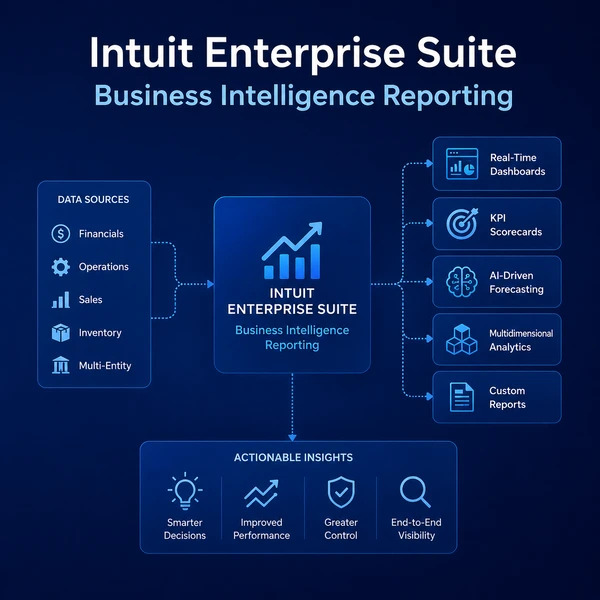
The landscape of small business finance is shifting as loan origination systems for MSME lending in India reduce friction, speed decisions, and expand credit access. Modern LOS platforms combine digital loan onboarding for MSMEs, automated credit assessment MSME loans, KYC automation for small businesses India, and integration with payment rails to move applications from weeks to hours or minutes.
Modern loan origination systems (LOS) automate steps from lead capture to disbursement, improving approval rates and lowering operational costs. This article explains how LOS work in the Indian MSME context, presents the LEND framework for implementation, shows a short real-world scenario, offers practical tips, and highlights trade-offs and common mistakes. Detected intent: Informational.
How loan origination systems for MSME lending in India change credit access
Loan origination systems for MSME lending in India centralize data capture, compliance checks, credit decisioning, and document workflows. They connect bank and NBFC front offices with backend credit engines, bureau data, e-KYC services, and digital signatures. With the Reserve Bank of India and industry bodies shaping digital-lending guidelines, LOS adoption supports safer scale while enabling lenders to meet MSME demand more effectively RBI.
Key components of modern LOS and related terms
- Lead capture and CRM integration — intake forms, APIs, marketplace funnels
- Digital loan onboarding for MSMEs — e-KYC, GST verification, bank statement ingestion
- Automated credit assessment MSME loans — rule-based scoring, machine learning models, bureau pulls
- Document management and e-sign — Aadhaar-based KYC, eSign, secured storage
- Underwriting & decision engine — configurable rules, workflow approvals, exception handling
- Disbursement and servicing — API-led payouts, UPI/NACH integration, repayment schedules
LEND framework: A practical checklist for LOS adoption
Use the LEND framework to plan implementation and vendor selection. It provides a simple, actionable structure.
- Lead capture & integration: Define channels, API requirements, and CRM flows.
- Eligibility & e-KYC: Map required documents (GST, PAN, bank statements) and integrate Aadhaar/KYC providers.
- Native scoring & underwriting: Select rule engine and data sources (credit bureaus, bank transaction analysis).
- Disbursement & monitoring: Plan payout rails, reconciliation, and portfolio monitoring dashboards.
Why the framework matters
The LEND framework keeps implementation practical: start with lead flows, secure the onboarding and KYC layer, then build decisioning, finally automate disbursements and monitoring. This order reduces compliance risk while demonstrating measurable ROI to stakeholders.
Real-world example: A small textile unit in Surat
A 12-person textile unit needed a working capital loan to buy raw materials ahead of a festival season. Using a lender with a modern LOS, the owner submitted GST and bank statements via a mobile form, completed Aadhaar e-KYC, and allowed bank transaction ingestion. An automated credit assessment pulled bureau data, applied a scoring model tuned for seasonal cash flow, and routed a small manual review for exceptions. Disbursement happened within 48 hours—compared to two to three weeks under the old paper-based process.
Practical tips for lenders and technology teams
- Prioritize data ingestion: Bank statement parsing and GST verification usually unlock the best predictive power for MSME credit models.
- Design exception workflows: Automated decisions are efficient, but lean manual review paths reduce false negatives and customer frustration.
- Start with a limited product set: Pilot one product line (e.g., short-term working capital) before scaling across sectors.
- Secure integrations early: Ensure bureau, KYC, eSign, and payment APIs are contractually and technically stable.
Trade-offs and common mistakes to avoid
Trade-offs
- Speed vs. accuracy: Aggressive automation can improve turnaround but may raise default risk if models are not properly calibrated for MSME cash-flow variability.
- Complexity vs. adoption: Rich feature sets add capability but increase training and change management costs for sales and operations teams.
- Centralization vs. customization: A single LOS for many products saves cost but may require extensive configuration to serve diverse MSME segments.
Common mistakes
- Missing ground-truth data: Implementing scoring without enough labelled outcomes leads to overfitting and poor real-world performance.
- Poor exception handling: Treating all edge cases as manual creates bottlenecks; build triage thresholds.
- Ignoring customer UX: Long forms or unstable uploads cause drop-off—optimize for mobile and low-bandwidth environments.
Operational and compliance considerations
LOS projects must align with Indian regulatory expectations, anti-money-laundering norms, and data protection practices. Plan for secure storage of sensitive identifiers, adhere to KYC/KYB standards, and implement logging and audit trails. Integrating with credit bureaus (CIBIL, CRIF, Experian) and payment networks (UPI, NACH) often requires formal approvals and SLA commitments.
Core cluster questions (for related articles or internal linking)
- How to evaluate LOS vendors for MSME lending?
- What data sources improve automated credit assessment for MSMEs?
- How to integrate e-KYC and e-sign into loan onboarding?
- What metrics track LOS performance and credit quality?
- How to design exception workflows for SME loan approvals?
Measuring impact: KPIs to watch
- Turnaround time from application to disbursement
- Application-to-approval rate and abandonment rate (digital funnel)
- Cost per funded loan (operations savings)
- Portfolio performance: 30/60/90+ day delinquencies
FAQ: What are loan origination systems for MSME lending in India?
Loan origination systems for MSME lending in India are integrated software platforms that automate the lifecycle of a loan application—lead capture, identity and document verification, credit assessment, underwriting decisions, and disbursement—while connecting to regulatory and payment infrastructure required in the Indian market.
How do digital loan onboarding for MSMEs improve approval rates?
Digital onboarding reduces data entry errors, enables richer data collection (bank statements, GST flows), and speeds verification. Combined with automated credit assessment, lenders can score more applicants accurately and reduce time-to-decision, which typically improves conversion and approval rates.
Can automated credit assessment MSME loans replace manual underwriting?
Automated assessment can handle a large share of routine decisions, but it is best used alongside targeted manual underwriting for high-risk or complex cases. Hybrid models combine the efficiency of automation with human judgment for exceptions.
What are practical first steps for an NBFC or bank starting LOS adoption?
Begin with process mapping, select one product to pilot, secure key integrations (bureau, KYC, eSign, payout), implement the LEND framework, and measure KPIs like TAT and cost per loan. Plan for change management and compliance reviews early.
How does KYC automation for small businesses India work with LOS?
KYC automation ingests PAN, Aadhaar (where permitted), GST returns, and bank statements to build a verified identity and business profile. LOS platforms orchestrate these checks via APIs and store signed documents for audits.