Practical Guide to Deliveroo App Restaurant Data Scraping
-

- Published Updated
- 454 views
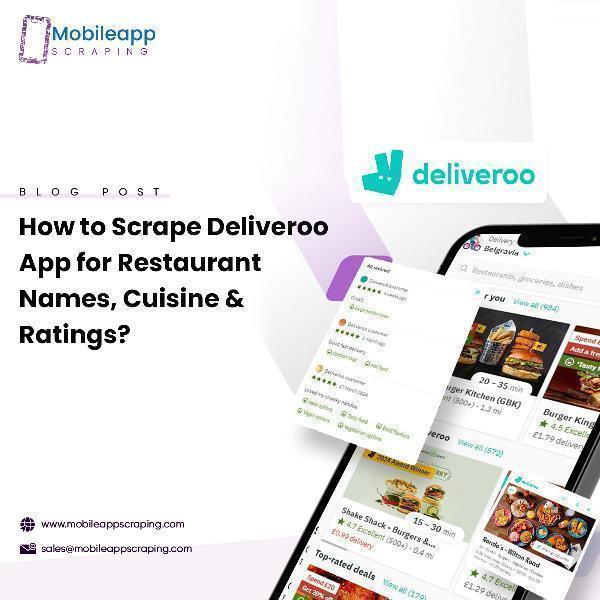
Deliveroo app restaurant data scraping is the process of collecting restaurant names, cuisine types, ratings and similar fields from the Deliveroo mobile app or its backend services for analysis, research or integration. This guide explains practical approaches, legal and ethical considerations, a reusable checklist, and a short example to make the work repeatable and safe.
What this guide covers: practical techniques (HTTP/API vs. UI scraping), compliance checkpoints, a named SCRAPE checklist, parsing tips for JSON and HTML, handling rate limits and proxies, and a short scenario. Detected intent: Informational
Deliveroo app restaurant data scraping: How it works and legal guardrails
Two common technical approaches to collect Deliveroo restaurant data are: 1) using the app or web API endpoints (observed via developer tools or a proxy) and 2) scraping rendered pages or the app UI (headless browsers, OCR for images). Before any technical work, confirm terms of service, regional laws (e.g., GDPR in the EU, Data Protection Act in the UK), and robots.txt rules—consult the official specification when unsure: robots.txt specification (RFC 9309).
Quick decisions: When to scrape vs. when to seek data access
Choose scraping only when programmatic access is unavailable, allowed by terms, and compliant with local law. If data is needed for commercial use or frequent updates, pursue an official integration or licensing. Scraping is reasonable for one-off research, small-scale market analysis, or internal testing when compliance is observed.
SCRAPE checklist (named framework for repeatable work)
Use the SCRAPE checklist as a step-by-step framework before any data collection:
- Scope: Define fields (restaurant name, cuisine, rating, address, delivery time). Limit collection to what is necessary.
- Compliance: Review terms of service, privacy policy, and relevant laws. Check robots.txt and local data protection rules.
- Requests: Choose request strategy (API vs. HTML). Observe headers, rate limits, and retry policies.
- Authentication: Handle tokens and sessions responsibly. Never bypass authentication or expose credentials.
- Parse: Extract structured data using JSON parsing, CSS selectors, or XPath. Validate and normalize fields.
- Export: Store results with provenance and timestamps. Respect retention rules and anonymize personal data.
Common technical approaches
1. Observe the app/web traffic (API-first)
Many apps use JSON endpoints that return structured data. Tools: a local proxy (mitmproxy, Charles) or browser DevTools. Look for endpoints returning lists of restaurants and inspect parameters for location, pagination, and filters. Save JSON responses and parse names, cuisine types, and rating fields directly rather than scraping rendered HTML.
2. Headless browser / UI scraping
If the app renders content client-side and the API is protected, a headless browser (Puppeteer, Playwright) can render JavaScript and capture DOM elements. Use stable CSS selectors, wait for network idle, and prefer semantic attributes or data-* properties to reduce fragility.
3. Mobile app reverse engineering (when necessary)
Android APK or iOS traffic inspection can reveal endpoints and tokens. This is higher risk legally and technically; proceed only after compliance review and never use stolen or private keys.
Real-world example scenario
Scenario: A local market research team needs a snapshot of 500 London restaurants on Deliveroo to analyze cuisine distribution and average ratings for a business plan. Steps taken: use the SCRAPE checklist; observe the web app with DevTools; find a public JSON endpoint that lists restaurants by postcode; implement paginated requests with a 1s delay between requests; parse JSON to extract name, cuisine tags, and rating; store results with source URL and timestamp. The dataset is used for internal planning only and retained 30 days.
Practical tips (actionable)
- Respect rate limits: add randomized delays and exponential backoff to avoid bans.
- Set a clear user agent and include contact information in a responsible manner if doing large research runs (where allowed).
- Prefer structured JSON responses over HTML parsing—JSON is less brittle and preserves types like numeric ratings.
- Normalize cuisine tags: map synonyms (e.g., "Italian" vs "Pizza") in a post-processing step to improve analysis.
- Log provenance: store the endpoint URL, request parameters, and timestamps for reproducibility and auditing.
Trade-offs and common mistakes
Trade-offs
API scraping yields cleaner data but may be rate-limited or require tokens. UI scraping is more flexible but fragile against layout changes and slower. Proxies reduce IP blocks but add cost and complexity. Prioritize maintainability and compliance over raw speed.
Common mistakes
- Not checking terms of service or robots.txt before starting.
- Hardcoding brittle selectors that break when the UI updates.
- Exposing credentials or tokens in shared repositories.
- Collecting unnecessary personal data (e.g., driver details) instead of only public restaurant fields.
Core cluster questions (for internal linking and related articles)
- How to find Deliveroo API endpoints without violating terms?
- What fields are typically available in Deliveroo restaurant JSON responses?
- How to handle pagination and rate limits when collecting restaurant data?
- What are best practices for normalizing cuisine types and ratings?
- How to store and version scraped restaurant datasets for reproducibility?
Data quality and storage
Validate rating values (numeric, range 0–5), ensure cuisine tags are lists or normalized strings, and remove duplicates by canonicalizing restaurant names + address. Export to CSV or a small database and include a "source_url" and "collected_at" column for each row.
When to stop and seek permission
If the project scales beyond occasional queries, or if automated collection affects platform availability, stop and request official access. Many platforms offer partner programs or data partnerships for repeated commercial use—this both reduces legal risk and improves data stability.
Final checklist before running any collector
- Complete the SCRAPE checklist
- Confirm legal review for jurisdictional rules
- Run a small pilot with conservative settings
- Monitor for blocking and error rates and be prepared to pause
FAQ: What is Deliveroo app restaurant data scraping?
Deliveroo app restaurant data scraping is the process of programmatically collecting publicly visible restaurant attributes such as names, cuisine categories, location, and ratings from the Deliveroo app or its backend services for analysis or integration. Follow legal and technical best practices described above.
FAQ: Is it legal to scrape Deliveroo restaurant data?
Legality depends on terms of service, local data protection laws, and how the data will be used. Public information is often collectible for research, but automated scraping may violate a service's terms or local regulations. Consult legal counsel for commercial projects and check the service's terms and robots.txt rules first.
FAQ: How to avoid getting blocked when collecting restaurant listings?
Use conservative rate limits, randomized delays, rotating IPs if necessary and allowed, proper error handling, and prefer API endpoints over UI scraping. Monitor responses and implement exponential backoff on 429/5xx HTTP codes.
FAQ: Deliveroo app restaurant data scraping — where to start?
Start with the SCRAPE checklist: define fields, check compliance and robots.txt, inspect network traffic for JSON endpoints, implement paginated requests with delays, and validate results. Run a small pilot before scaling up.
FAQ: How should scraped restaurant ratings and cuisine categories be normalized?
Normalize ratings to numeric types and clip to the valid range. Map cuisine labels to a controlled vocabulary by grouping synonyms and using a lookup table. Store both raw and normalized values for traceability.
Related Articles