Local SEO That Works: A Practical Guide for Doncaster and Sheffield Businesses
-

- Published Updated
- 625 views

Local competition and customer search behavior make local SEO for Doncaster and Sheffield essential for every small and medium business aiming to attract nearby customers. This guide explains practical steps—listings, on-page changes, citations, and content—that drive measurable local visibility on Google and other local search engines.
Quick actions: claim and verify Google Business Profile, standardise NAP (name, address, phone), add local pages and schema, collect reviews, and track local rankings. Uses the LOCAL MAPS Checklist and includes a real-world cafe example. Detected intent: Informational
local SEO for Doncaster and Sheffield: core strategies
Local SEO focuses on making a business discoverable to people searching nearby. Key signals include Google Business Profile accuracy, consistent citations, localised content, and on-site technical markup such as schema.org/LocalBusiness. For UK businesses, factors like correct postcode formats and alignment with official records (e.g., Companies House where relevant) also help search engines trust the listing.
LOCAL MAPS Checklist: a named framework to follow
Use the LOCAL MAPS Checklist to run a quick audit and ongoing program. LOCAL MAPS stands for:
- Listings: Claim and verify Google Business Profile, Bing Places, and major directories.
- On-page: Add local keywords, contact info, and service-area pages on the website.
- Citations: Ensure consistent NAP across directories and citations.
- Authority: Build local backlinks and community references (press, local blogs, trade bodies).
- Local content: Create pages or posts tailored to Doncaster and Sheffield audiences.
- Monitoring: Track rankings, clicks, and review trends with analytics and local rank trackers.
- Analytics: Use Google Analytics and Search Console to validate traffic changes.
- Profiles: Add photos, services, and attributes to profiles; answer Q&A on listings.
- Social proof: Collect and respond to reviews; maintain active local social signals.
Practical steps to implement (step-by-step)
1. Claim and optimise your Google Business Profile
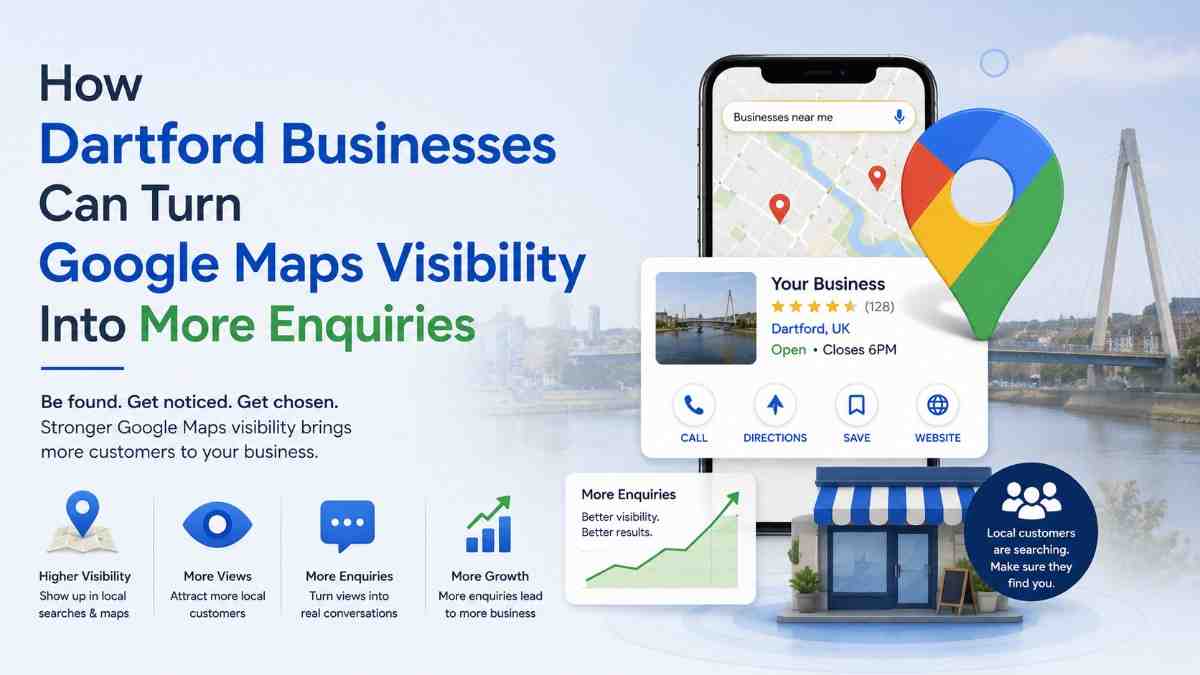
Create or claim the listing, verify it, and populate every field — categories, services, opening hours, and high-quality photos. Google Business Profile remains the single most important factor for map-pack visibility. Follow Google's own guidelines for accurate representation and spam prevention (Google Business Profile guidelines).
2. Standardise NAP and build consistent citations
Make sure the business name, address (including proper postcode format), and phone number are identical across the website, Google listing, directories, and social profiles. Inconsistent citations confuse search engines and fragment local authority. This is particularly important for multi-location businesses serving both Doncaster and Sheffield areas.
3. Local pages and schema
Add location-specific pages (e.g., "Plumbing services in Doncaster" and "Plumbing services in Sheffield") and implement LocalBusiness schema markup with address, geo coordinates, and opening hours. This helps search engines match queries to the correct service area.
4. Reviews and reputation
Ask customers for reviews after a positive interaction, respond professionally to both positive and negative feedback, and showcase testimonials on the site. Review signals influence ranking in local packs and click-through rates.
Practical tips (3–5 actionable points)
- Use consistent address formatting: use the Royal Mail postcode style and include a full street address where possible.
- Add at least 8–12 photos to Google Business Profile: exterior, interior, staff, and common products/services.
- Create two short location pages if serving both cities, each with unique locally-focused content and customer stories.
- Embed a Google Map on each location page and include schema markup for LocalBusiness.
Real-world example: Doncaster cafe expanding visibility in Sheffield
A Doncaster cafe opened a second takeaway location near a Sheffield suburb. Actions taken: claimed two separate Google Business Profile entries (one per site), standardised NAP across listings, added dedicated Sheffield menu and pickup page with schema, collected 40+ local reviews in 3 months, and secured links from local food bloggers. Result: increased map-pack appearances for "coffee near me Sheffield" and a 32% lift in takeaway orders from organic search over three months.
Common mistakes and trade-offs
Common mistakes
- Using slightly different business names across directories (adds citation noise).
- Duplicating a single Google Business Profile for multiple physical locations (violates guidelines).
- Copying generic content across location pages instead of creating unique local content.
Trade-offs
Investing heavily in listings and citations delivers quick trust gains, while content and backlinks provide longer-term organic growth. Small businesses with limited budgets should prioritise a verified Google Business Profile, accurate NAP, and review collection before scaling content or link-building efforts.
Monitoring and measurement
Track local keyword rankings, clicks from map results, phone-call conversions, and directions requests. Use Google Search Console for organic queries and Google Business Profile insights for profile interactions. Regularly audit citations and reviews as part of a monthly checklist.
Core cluster questions
- How to claim a Google Business Profile for a Doncaster business?
- What citations matter most for Sheffield local search?
- How to write a location page that ranks for local queries?
- Which schema fields are essential for LocalBusiness markup?
- How many reviews are needed to improve local pack visibility?
Resources and compliance
Follow platform rules from Google and local search providers when representing addresses and locations. For legal business registration and address verification, consult official UK resources when necessary. The Google Business Profile link above outlines acceptable business representation and verification procedures.
Next steps checklist
- Run the LOCAL MAPS Checklist and fix any missing data issues.
- Claim and verify each location's Google Business Profile and add photos.
- Publish or update two location pages with localised content and schema.
- Start a simple process to request and respond to customer reviews.
- Schedule monthly monitoring of rankings, listings, and reviews.
FAQ
What is local SEO for Doncaster and Sheffield and why does it matter?
Local SEO for Doncaster and Sheffield focuses on improving visibility for searches with local intent within those cities. It matters because local search drives high-intent traffic — users close to a business are more likely to convert to visits or purchases.
How long does it take to see results from Doncaster local search optimisation?
Improvements in visibility can be seen within weeks for map-pack changes (after verification and review collection), while organic ranking gains from content and backlinks typically take 2–6 months depending on competition.
Should a business have separate pages for Doncaster and Sheffield?
Yes — if each location serves different catchment areas, separate pages with unique local content and schema help search engines show the relevant page to searchers in each city.
How important are reviews for Sheffield Google Business Profile success?
Reviews are a key ranking and trust signal. A steady stream of recent, local reviews improves click-through rates and the likelihood of appearing in the local pack.
How to keep citations consistent across directories?
Use the exact business name, address format, and phone number everywhere. Maintain a primary source of truth (website contact page and Google Business Profile) and correct discrepancies on major directories first.