Smart CPC Strategies for Loan Ads: A Practical Local Agency Playbook
-

- Published Updated
- 474 views
Detected intent: Informational
Local agencies that manage finance or mortgage accounts need CPC strategies for loan ads that balance cost, lead quality, and regulatory compliance. This guide explains proven bidding approaches, targeting adjustments, and measurement techniques to improve performance for loan and lending campaigns without relying on vague theory.
- Focus bids on high-intent geos and audience segments, not blanket increases.
- Use a value-based framework (SCORE) to align bids with lifetime value and risk.
- Measure and experiment: conversion tracking, offline attribution, and landing quality matter as much as CPC.
- Watch compliance and ad policy for financial products — link below for reference.
CPC strategies for loan ads: core tactics for local agencies
Start with segmentation: local loan advertising CPCs vary widely by ZIP, device, and product (mortgages, personal loans, HELOCs). Effective CPC strategies for loan ads will prioritize segments with higher conversion rates and better long-term value instead of chasing top-of-funnel volume.
1. Segment bids by local intent and product
Split campaigns by loan type (e.g., refinance vs purchase) and geolocation (radius or postal codes around branch locations). Apply bid modifiers for ZIP codes and neighborhoods that historically produce lower CPA or higher signed-loan value.
2. Use value-based bidding and conversion weighting
Assign conversion values for application starts, completed applications, and funded loans. Where possible, feed lifetime value (LTV) or expected funded amount into bidding strategies (target ROAS or value-based smart bidding) rather than optimizing for raw clicks that inflate cost-per-click with low-intent traffic.
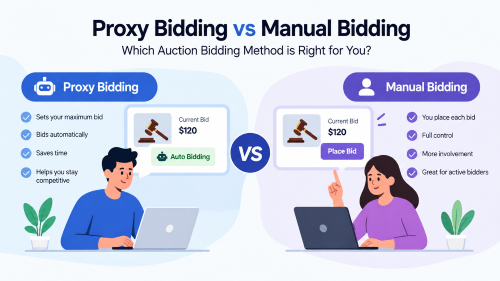
3. Mix manual CPC with smart bidding experiments
For new local accounts, begin with manual or enhanced CPC to collect clean conversion data and identify high-performing segments. Once sufficient conversion volume exists, test automated strategies (target CPA or target ROAS) with narrow scope experiments to avoid large account-wide swings in spend.
4. Dayparting, device, and negative keyword hygiene
Apply ad scheduling for peak inquiry hours, reduce bids on devices with poor conversion rates, and maintain a dynamic negative keyword list to remove irrelevant search terms that waste CPC budget.
SCORE framework: a checklist to apply to every loan ad account
The SCORE framework gives a repeatable process local agencies can use when optimizing CPC for loan ads.
- Segmentation — Separate by product, geo, demo, and intent keywords.
- Conversion value — Map meaningful business values to actions (application start, funded loan).
- Observability — Ensure conversion tracking, offline attribution, and lead validation are in place.
- Rules & experimentation — Use rules, scripts, and controlled A/B tests for bidding changes.
- Execution — Apply bid adjustments, negative keywords, and landing page optimization in prioritized sprints.
Practical implementation checklist
- Tag landing pages and integrate CRM to attribute funded loans back to campaign.
- Set initial geo bid multipliers from branch-level historical conversion rates.
- Assign conversion values and prioritize smart bidding tests only after 20–50 conversions per segment.
- Run 2-week control vs experiment tests when changing bid strategy for a segment.
Real-world example
A local agency managing a mortgage lead funnel split a campaign into two: urban ZIPs with high conversion intent and suburban ZIPs with lower conversion but higher average loan size. Initial manual CPC was $6.50 with a 3% conversion rate in urban zones and $3.20 with 1% conversion in suburban zones. Using the SCORE framework, the agency:
- Raised urban bids by 15% (to $7.48) because the higher conversion rate reduced CPA and produced more funded loans.
- Lowered suburban bids and focused on a lead-gen landing page test to improve conversion rate; after improving form clarity, suburban conversion rose to 1.6% and CPC reductions held CPA steady while preserving volume.
Result: 22% more funded loans without increasing overall spend. The key was prioritizing segments by expected funded value, not raw clicks.
Practical tips for immediate CPC wins
- Prioritize conversion tracking: map application start and funded loan back to campaigns, otherwise CPC optimizations are guesswork.
- Implement geo bid adjustments at ZIP or DMA level and revisit weekly for 8–12 weeks to stabilize statistics.
- Use negative keywords aggressively for low-intent terms (e.g., "loan calculator free") that raise CPC without converting.
- Run small, time-bound automated bidding tests (2–4 weeks) to compare manual CPC vs target CPA on equivalent segments.
Trade-offs and common mistakes
Trade-offs: aggressive bid increases can win more top-of-funnel clicks but raise CPAs; overly conservative bids may reduce volume and miss qualified leads. Common mistakes include:
- Optimizing only for clicks instead of conversion value.
- Applying broad automated bidding across diverse products without segment testing.
- Neglecting offline attribution for funded loans—leads may convert weeks after the click.
Compliance and policy note
Financial product ads must follow platform-specific policies and local regulations. Review ad platform financial-services guidance before scaling campaigns. For example, check the platform policies on advertising financial products: Google Ads financial services policy.
Core cluster questions (use for internal linking or related articles)
- How to calculate target CPA for loan lead campaigns?
- What conversion tracking is required for mortgage ad attribution?
- How to segment loan ad campaigns by ZIP code and locality?
- When to switch from manual CPC to automated bidding for finance accounts?
- How to weigh click cost vs funded loan lifetime value in bidding?
FAQ
What are the best CPC strategies for loan ads?
Best CPC strategies for loan ads prioritize segments with higher conversion-to-funded-loan rates, use conversion value-based bidding when possible, and combine manual CPC for data collection with targeted smart bidding tests. Ensure reliable conversion tracking and use geo and device bid modifiers to concentrate spend where ROI is proven.
How should a local agency set bids by geography and product?
Start from historical data: set higher bids in ZIP codes and products with lower CPA and higher funded-value. Use a tiered approach—high-priority ZIPs, test ZIPs, and low-priority ZIPs—and adjust weekly based on rolling 14–28 day performance. Include distance-based bidding near physical branches for branch-assisted products.
How long before automated bidding has enough data to work?
Automated bidding generally needs 20–50 conversions per target segment in a 30-day window to stabilize. If conversion volume is lower, aggregate similar segments or rely on manual/enhanced CPC while running localized experiments to build data.
How can agencies measure the real value of loan leads?
Integrate CRM and loan origination system (LOS) data to attribute funded loans back to campaign, then calculate expected lifetime value or average funded amount per lead. Use that value in bidding strategies (target ROAS or value-based bidding) rather than treating all conversions equally.
What are common mistakes that increase CPCs without improving results?
Common mistakes include optimizing for clicks instead of conversion value, applying broad automated bidding across heterogeneous products, neglecting negative keyword lists, and failing to track funded loans offline. Correcting these reduces wasted CPCs and improves long-term ROI.