How to Use a Decision Spinner: Picker & Yes/No Wheel Tool Guide
-
- March 07th, 2026
- 239 views

Get a free topical map and start building content authority today.
Introduction
Detected intent: Informational
A decision spinner tool helps pick an option at random or resolve binary choices quickly. This guide explains what a decision spinner tool is, how it works, practical use cases (including a yes/no wheel picker), accessibility and fairness considerations, and step-by-step recommendations for implementing or using one effectively.
- What it is: a visual random chooser (wheel, spinner, or binary yes/no picker).
- When to use: low-stakes decisions, group facilitation, randomized testing, gamification.
- Main considerations: transparency, fairness, accessibility, and configurability.
- Framework provided: SPIN checklist for setup and testing.
What a decision spinner tool does and when to use it
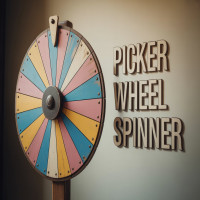
At its core, a decision spinner tool visually or programmatically selects one option from a list. Common forms include a multi-option wheel (roulette-style), a yes/no wheel picker for binary questions, and a weighted spinner that reflects probability differences among choices. Use these tools for quick, low-consequence decisions—like choosing a lunch spot, assigning a presenter order, running a randomized sample, or adding playful interactivity to learning and events.
Core concepts and related terms
Related entities and terms to know: spinner, wheel picker, random chooser, weighted spinner, binary choice, probability distribution, deterministic seed, UI affordance, ARIA accessibility roles, and decision matrix. Understanding these helps compare implementations and anticipate trade-offs between visible randomness (the spinning animation) and verifiable randomness (seeded or cryptographic RNG).
SPIN checklist: a compact framework for set up and verification
Use the SPIN checklist to design, test, and deploy a picker or yes/no wheel tool reliably:
- Set options clearly — label each segment or button and limit options to a cognitive-friendly number (4–10 for a single wheel).
- Probabilities — decide if options are equal or weighted; document the distribution.
- Interaction & accessibility — provide keyboard controls, ARIA labels, and non-visual output for screen reader users.
- Notify & log outcomes — show the result visibly and optionally persist a timestamped log for auditability or replay.
Step-by-step: Use a yes/no wheel picker for a group decision
1. Define the question and stakes
Write a concise yes/no question and clarify whether the result is binding or advisory. Use a yes/no wheel picker for quick preference checks, not for high-stakes decisions requiring deliberation.
2. Configure options and probabilities
For an honest binary choice, set equal probabilities. If a bias is required (for example, to reflect prior agreement), use a weighted spinner but announce the weightings in advance.
3. Provide accessible controls
Include a start button with keyboard focus and a text-only result area. Follow ARIA guidance for interactive widgets to ensure screen reader users can operate and hear results; for best-practice reference, consult the WAI-ARIA Authoring Practices documentation (W3C ARIA Authoring Practices).
4. Run and record
Spin once, show the animation (optional), and reveal the result. Save the outcome to a simple log if reproducibility or audit is needed.
Real-world example
Scenario: A team of five needs to pick a lunch spot. Create a multi-option wheel with five equally sized segments labeled with restaurant names. Follow the SPIN checklist: set options, keep equal probabilities, add keyboard start and result text, and log the timestamp. Spin once; the wheel lands on “Thai Kitchen.” The result is announced, saved to the meeting notes, and used as the lunch choice.
Practical tips for better decisions with spinners
- Limit option count: keep wheels to 4–10 choices to maintain clear segment sizes and avoid perceived unfairness.
- Disclose weights: if some segments are larger or weighted, show the exact probability or percentages alongside the wheel.
- Provide non-visual output: always include plain text results and keyboard controls for accessibility and reproducibility.
- Seed or log for reproducibility: for experiments or contests, record the RNG seed or the full event log so results can be verified later.
- Test randomness: run simulated spins (100–1,000 trials) to verify observed frequencies match expected probabilities within reasonable variance.
Trade-offs and common mistakes
Trade-offs
Visual appeal vs. verifiability: animated wheels are engaging but may mask how results are generated. Use logs or seeded RNGs when verifiability matters. Simplicity vs. flexibility: a simple yes/no wheel is fast and intuitive, while weighted spinners add flexibility but can raise fairness concerns.
Common mistakes
- Not disclosing weights or segment sizes — leads to perceived bias.
- Skipping accessibility — excluding keyboard and screen reader users reduces inclusivity and can violate accessibility requirements in public-facing tools.
- Using spinners for high-stakes decisions — these tools are best for low-consequence choices or as tie-breakers.
- No logging for reproducibility — without logs, contested outcomes cannot be reviewed.
Core cluster questions
- How does a weighted spinner change outcome probabilities?
- When is a yes/no wheel picker appropriate for group decisions?
- How to make a spinner tool accessible to screen reader users?
- What methods verify that a spinner is fair and unbiased?
- Should a spinner be logged or seeded for contests and experiments?
Implementation notes for builders
Technical considerations: use a secure RNG for cryptographic needs, or a standard pseudo-random generator for casual use. Expose the RNG seed and the mapping between segments and probabilities if reproducibility is required. For web implementations, follow the WAI-ARIA Authoring Practices linked above for roles and keyboard patterns; include a plain-text result and consider a print-friendly log view.
Conclusion
A decision spinner tool and yes/no wheel picker are efficient, engaging ways to break ties, choose from options, and add randomness to activities. Apply the SPIN checklist, disclose probabilities, ensure accessibility, and log outcomes when needed. With these practices, spinners remain fair, transparent, and useful for real-world decisions.
FAQ
What is a decision spinner tool and when should it be used?
A decision spinner tool is a visual or programmatic chooser that picks a single option from a set. Use it for low-stakes decisions, tie-breaking, randomized sampling, and light gamification. Avoid relying on it for high-impact decisions without supporting deliberation or governance.
How can a yes/no wheel picker be made accessible?
Provide keyboard controls, ARIA roles, and a readable result area for screen readers. Include plain text output and ensure focus management follows accessibility guidelines to make the widget usable without a mouse.
Are weighted spinners fair?
Weighted spinners are fair if weights are disclosed and the underlying random generator is unbiased. Verify fairness with trial runs and by publishing the probability mapping so users understand the odds.
When is logging spinner results recommended?
Logging is recommended for contests, experiments, audits, or any scenario where reproducibility or dispute resolution may be required. Logs should include a timestamp, the RNG seed (if used), the options, and the selected result.
Can a spin to decide app be verified for randomness?
Yes. Verification involves publishing RNG details or seeds, running many trials to compare empirical frequencies with expected probabilities, and using established statistical tests (chi-square) to detect significant deviations.