Smart Marketing Strategies for Businesses: A Practical Guide to Digital Growth
-

- March 07th, 2026
- 142 views

Get a free topical map and start building content authority today.
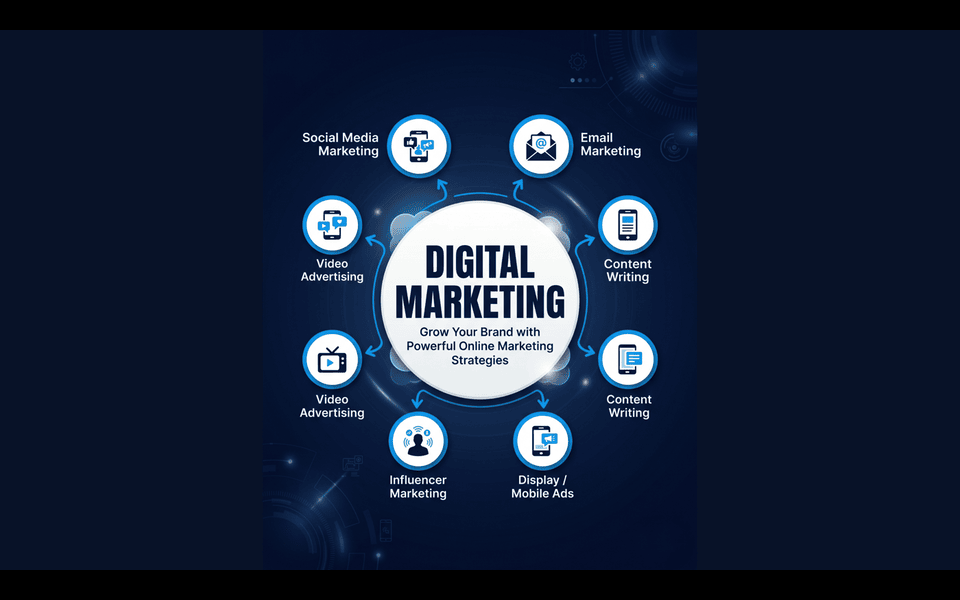
Smart marketing strategies for businesses are essential to attract customers, convert leads, and grow revenue in competitive digital markets. This guide explains which tactics matter, how to measure results, and how to build a repeatable process that scales.
This article presents a practical framework (SMART-M), a digital marketing strategy checklist, and step-by-step actions to plan, implement, and measure smart marketing strategies for businesses. Includes a short scenario, common mistakes, and 3–5 actionable tips for immediate improvement.
Detected intent: Informational
Why smart marketing strategies for businesses drive measurable growth
Effective marketing aligns goals, channels, and measurement so every dollar spent contributes to acquisition, conversion, or retention. Smart marketing strategies for businesses prioritize customer journey mapping, audience segmentation, and data-driven testing to reduce waste and increase lifetime value. Related terms include digital marketing, content marketing, paid media, SEO, conversion rate optimization (CRO), CRM, and customer journey mapping.
Introducing the SMART-M framework: a practical model for execution
The SMART-M framework adapts the familiar SMART goals idea to marketing operations. It provides a repeatable model teams can use to plan, test, and scale initiatives.
- Specific audience and goal definition (who, what metric)
- Measurable KPIs and tracking setup (events, attribution)
- Activation plan (channels, offers, timing)
- Resources & roles (budget, tools, responsibilities)
- Testing cadence (A/B tests, hypothesis backlog)
- -Monitor & optimize (reporting loop, pivot or scale)
The framework pairs with a digital marketing strategy checklist (see next section) to turn strategy into daily tasks.
Digital marketing strategy checklist
Use this checklist to validate a campaign before launch. This is the "do not launch" list that prevents common tracking and audience errors.
- Defined target personas and primary conversion event
- Baseline metrics and realistic KPI targets (traffic, CR, CAC, LTV)
- Tracking implemented (analytics events, UTM parameters, pixels)
- Creative assets and landing pages optimized for the funnel
- Clear budget, channel mix, and test plan with timelines
- Plan for measurement and attribution, including a data backup plan
Step-by-step actions: from plan to performance
1. Clarify outcomes and metrics
Translate business goals into marketing outcomes: lead volume, trial sign-ups, average order value, or recurring revenue. For each outcome, choose one primary KPI and two supporting metrics.
2. Map audience and journey
Define audience segments (by intent, channel behavior, lifecycle) and map the ideal journey. Use audience segmentation to tailor messaging and offers.
3. Set up measurement
Implement analytics events and conversion tracking. Use a primary analytics platform and tie it to paid channels and CRM for attribution. For measurement best practices, consult official guidance such as Google Analytics Help (support.google.com/analytics).
4. Run experiments and optimize
Prioritize tests by expected impact and ease of implementation. Run time-bound A/B tests for landing page elements, ads, and email sequences, then scale winners and iterate on losers.
5. Scale what works, cut what doesn’t
Automate repeatable, profitable campaigns and reallocate budget away from low-performing tactics. Maintain a weekly report and a monthly strategy review to keep the loop active.
Practical tips to improve results now
- Audit top-performing pages and ads to identify highest-impact microtests (headlines, CTA, form length).
- Use cohort metrics (retention, churn) rather than only acquisition metrics to track long-term value.
- Instrument clean tracking before scaling ad spend — incorrect attribution wastes budget.
- Prioritize channels where the target audience already spends time and has intent (search, niche forums, trade publications).
Common mistakes and trade-offs
Common mistakes
- Launching campaigns without proper event tracking or UTM tagging, producing unreliable data.
- Focusing solely on top-of-funnel metrics (traffic) and ignoring conversion quality and retention.
- Over-diversifying channels before mastering one repeatable acquisition path.
Trade-offs to consider
Short-term paid acquisition can produce fast results but increases CAC; investing in organic channels (SEO, content) lowers CAC over time but takes longer to yield returns. Choose a mix that fits cash runway and growth targets. Automation speeds execution but can reduce personalization if not carefully configured.
Short scenario: a small e-commerce store
A small e-commerce brand used the SMART-M framework to reduce checkout abandonment. First, the team set a specific KPI: reduce checkout abandonment rate by 15% in 60 days. Measurement tracked cart events and form drop-off. Tests included simplifying the checkout form, adding a progress indicator, and offering one-click guest checkout. The highest-impact change: removing optional fields in the form, which reduced abandonment by 18% and increased monthly revenue by 12% after scaling. This demonstrates how a focused hypothesis, measurement, and quick tests produce measurable gains.
Core cluster questions for related content
- How to create a digital marketing strategy checklist for small teams?
- What metrics should businesses track for online marketing performance?
- How to prioritize marketing channels when budget is limited?
- Which A/B tests deliver the highest ROI for landing pages?
- How to connect CRM data with website analytics for better attribution?
Measurement and compliance notes
Follow privacy and consent guidelines when implementing tracking. Align analytics and cookies with GDPR, CCPA, or other regional regulations as needed. For attribution clarity, maintain a documented methodology for first-click, last-click, or data-driven attribution so stakeholders can compare results reliably.
Next steps checklist
- Run a 30-day audit of tracking and conversion funnels
- Choose one high-impact channel to optimize this quarter
- Create a 6-week test calendar with prioritized hypotheses
FAQ
How do smart marketing strategies for businesses improve ROI?
Smart marketing strategies improve ROI by aligning channels with measurable goals, reducing wasted spend through testing, and optimizing for lifetime customer value. Tracking and attribution allow teams to stop low-performing tactics and scale high-performing ones, which increases return on ad spend and overall marketing efficiency.
What should be included in a digital marketing strategy checklist?
Include defined goals and KPIs, audience personas, tracking implementation, creative assets, budget and channel plan, a testing roadmap, and measurement/attribution rules.
How long does it take to see results from smart marketing strategies?
Results vary by channel and business model. Paid campaigns can show early signals within days, while SEO and content-driven approaches usually take 3–6 months to show sustained improvement. Use leading indicators (click-through rates, lead quality) to evaluate early progress.
What tools are needed to run these strategies effectively?
Typical tools include a web analytics platform, a tag manager, a CRM, an email platform, landing page or CMS tools, and an experimentation platform. The exact stack depends on scale and budget.
How should small businesses prioritize marketing strategy steps?
Prioritize by impact and feasibility: fix measurement first, then optimize the highest-converting channel, run focused tests, and gradually expand to complementary channels once a repeatable acquisition path is proven.