5D Massage Chairs Explained: The Next Step Beyond 4D
-

- August 31st, 2026
- 3,236 views
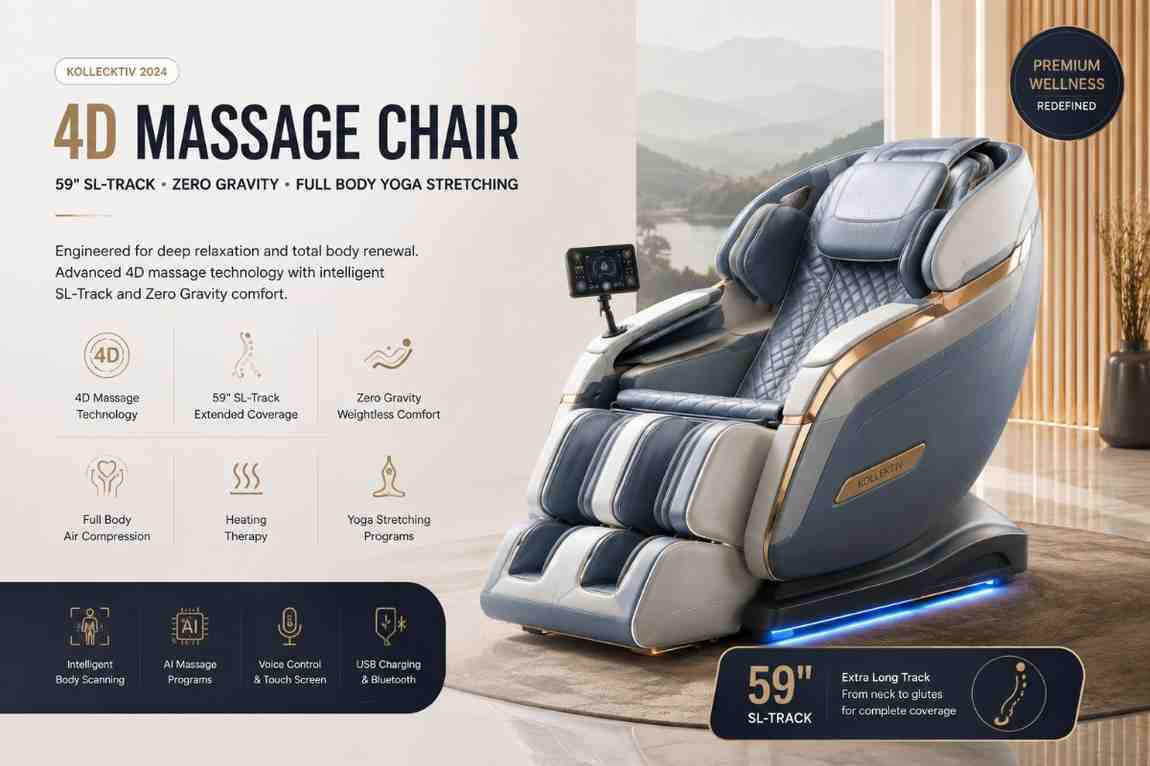
For years, "4D" was the top of the massage chair hierarchy — the label reserved for the most advanced roller technology on the market. Lately, though, a new term has started showing up on flagship models: 5D. It's a legitimate next step in roller engineering, not just a marketing refresh, and understanding what it actually adds helps explain why flagship-tier chairs built around it tend to sit at the very top of the price range.
This guide breaks down what 5D technology actually means, how it builds on 4D rather than replacing it, and what else typically comes bundled with a genuine 5D massage chair.
From 2D to 5D: How Roller Technology Got Here
Each generation of massage chair rollers added a real, distinct capability rather than just a rebranded label:
- 2D rollers move up/down and left/right along the track, applying constant, unchanging pressure throughout a session.
- 3D rollers add a third axis — depth — letting the rollers push in and out to adjust firmness.
- 4D rollers add dynamic changes in speed and rhythm during the massage, closer to how a human hand naturally varies pace and pressure rather than repeating a fixed pattern.
- 5D rollers build directly on 4D, typically pairing that dynamic movement with AI-driven, real-time body sensing — meaning the chair doesn't just vary speed and rhythm on a pre-set program, but actively adjusts based on live feedback about your specific body as the session runs.
In practice, "5D" on a genuine flagship chair usually refers to an AI-powered massage mechanism combined with real-time body sensing, rather than a single new mechanical axis the way 3D and 4D each represented. It's less about a new direction of movement and more about the system becoming responsive rather than purely programmed.
What Makes a 5D Massage Chair Different Day to Day
Real-time body sensing changes how personalized the massage actually feels. Rather than running a fixed program regardless of who's sitting in the chair, a 5D system with dual-side intelligent health detection can read positioning and adjust pressure and targeting in the moment, rather than relying entirely on a body scan taken once at the start.
AI-powered adjustment reduces the "generic program" feeling. Because the system is actively responding rather than just executing pre-set instructions, sessions tend to feel less like a repeating mechanical routine and more like the massage is adapting to what your body actually needs on that particular day.
It typically comes paired with the most complete hardware in a lineup. Flagship chairs built around 5D technology tend to include the longest SL-tracks (often 57 inches or more), the highest airbag counts (30+), and the most extensive program libraries in a manufacturer's catalog, since the technology is generally reserved for top-tier models.
What Typically Comes Bundled With 5D Chairs
5D roller technology rarely appears as a standalone upgrade — it's usually the centerpiece of a broader flagship feature set:
- Extended SL-tracks, frequently in the 57-inch range, giving the massage mechanism enough length to properly reach from the neck down through the glutes and hamstrings.
- High-density airbag systems, often 30+ cells, covering the shoulders, arms, hips, calves, and feet for compression that complements the roller work rather than leaving gaps.
- Multi-stage zero gravity, commonly offering three or more distinct recline positions rather than one fixed angle.
- Health detection features, such as heart rate and blood oxygen sensing, that feed into how the AI adjusts the session.
- Deep stretch and yoga-style programs, made possible by the extended track and more sophisticated program logic that comes with this tier.
- Premium extras like wireless charging, voice control with dozens of recognized commands, and touchscreen interfaces, which tend to be standard at this level even though they're not directly related to the massage mechanism itself.
4D vs. 5D: A Practical Comparison
| Feature | 4D | 5D |
|---|---|---|
| Movement | Dynamic speed and rhythm | Dynamic speed and rhythm plus real-time responsiveness |
| Personalization | Program-based, often with body scan at start | AI-adjusted during the session using live sensing |
| Typical track length | Extended SL-track | Longest SL-tracks in a manufacturer's lineup (57"+) |
| Typical airbag count | 20–34 | 30–34+ |
| Typical tier | Mid-range to luxury | Flagship |
| Typical price | $2,500–$6,000 | $6,000–$9,000+ (often discounted significantly during sales) |
Is 5D Worth It Over a Well-Equipped 4D Chair?
For most users, a strong 4D chair with a long SL-track and a solid airbag count covers the large majority of what people actually want from a massage chair. The added value of 5D shows up most clearly for a specific type of buyer:
Buyers who use their chair daily and want it to feel less repetitive over time. Since the AI component adjusts based on real-time input rather than a fixed script, sessions on a 5D chair tend to stay feeling responsive even after months of regular use.
People managing more complex or chronic physical issues. Real-time body sensing and health detection features can be genuinely useful for tracking how a session is affecting the body, particularly for users managing ongoing back or joint issues who want more than a generic program.
Anyone treating the purchase as a true flagship, long-term investment. 5D chairs are almost always paired with the manufacturer's best overall build — longest warranty, highest-grade materials, and most complete feature set — making them a reasonable pick for someone who wants the best available rather than the most cost-efficient option.
For occasional users or first-time buyers on a tighter budget, a mid-range 4D chair is often the more sensible starting point, with room to upgrade to 5D later if daily use becomes the norm.
Common Misconceptions About 5D Massage Chairs
"5D just means more intensity."
Like 4D before it, 5D isn't primarily about strength — it's about responsiveness and personalization. A 5D chair can deliver a gentle, relaxing session just as effectively as an intense one; the AI and real-time sensing apply across the full intensity range.
"Any chair labeled 5D has the technology to back it up."
As with 4D before it, the term has started appearing more loosely in marketing. It's worth checking for specific mentions of AI-powered mechanisms or real-time body sensing in the actual feature list, rather than assuming the label alone guarantees genuine 5D functionality.
"5D chairs are only for people with serious back problems."
While the technology does offer real benefits for managing chronic issues, it's equally suited to anyone who simply wants the most responsive, least repetitive massage experience available, regardless of whether they have a specific medical concern.
FAQ
What does 5D mean in a massage chair? It typically refers to an AI-powered massage mechanism combined with real-time body sensing, building on 4D's dynamic speed and rhythm by adding live responsiveness during the session rather than relying solely on a pre-set program.
Is a 5D massage chair better than a 4D one? For most users, a well-equipped 4D chair covers the majority of practical needs. 5D adds real-time responsiveness and typically comes with the most complete flagship feature set, which matters most for daily users or anyone managing more complex physical needs.
How much does a 5D massage chair typically cost? Flagship 5D chairs generally list between $6,000 and $9,000, though seasonal sales can bring this down significantly — sometimes to well under half the original list price.
Do 5D massage chairs use body scanning? Yes, typically in an expanded form — many include dual-side intelligent health detection and real-time sensing, going beyond the single initial body scan common on standard 4D chairs.
What track length is common on 5D massage chairs? Flagship 5D models frequently feature SL-tracks around 57 inches, among the longest available, allowing the massage mechanism to reach further down toward the glutes and hamstrings.
Is 5D technology worth the extra cost for occasional use? For occasional use, a mid-range 4D chair often provides comparable practical value at a lower price. The benefits of 5D tend to compound with frequent, regular use.
Final Thoughts
5D massage chair technology represents a real evolution beyond 4D — not a new axis of movement, but a shift toward AI-driven, real-time responsiveness that adapts to your body during the session rather than just running a fixed program. It's most valuable for daily users and anyone who wants the most complete, flagship-level feature set available, while a well-equipped 4D chair remains a perfectly reasonable choice for lighter or occasional use.
Originally published on:
https://kollecktiv.com/product/kollecktiv-2024-4d-massage-chair-59-sl-track-zero-gravity-full-body-yoga-stretching/