Buying Agricultural Land in Gujarat: What Buyers Need to Know
-

- Published Updated
- 2,176 views
Quick Answer :
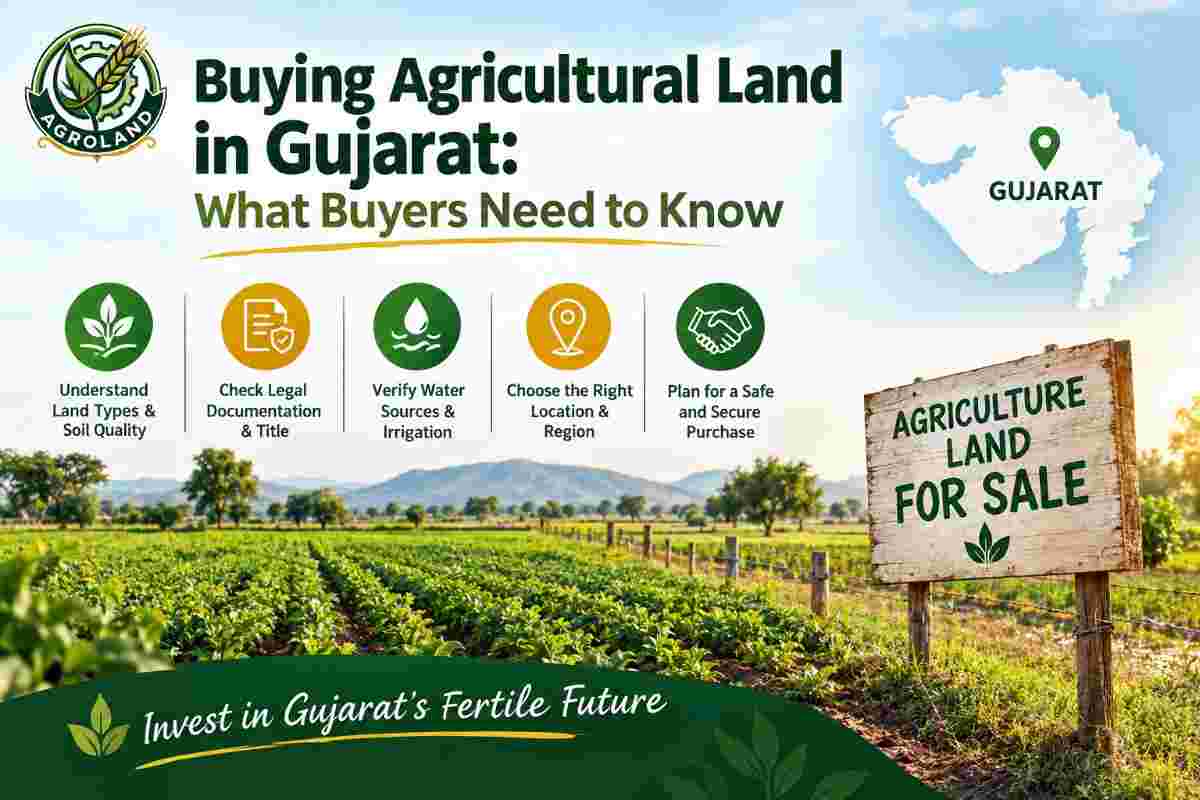
Agricultural land in Gujarat offers opportunities for farming, rural ownership, and long-term property investment, but buyers should complete legal and physical due diligence before purchasing. Location, soil quality, water availability, land records, buyer eligibility, and access to roads and markets are key factors when evaluating agricultural property.
Why Is Gujarat Attractive for Agricultural Land Investment?
Gujarat is an important agricultural state with diverse soils, irrigation facilities, a varied climate, and an established farming economy. The state supports crops such as cotton, groundnut, wheat, cumin, castor, fruits, and vegetables, with agricultural conditions varying considerably between regions. Soil types include black, alluvial, sandy, and other regional soils, making some areas more suitable for particular crops than others. Irrigation may come from canals, wells, borewells, reservoirs, farm ponds, and other local sources, but buyers should verify the actual water availability of each property. Government initiatives related to irrigation, agricultural infrastructure, mechanization, technology, and farmer support also contribute to the state’s agricultural environment. For people researching agriculture land for sale in Gujarat, the most important consideration is not simply the size or price of the property but whether its location and resources match the intended agricultural use.
What Legal Checks Are Required Before Buying Agricultural Land in Gujarat?
Buyers should verify ownership, revenue records, land classification, encumbrances, and their eligibility before purchasing agricultural land in Gujarat. The 7/12 extract, commonly referred to as a Record of Rights document, is an important revenue record containing information associated with a parcel of land. Buyers should also examine relevant mutation entries, survey records, title documents, and available information concerning mortgages, disputes, tenancy claims, or government restrictions. Agricultural land cannot automatically be used for residential or commercial purposes, and applicable non-agricultural conversion permissions must be checked if a different land use is intended. Buyer eligibility is also important because Gujarat’s agricultural land laws can impose restrictions depending on the purchaser and circumstances of the transaction. NRIs and other buyers who may have specific eligibility questions should obtain professional legal advice and verify the current requirements with the appropriate authorities. Completing these checks before signing an agreement or making a major payment can substantially reduce avoidable legal and financial risks.
Which Regions Are Popular for Agricultural Land in Gujarat?
Popular agricultural areas include parts of North Gujarat, Central Gujarat, Saurashtra, and South Gujarat, although the suitability of individual properties varies within every district. Mehsana, Gandhinagar, Ahmedabad, and Kheda are examples of areas that may appeal to buyers because of established agricultural activity and connectivity to urban or commercial centers. Rajkot, Junagadh, and Amreli in Saurashtra also contain extensive agricultural areas supporting different farming activities according to local soil, rainfall, and irrigation conditions. Parts of South Gujarat benefit from higher rainfall and established agricultural activity, while specific locations may be suitable for horticulture and other crops. Buyers should compare individual properties based on water resources, soil characteristics, road connectivity, electricity, nearby markets, and land records rather than choosing a property only because of its district. Those looking to buy and sell farmland in Gujarat can compare available properties while keeping these location-specific factors in mind. Agricultural Property Listings
What Should You Check Before Buying Agricultural Land?
Before purchasing agricultural land, buyers should evaluate both the property’s practical condition and its legal documentation. The following key points can help with the initial evaluation:
Water Availability: Check borewells, wells, canals, farm ponds, and the reliability of the available water source.
Soil Quality: Consider soil testing to understand fertility, pH, salinity, drainage, and suitability for intended crops.
Land Records: Verify the 7/12 extract, ownership details, mutation entries, survey records, and title documents.
Road and Market Access: Check connectivity to roads, nearby markets, towns, and essential agricultural services.
Boundary Verification: Physically inspect the property boundaries and compare them with official survey and revenue records.
Legal Eligibility: Confirm that the buyer is legally eligible to purchase agricultural land and check applicable restrictions or conversion requirements.
Finding the Right Agricultural Property in Gujarat
The right agricultural property should combine clear documentation with suitable land conditions, reliable access, and resources appropriate for its intended use. Buyers should compare properties based on location, size, water availability, soil quality, road connectivity, legal status, and applicable land-use rules rather than relying only on the asking price. A transparent property-search process can make it easier to view agricultural land listings and identify properties that match specific requirements. View Agricultural Land Listings Before completing a transaction, buyers should independently verify ownership, eligibility, boundaries, encumbrances, and relevant permissions with qualified professionals and official records. Careful research is particularly important for high-value purchases and for buyers who may have specific legal eligibility requirements. By combining reliable property information with proper due diligence, buyers can approach agricultural land purchases in Gujarat with greater clarity and confidence.
Frequently Asked Questions
Can anyone buy agricultural land in Gujarat?
Not necessarily. Eligibility can depend on the buyer’s status and applicable Gujarat land laws, so purchasers should confirm their legal eligibility before proceeding.
What is a 7/12 extract?
The 7/12 extract is an important land revenue record containing information associated with a parcel, including recorded ownership and cultivation-related details. Buyers should review it alongside other relevant title and revenue documents.
Can agricultural land be converted into residential or commercial land?
Agricultural land cannot automatically be used for residential or commercial purposes. The applicable non-agricultural conversion permissions and local planning requirements should be verified before changing the land’s use.
What should I check before buying farmland?
Check the title and revenue records, water source, soil quality, road access, electricity, physical boundaries, land classification, encumbrances, and buyer eligibility. Professional legal verification is recommended before completing the transaction.