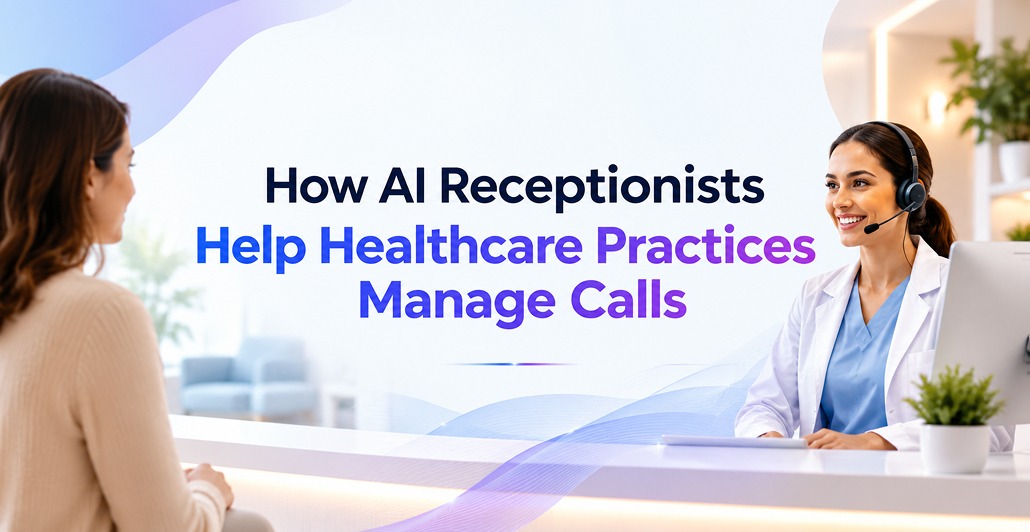
How AI Receptionist Help Healthcare Practices Manage Calls
-

- Published Updated
- 7,671 views
Introduction
In healthcare, practices deal with this whole pile of phone calls every single day, kinda like that appointment thing, medication refill requests, patient questions… and then the follow up side of it too. Staying on top of that fast back and forth is kinda a big deal if they want decent patient care , and also if they want the office to keep running pretty smooth. But most days the front desk crew is already stretched thin, calls keep getting bigger and bigger. So yeah, they end up missing calls, people stuck on hold forever, and patients start getting way more annoyed. That’s where an AI Receptionist slides in. When the routine messages get automated, healthcare providers can make the patient feel more “looked after”, while also shrinking the admin workload, which honestly matters a lot.
The Bigger Issue with Patient Calls
Healthcare orgs have their own communication chaos going on, because patients usually want answers fast, and they want the details to be right too. During busy hours the reception team is doing several things at once , like speaking with patients in person, and also managing incoming phone calls. Then delays happen, and those delays kinda mess with satisfaction plus day to day efficiency. Because of that, a lot of providers end up reading through AI Receptionist Reviews, trying to get a real sense of what AI based communication can do for these rising demands… in a more steady way.
24/7 Support, even when the office is closed
Patients don’t only need help during “normal” hours. Sometimes they need info, want to schedule an appointment, confirm office hours, or just leave a message for the right clinician. If phone calls go unanswered it creates frustration , and it can also mean they miss the chance to connect early. With an AI Call Assistant, round the clock support becomes actually doable, and patients still get basic info plus options to communicate, without waiting around for someone to become available. This kind of always-on access can help practices improve service, without automatically hiring more staff.
Less missed calls, fewer lost chances
A missed call isn’t really “just” a missed call. It can turn into a missed appointment, or a delayed conversation that should have happened earlier. If the practice can’t respond quickly enough, the patient may switch to someone else. Or they get unhappy , which is not great for long term trust. An AI Phone Call system can answer right away, capture the important details, and then funnel the request to the right department when it fits. In the end, patients get timely attention, and nothing important slips through the gaps, especially during peak call times.
Scheduling appointments without burning the day away
Scheduling appointments is honestly one of the most time consuming reception tasks. People constantly call about bookings, cancellations, or reschedules , and front desk staff can lose huge chunks of the day doing that. An AI Receptionist can handle a lot of it on autopilot, especially when it connects with scheduling systems, so patients can book sooner with less friction. That lowers the admin load , cuts scheduling mistakes, and helps keep the whole patient experience feeling smoother.
Helping front desk staff do more meaning ful stuff, kinda
Front desk receptionists do more than just picking up the phone, it’s also checking in patients, updating chart notes, and making sure clinicians are in the right loop. But when the phones keep interrupting everything , productivity kind of slips and stress stacks up fast. That’s where AI Receptionist Reviews usually highlight something crucial , these tools can help the team shift toward higher value work instead of doing the same basic “quick question” over and over all day. When it works well, the whole practice starts to feel more coordinated , and patient care also seems to move smoother
Patient experience that feels better , not harder
For healthcare orgs, patient satisfaction really matters a lot , maybe more than people assume. Long hold times, plus calls that never get answered the way patients expect, can make the practice feel oddly disconnected. An AI Call Assistant can improve that by responding right away, cutting down wait time, and keeping communication a bit more steady. Patients usually like fast access to the correct info, and practices can end up with stronger engagement, plus a better rapport with the people they serve, week after week, month after month.
Managing high call volumes during busy periods
Healthcare practices tend to see these random spikes in call volume when flu season shows up, during public health moments, or when the clinic hours are just extra packed. Human reception teams can sort of get overloaded real fast when they’re trying to handle multiple chats at once, and then it all snowballs into this messy backlog. An AI Phone Call system can manage a lot of calls simultaneously, without dropping service quality in the process. That scalability matters, because patients still need quick, clear answers even when demand is unusually high and no , the phones aren’t magically going to stop ringing.
Supporting accurate information delivery
In healthcare, accurate information isn’t optional. Patients expect practices to share office hours, appointment details, what services are available ,and the right general guidance, with no awkward blank spaces or half explanations. An AI Receptionist delivers standardized responses using predefined information, which helps cut down misunderstandings, or inconsistent messaging that can happen when different people answer different calls. This kind of consistency also helps build trust, because it’s more dependable guidance every time patients reach out. It’s less “guessing around” and more direct, steady support.
Helping healthcare practices scale efficiently
As healthcare organizations grow, the communication workload usually grows too. Expanding a reception team often means more hiring, more training, and higher operating costs. A lot of administrators look through AI Receptionist Reviews before settling on an option that’s supposed to support long term growth. AI-powered tools can adapt to higher call volumes without needing the same staffing increases, which ends up being a pretty cost-effective route for scaling.
Conclusion
Good call management is kind of like the backbone for really solid patient care, while also keeping day to day healthcare operations running more smoothly. Appointment scheduling, those patient questions, even after-hours support it all sort of, ends up in the center of most things a practice does. Communication kinda lands in the middle of it.
An AI Call Assistant helps take off a big chunk of that pressure that shows up when call volumes get high, by providing quick, steady, and consistent help. And when it’s paired with modern AI Phone Call technology, providers can cut down on missed calls, boost patient satisfaction, and streamline those admin chores. Over time, as more practices adopt digital solutions, the AI Receptionist starts to feel less like a novelty, and more like a must have tool, supporting better experiences for both patients and staff.