How can AI workflow automation help businesses scale without increasing operational workload?
-
- Published Updated
- 34 views
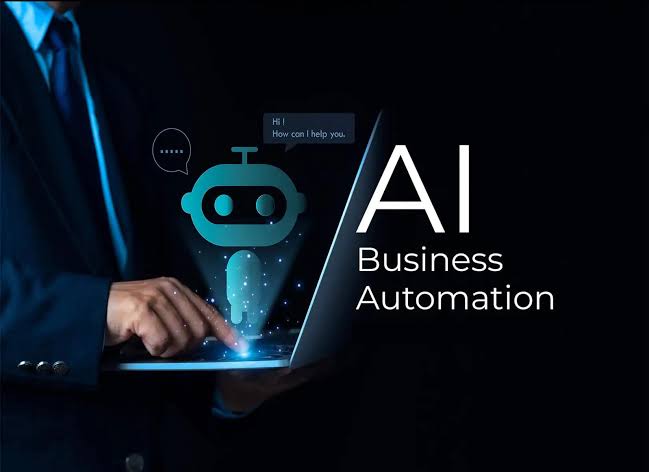
Running a business involves many tasks that need to be completed every day. From responding to customers and managing leads to updating records, preparing reports, and coordinating internal processes, these activities can take up a significant amount of employee time.
As businesses grow, managing these tasks manually can become increasingly difficult. AI workflow automation provides a practical way to simplify repetitive processes, reduce unnecessary manual work, and help teams use their time more effectively.
When implemented correctly, automation is not about removing people from the process. It is about giving employees better tools so they can spend more time on meaningful and productive work.
What Is AI Workflow Automation?
AI workflow automation combines artificial intelligence with automated business processes. It allows software systems to perform repetitive tasks while AI can help analyze information, understand requests, categorize data, generate content, and support certain decisions.
For example, when a customer submits an inquiry through a website, an automated workflow can collect the information, identify the type of request, update the CRM, notify the appropriate employee, and send an initial response.
Instead of an employee handling every step manually, the workflow manages the routine activities while the team focuses on the customer or task that requires human attention.
How Does AI Workflow Automation Improve Business Efficiency?
1. Reduces Repetitive Manual Work
One of the biggest benefits of automation is reducing repetitive tasks.
Employees often spend hours copying information between systems, sending routine emails, updating spreadsheets, scheduling reminders, and creating basic reports.
These tasks may be necessary, but they do not always require human decision-making. AI automation services can help businesses automate suitable processes so employees can focus on higher-value responsibilities.
For example, a sales team can use automation to capture leads from different sources and automatically organize them in a CRM instead of entering every lead manually.
2. Saves Valuable Employee Time
Time is an important business resource. When employees spend less time on routine administrative work, they have more time for activities such as customer communication, strategy, creative work, sales, and problem-solving.
An automated workflow can handle tasks in the background based on predefined conditions. This means employees do not need to manually start every step of a process.
Over time, even small time savings across multiple workflows can make a noticeable difference to overall productivity.
3. Connects Different Business Applications
Businesses often use multiple tools for sales, marketing, customer support, accounting, communication, and project management.
When these platforms do not communicate with each other, employees may need to manually transfer information from one system to another.
This is where AI integration can help.
By connecting different applications, businesses can create workflows where information automatically moves between systems. For example, a new website inquiry can create a CRM entry, notify a salesperson, and trigger a follow-up email without requiring separate manual actions.
4. Improves Customer Response Times
Customers generally expect businesses to respond quickly. However, teams cannot always respond immediately, especially when they receive a large number of inquiries.
An Online AI Chatbot can provide instant assistance for common customer questions. It can share basic information, collect contact details, guide visitors, and direct complex requests to the appropriate team.
This can improve the customer experience while reducing the number of routine questions employees need to handle manually.
For example, a chatbot can answer questions about services, pricing information, business hours, or the next steps for contacting the company.
5. Helps Reduce Human Errors
Manual data entry and repetitive processes can sometimes lead to mistakes. Information may be entered incorrectly, a follow-up may be forgotten, or a task may be missed.
AI workflow automation can standardize repetitive processes and ensure that predefined steps are followed consistently.
For example, when a new lead enters a system, an automated workflow can make sure the lead is recorded, assigned, and followed up according to the company's process.
Automation does not remove the need for human oversight, but it can reduce avoidable errors in routine activities.
The Role of AI-Powered Technology
AI-Powered Technology adds another layer of intelligence to traditional automation.
Basic automation usually follows specific rules. AI can help systems work with information that is less structured, such as emails, documents, customer messages, and support requests.
For example, an AI system can analyze an incoming customer message, identify its topic, and route it to the correct department. It may also summarize the request so an employee can understand the issue more quickly.
This allows businesses to create workflows that are more flexible and useful in real-world situations.
AI Workflow Automation for Different Departments
AI workflow automation is not limited to one part of a business. Different departments can use automation according to their specific needs.
Sales: Automate lead capture, lead qualification, follow-ups, and CRM updates.
Marketing: Automate campaign reporting, content workflows, customer segmentation, and notifications.
Customer Support: Automate ticket classification, common responses, and request routing.
HR: Automate employee onboarding, document collection, reminders, and internal notifications.
Finance: Automate invoice processing, data collection, approval notifications, and reporting workflows.
The right automation depends on the organization's existing processes and goals.
Why Work With an AI Automation Agency?
Implementing automation effectively requires more than simply connecting software tools. Businesses need to identify the right processes, understand how different systems should work together, and determine where human involvement is still necessary.
An AI automation agency can help businesses review their existing workflows and identify areas where automation can provide practical value.
A typical process may include understanding the current workflow, identifying repetitive tasks, selecting appropriate AI tools, integrating existing platforms, building the workflow, testing it, and monitoring its performance.
This approach helps ensure that automation supports the business instead of making processes unnecessarily complicated.
Choosing the Right AI Workflow Automation Services
When considering AI workflow automation services, businesses should focus on practical outcomes rather than simply choosing the newest technology.
Start by identifying tasks that are repetitive, time-consuming, or prone to manual errors. Then consider whether automation can reduce the effort required to complete them.
It is also important to consider how the automation will integrate with existing software and whether employees need to approve certain actions.
A well-designed workflow should be easy to monitor, flexible enough to adapt as the business changes, and capable of delivering measurable improvements.
Build More Efficient Business Processes
AI workflow automation can help businesses improve productivity by reducing repetitive work, connecting applications, speeding up customer responses, and creating more consistent processes.
The goal is not to automate every activity. Instead, businesses should identify the tasks where AI and automation can provide genuine value.
With the right strategy, AI workflow automation services can help employees spend less time managing routine processes and more time focusing on customers, innovation, and business growth.
As AI-Powered Technology continues to develop, businesses have more opportunities to build smarter workflows that make everyday operations simpler, faster, and more efficient.