Airline Fare Monitoring Services for Smarter Revenue Decisions
-

- Published Updated
- 3,771 views
Introduction
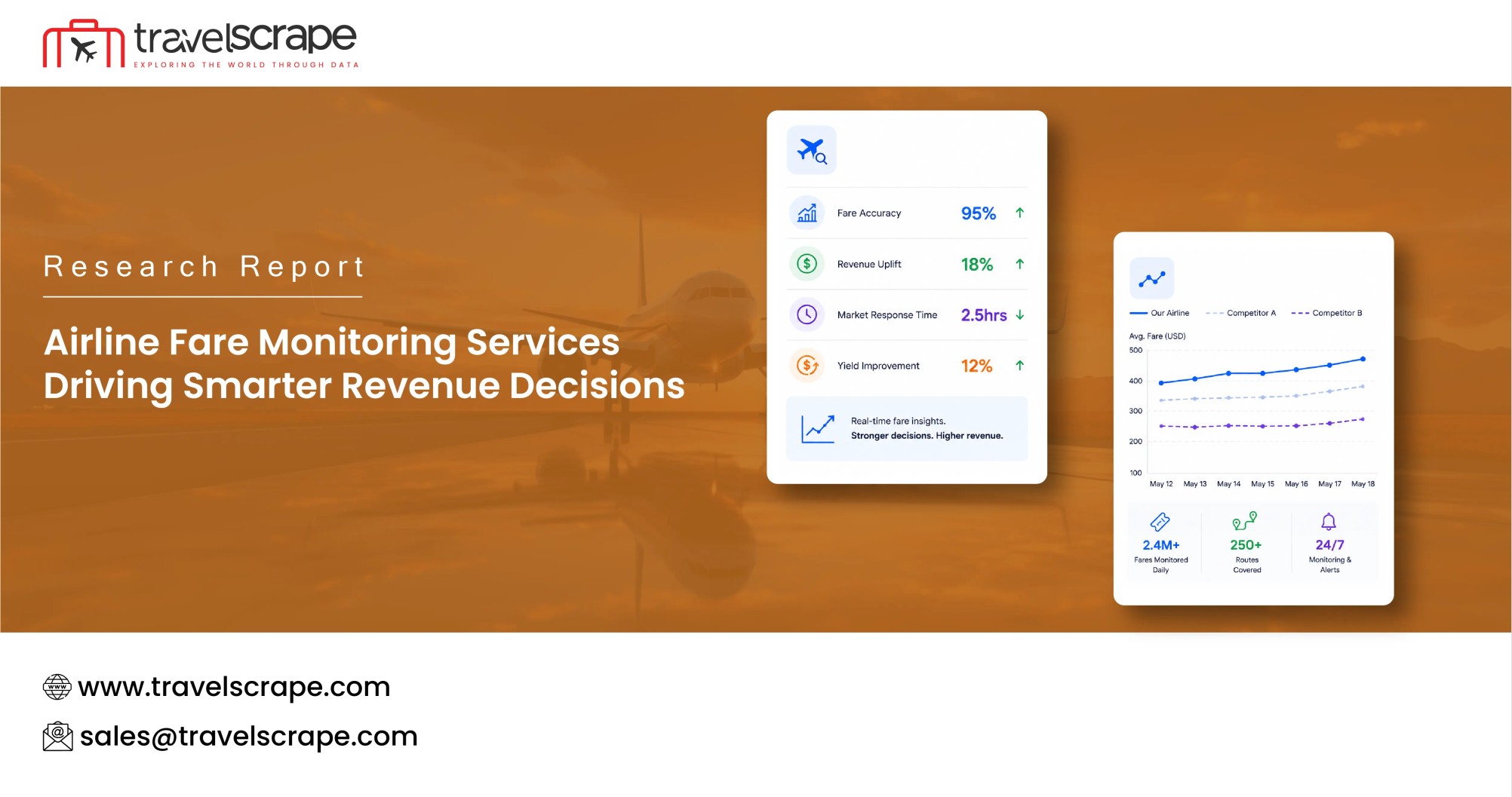
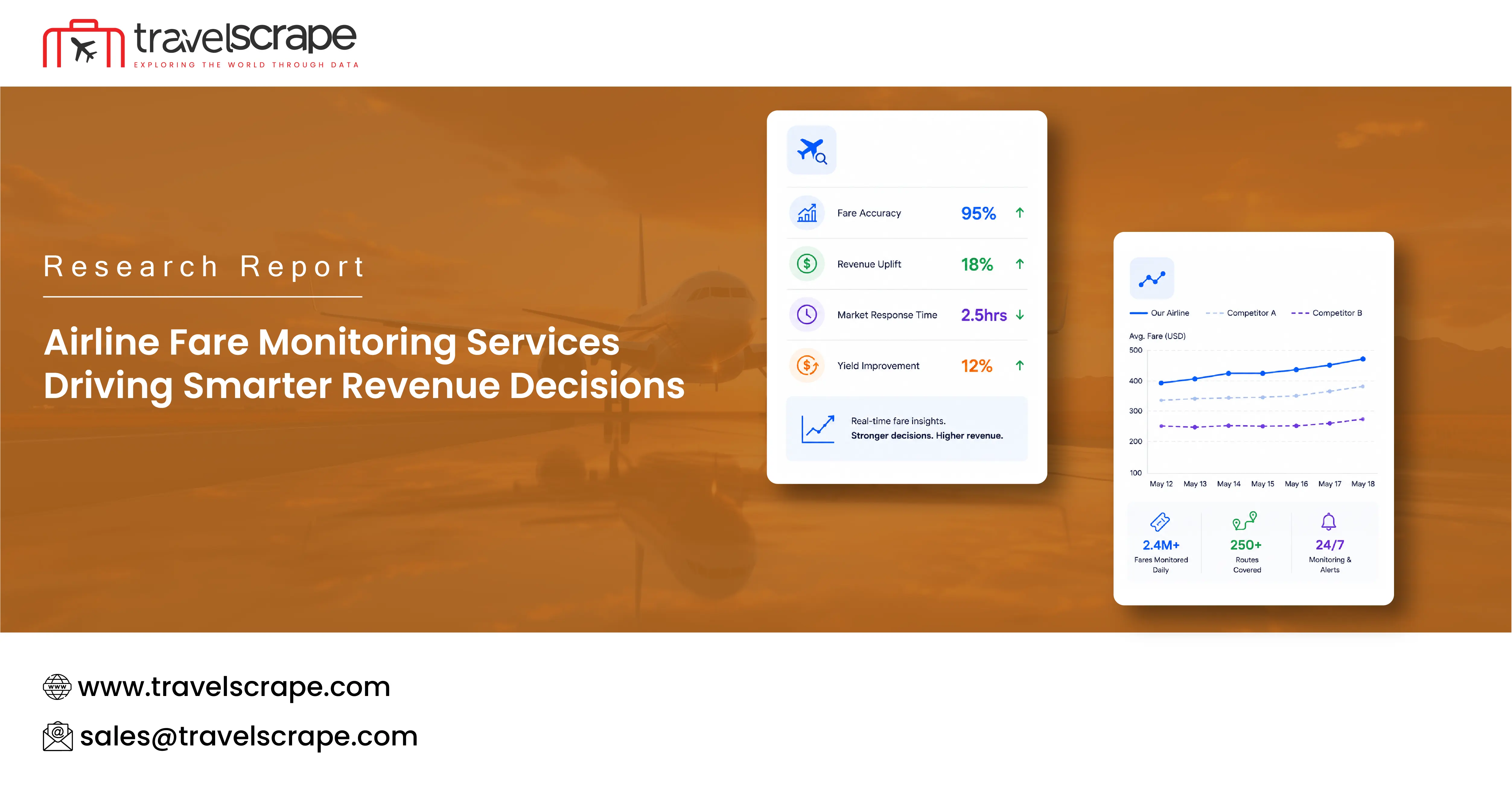
The aviation industry has become one of the world's most dynamic and data-driven sectors, with airfare fluctuating continuously based on demand, seasonality, competition, inventory, booking behavior, fuel costs, and promotional campaigns. Airlines, online travel agencies (OTAs), travel aggregators, corporate travel management companies, tourism boards, and market research firms increasingly rely on Airline Fare Monitoring Services to understand these fluctuations and make informed commercial decisions. By continuously collecting airfare information across multiple booking channels, businesses gain visibility into pricing movements that directly influence customer acquisition, profitability, and market positioning.
Modern airfare intelligence platforms extend beyond simple fare comparisons. They incorporate Price Monitoring capabilities that track route-level fare changes in real time, helping organizations detect promotional campaigns, competitor discounts, fare increases, and inventory shifts before they significantly impact bookings. These insights allow businesses to respond proactively rather than reactively in highly competitive travel markets.
Another essential capability is flight price monitoring, which enables organizations to analyze fare behavior across domestic and international routes over extended periods. Continuous monitoring creates historical datasets that reveal seasonal trends, demand cycles, booking windows, and pricing anomalies, supporting more accurate forecasting and strategic planning.
The Growing Importance of Airline Fare Intelligence
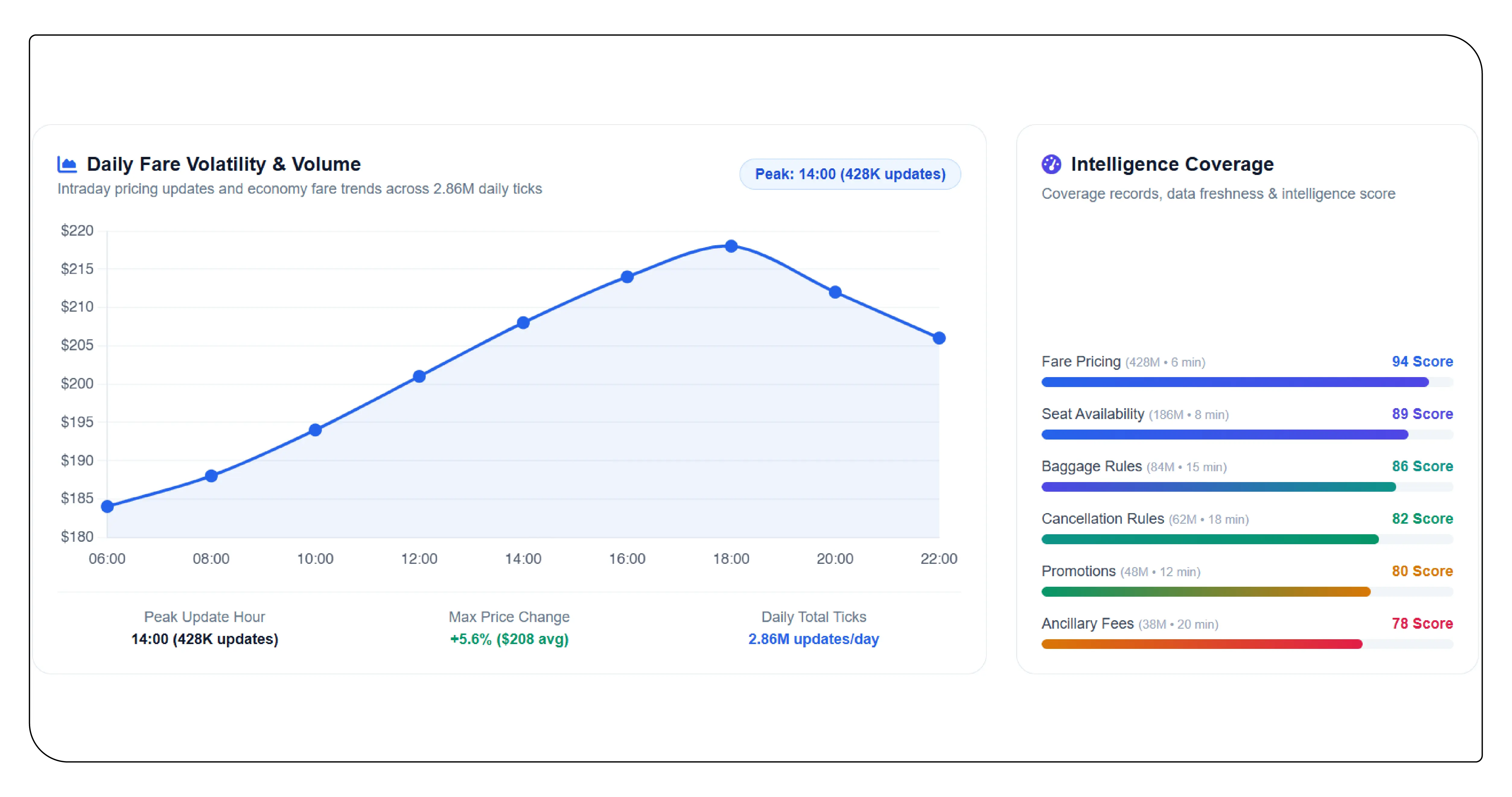
Airfare has become one of the most volatile pricing categories in the travel industry. A single route may experience dozens of fare changes within one day depending on seat availability, booking demand, competitor actions, departure timing, and customer purchasing behavior. Traditional manual monitoring methods cannot capture these rapid fluctuations, making automated fare intelligence systems essential.
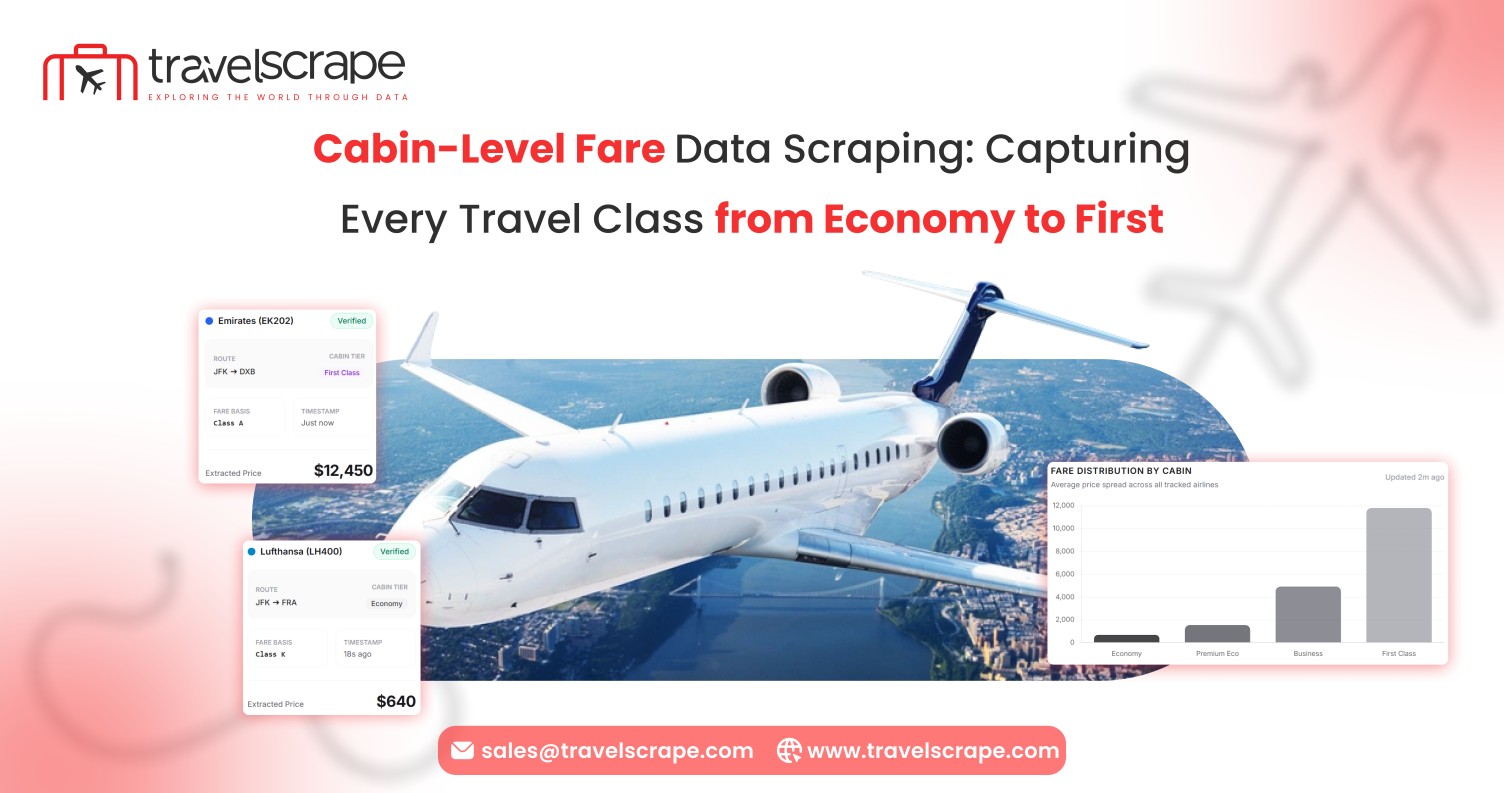
Organizations monitor thousands of airline routes simultaneously, including one-way, round-trip, multi-city, domestic, regional, and international journeys. Fare intelligence platforms collect data across economy, premium economy, business, and first-class cabins while recording baggage policies, cancellation rules, seat availability, taxes, ancillary fees, refund conditions, and promotional discounts.
Historical pricing databases enable analysts to identify long-term market behavior instead of relying solely on current fares. Businesses use these insights to improve pricing strategies, optimize promotions, negotiate supplier contracts, forecast revenue, and evaluate competitor positioning.
Data Sources Used in Airline Fare Monitoring
Modern fare intelligence solutions collect information from airline websites, online travel agencies, global distribution systems, travel comparison portals, metasearch engines, corporate booking platforms, and mobile travel applications. Multiple booking channels often display different fares for identical routes due to regional pricing strategies, loyalty discounts, promotional campaigns, payment offers, and inventory allocation.
Collected datasets typically include airline name, departure airport, arrival airport, flight number, departure time, arrival time, booking class, cabin type, fare category, ticket price, taxes, baggage allowance, cancellation policy, refund rules, remaining seat availability, booking timestamp, currency, promotional discount, loyalty benefits, payment method offers, and booking restrictions.
These continuously updated datasets become valuable resources for market intelligence, operational planning, customer analytics, and commercial forecasting.
Operational Workflow of Airline Fare Monitoring
Airline fare monitoring systems begin by defining monitored routes and travel dates. Automated extraction engines collect pricing information at scheduled intervals ranging from every few minutes to several hours depending on business requirements. The collected information undergoes validation to remove duplicates, normalize currencies, standardize airport codes, and classify fare types.
Historical databases preserve every fare update, enabling organizations to compare current prices with previous values. Analytical dashboards calculate fare volatility, promotional frequency, booking window effectiveness, route competitiveness, and seasonal demand patterns.
Alerts notify analysts whenever predefined pricing thresholds are crossed, allowing rapid commercial responses before competitors adjust their strategies.
Global Airline Pricing Snapshot
| Region | Average One-Way Fare (USD) | Monthly Fare Change (%) | Average Booking Window (Days) | Major Airlines Monitored | Daily Fare Updates | Route Coverage |
|---|---|---|---|---|---|---|
| North America | 268 | 8.4 | 36 | 82 | 1,250,000 | 4,850 |
| Europe | 214 | 7.1 | 42 | 95 | 1,480,000 | 5,620 |
| Asia-Pacific | 238 | 9.8 | 31 | 118 | 1,720,000 | 6,480 |
| Middle East | 352 | 6.7 | 39 | 42 | 620,000 | 1,920 |
| Latin America | 229 | 10.3 | 28 | 57 | 540,000 | 2,140 |
| Africa | 291 | 8.9 | 35 | 49 | 410,000 | 1,580 |
| Oceania | 317 | 7.5 | 44 | 27 | 280,000 | 980 |
The resulting Global Flight Price Trends Dataset helps organizations evaluate long-term fare movements across continents, compare regional competitiveness, and understand the influence of seasonal demand on ticket pricing.
Business Applications Across the Travel Industry
Airlines monitor competitor pricing to optimize yield management strategies and maximize seat revenue. Online travel agencies analyze market competitiveness to display attractive offers while maintaining profitability. Corporate travel managers identify optimal booking periods that reduce employee travel expenses. Tourism boards monitor international accessibility by evaluating airfare affordability across major inbound routes.
Travel insurance providers evaluate pricing behavior alongside booking trends to forecast travel demand. Investment firms monitor aviation performance using pricing intelligence as an indicator of passenger activity and airline competitiveness.
Hotels, cruise operators, and destination marketing organizations also utilize airfare intelligence because flight affordability directly influences tourism demand and occupancy levels.
Competitive Intelligence Through Automated Monitoring
Continuous airline fare tracking services enable businesses to benchmark pricing against multiple competitors across thousands of routes. Organizations identify discount campaigns, seasonal promotions, inventory shortages, and pricing inconsistencies without manually reviewing booking websites.
Automated intelligence highlights market disruptions such as fuel-related fare increases, regulatory changes, airport capacity constraints, weather-related demand shifts, and holiday pricing patterns. Decision-makers receive actionable insights within minutes instead of waiting for manual reports.
Airline Price Change Analysis
Historical fare archives form the foundation of the Airline Price Change Dataset, allowing analysts to compare daily, weekly, monthly, and yearly pricing behavior. Organizations can identify recurring fare cycles before major holidays, school vacations, sporting events, festivals, conferences, and business travel peaks.
Predictive analytics models trained on historical fare changes estimate future pricing behavior based on previous demand cycles, competitor responses, and seasonal booking patterns. These forecasts improve campaign planning and revenue optimization.
Revenue Optimization Through Fare Intelligence
Revenue management teams increasingly depend on airline revenue analytics to balance seat occupancy with ticket profitability. Rather than maximizing passenger volume alone, airlines focus on maximizing revenue per available seat kilometer while maintaining competitive positioning.
Continuous monitoring enables analysts to evaluate fare elasticity, premium cabin demand, ancillary revenue opportunities, upgrade behavior, loyalty program performance, and route profitability. These insights contribute to smarter pricing decisions and improved financial performance.
Market Intelligence for Strategic Planning
Comprehensive airfare market intelligence combines historical pricing, competitor analysis, booking trends, promotional activity, airport connectivity, and macroeconomic indicators into a unified decision-support framework.
Organizations compare regional fare competitiveness, identify underserved markets, evaluate expansion opportunities, and assess emerging travel corridors. Strategic planning becomes significantly more accurate when supported by continuously updated pricing intelligence rather than isolated snapshots.
Route-Level Pricing Performance
| Route | Average Economy Fare (USD) | Lowest Recorded Fare | Highest Recorded Fare | Fare Volatility (%) | Weekly Searches | Monthly Bookings | Average Advance Purchase (Days) | Price Updates per Day |
|---|---|---|---|---|---|---|---|---|
| New York–London | 612 | 389 | 1,148 | 41 | 860,000 | 184,500 | 48 | 36 |
| Los Angeles–Tokyo | 741 | 462 | 1,396 | 46 | 522,000 | 109,800 | 54 | 34 |
| Dubai–Mumbai | 238 | 126 | 482 | 38 | 610,000 | 146,700 | 27 | 42 |
| Singapore–Sydney | 419 | 251 | 735 | 35 | 430,000 | 92,600 | 39 | 31 |
| Paris–Rome | 147 | 69 | 312 | 44 | 515,000 | 138,400 | 23 | 47 |
| Frankfurt–Dubai | 468 | 274 | 889 | 37 | 368,000 | 82,900 | 36 | 29 |
| Delhi–Bangkok | 286 | 148 | 521 | 43 | 455,000 | 116,800 | 26 | 40 |
| Toronto–Vancouver | 331 | 181 | 624 | 39 | 398,000 | 96,500 | 32 | 33 |
| São Paulo–Madrid | 689 | 428 | 1,215 | 45 | 204,000 | 51,900 | 51 | 28 |
| Johannesburg–Cape Town | 154 | 78 | 289 | 36 | 342,000 | 104,300 | 18 | 45 |
These route-level datasets provide organizations with Flight Price Data Intelligence that supports competitive benchmarking, fare forecasting, and long-term network planning.
Demand Forecasting Using Historical Fare Data
Historical pricing combined with booking activity enables advanced flight demand analysis across different travel seasons. Airlines estimate future passenger demand by analyzing previous booking curves, fare elasticity, holiday travel behavior, airport congestion, and competitor pricing strategies.
Machine learning models detect relationships between airfare movements and booking conversions, enabling more accurate demand forecasting. This information assists airlines in adjusting capacity, scheduling additional flights, reallocating aircraft, and optimizing seat inventory.
Route Intelligence Through Automated Data Collection
Modern airline route price scraping technologies collect fare information across thousands of origin-destination combinations simultaneously. Automated systems monitor fare changes for multiple travel dates, booking windows, cabin classes, and passenger combinations while maintaining standardized datasets suitable for business intelligence platforms.
These datasets enable organizations to compare route competitiveness, identify pricing anomalies, evaluate promotional effectiveness, and monitor market dynamics across domestic and international aviation networks.
Challenges in Airline Fare Monitoring
Airfare collection presents technical challenges due to dynamic pricing engines, personalized search results, currency localization, anti-bot protections, frequent website updates, promotional campaigns, and rapidly changing inventory. Successful monitoring platforms overcome these challenges through intelligent scheduling, data validation, standardized normalization, scalable infrastructure, and continuous quality assurance.
Maintaining historical consistency is equally important because pricing intelligence becomes significantly more valuable when organizations can compare current market conditions with multiple years of historical observations.
Conclusion
The aviation industry continues to evolve toward increasingly dynamic and data-driven pricing strategies, making continuous airfare intelligence indispensable for airlines, travel agencies, corporate travel managers, tourism organizations, and market researchers. Real-time monitoring provides visibility into competitor pricing, promotional activity, seasonal demand, booking behavior, and market volatility while enabling faster and more informed commercial decisions.
Comprehensive fare datasets improve forecasting accuracy, strengthen revenue management, support strategic planning, and enhance competitive positioning across global travel markets. As artificial intelligence, predictive analytics, and automation continue transforming aviation analytics, organizations that invest in reliable airfare intelligence will gain substantial advantages in pricing optimization, operational efficiency, and customer acquisition. Advanced Airline Data Scraping solutions will remain the foundation for delivering accurate, scalable, and actionable airline pricing intelligence across the global travel ecosystem.
Ready to elevate your travel business with cutting-edge data insights? Scrape Aggregated Flight Fares to identify competitive rates and optimize your revenue strategies efficiently. Discover emerging opportunities with tools to Extract Travel Website Data, leveraging comprehensive data to forecast market shifts and enhance your service offerings. Real-Time Travel App Data Scraping Services helps stay ahead of competitors, gaining instant insights into bookings, promotions, and customer behavior across multiple platforms. Get in touch with Travel Scrape today to explore how our end-to-end data solutions can uncover new revenue streams, enhance your offerings, and strengthen your competitive edge in the travel market.