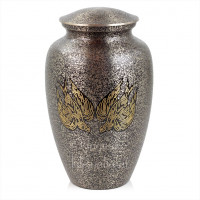
Memorial Urns NZ: How to Choose the Right Urn — Types, Sizes & Laws
-
- March 10th, 2026
- 482 views

Get a free topical map and start building content authority today.
A thoughtful urn choice matters. This guide explains how to compare memorial urns New Zealand options by material, capacity, legal considerations and environmental impact so decisions match family wishes and local rules. It covers biodegradable and traditional choices, common sizes, and a named checklist to make selection practical.
Detected intent: Commercial Investigation
memorial urns New Zealand: types, materials, and how to choose
Choosing memorial urns New Zealand buyers will encounter relies on three practical decisions: purpose (keepsake, burial, scattering, display), material (durability and style), and legal or site rules (cemetery plots, marae customs, or public land). This section lays out the main options and what they mean for use and care.
Common urn materials and what they imply
- Metal (brass, bronze, stainless steel): Durable for burial or display; finishes vary. Metals are good for long-term storage but often heavier and pricier.
- Ceramic and glass: Decorative, suitable for display or indoor storage. Fragile—handle with care and consider a protective base if displayed.
- Wood: Warm aesthetic; finishes range from natural to lacquered. Biodegradable options exist but check construction (some wood urns use adhesives that slow breakdown).
- Biodegradable urns and scattering options: Designed for water or earth return; materials include salt, paper, potter's clay or seed-embedded composites. Confirm decomposition claims and local rules before scattering.
- Columbarium niches and vault-compatible urns: Niches often have size constraints and may require specific materials or seals—check the facility's specifications.
Capacity and urn sizes
Capacity is typically measured in cubic inches or litres. A standard adult cremation often fits into an urn of roughly 3.5–4.5 litres (approximately 200–220 cubic inches). For families wanting partial keepsakes or multiple urns, look at keepsake sizes (small portions) or companion urns sized for two sets of ashes.
How to choose: the C.A.R.E.S. urn selection checklist
Use the C.A.R.E.S. checklist to make a clear choice:
- Capacity — Confirm the required size (full adult, companion, or keepsake).
- Apppearance — Match material and finish to the intended display or memory practice.
- Regulations — Check cemetery, columbarium, marae and public land rules (including scattering).
- Environmental impact — Decide if biodegradable urns New Zealand options are important and verify compostability claims.
- Security & Sealing — Pick appropriate closures or seals for burial, transport, or scattering.
Real-world example
Scenario: A family intends to scatter most ashes at sea and keep a small portion at home. Applying the C.A.R.E.S. checklist: (C) choose one scattering urn sized for open-water dissolution plus a 250cc keepsake; (A) pick a water-soluble urn for scattering and a small polished wooden keepsake for display; (R) consult maritime rules and local council for sea-scattering guidance; (E) confirm the scattering urn's biodegradability; (S) ensure the keepsake has a secure lid for safekeeping.
Practical tips for buying and using urns in NZ
- Measure first: ask the crematorium or funeral director for the exact volume of ashes before ordering a full-size urn.
- Confirm site rules: cemeteries, columbaria and marae may have specific material or size requirements; request written specifications when possible.
- Test a biodegradable claim: seek manufacturer documentation on materials and expected decomposition conditions; avoid vague marketing language.
- Consider a two-step plan: choose a temporary, affordable urn for transport and a final urn for long-term display or burial once preferences are settled.
Trade-offs and common mistakes
Trade-offs:
- Durability vs. aesthetics: Metal and stone last longest but may lack the warm look of wood or ceramic.
- Cost vs. features: Custom work (engraving, insets) raises cost; basic urns can be personalized later.
- Eco-friendliness vs. permanence: Biodegradable urns are better for scattering but are unsuitable for long-term display or cemetery niches that require durable materials.
Common mistakes:
- Ordering an urn without confirming actual ash volume.
- Assuming all biodegradable urns behave the same—some need specific burial depths or water conditions to break down.
- Not checking columbarium niche dimensions or cemetery requirements before purchase.
Legal and site considerations in New Zealand
Rules vary: private land, local council parks, conservation land and marae have different expectations. For scattering or placement on public conservation land, check national park or regional rules—consult the Department of Conservation for guidance on using public conservation land and any permit requirements: Department of Conservation (DOC).
Options for memorialization beyond an urn
Some families pair an urn with a plaque, planted memorial tree, or online memorial. When choosing a living memorial (planting), confirm whether the urn material and decomposition will affect root systems and soil health.
Practical tips (concise)
- Ask the crematorium for an ash volume report before ordering.
- Get measurements for a columbarium niche or burial vault in writing.
- If scattering, confirm local regulations and choose the appropriate biodegradable product.
- Delay custom engraving until after final confirmation of urn and capacity to avoid rework.
Core cluster questions
- What are the main types of memorial urns and their pros and cons?
- How to measure ash volume and choose the right urn size?
- Are biodegradable urns appropriate for sea scattering in New Zealand?
- What do New Zealand cemeteries and columbaria require for urn materials?
- How can ashes be legally scattered or returned to the environment in NZ?
Frequently asked questions
How large are memorial urns New Zealand families typically need?
Most adult cremations require an urn of about 3.5–4.5 litres (200–220 cubic inches). Confirm the exact ash volume with the crematorium and allow margin for companion urns or keepsakes.
Can biodegradable urns New Zealand options be used for sea scattering?
Yes, many biodegradable urns are designed for sea use, but check manufacturer instructions and local maritime or council regulations. Choose urns specified for water dissolution and verify any required distance from shore or permit rules.
What should be checked before buying an urn for burial or a columbarium?
Obtain written dimensions and material requirements from the cemetery or columbarium, confirm sealing needs, and ensure the urn's exterior fits the niche or vault opening.
Is engraving or personalization reversible if plans change?
Engraving is permanent. If plans might change, select a plain urn now and add a personalized plaque or a removable engraved plate later to avoid irreversible decisions.
How to store ashes temporarily if the final urn is delayed?
Use a secure, labelled temporary container provided by the crematorium or a sturdy, sealable box. Store in a cool, dry place away from direct sunlight until the final urn is ready.