How Better Asset Visibility Can Transform Real Estate Property Operations
-

- Published Updated
- 53 views
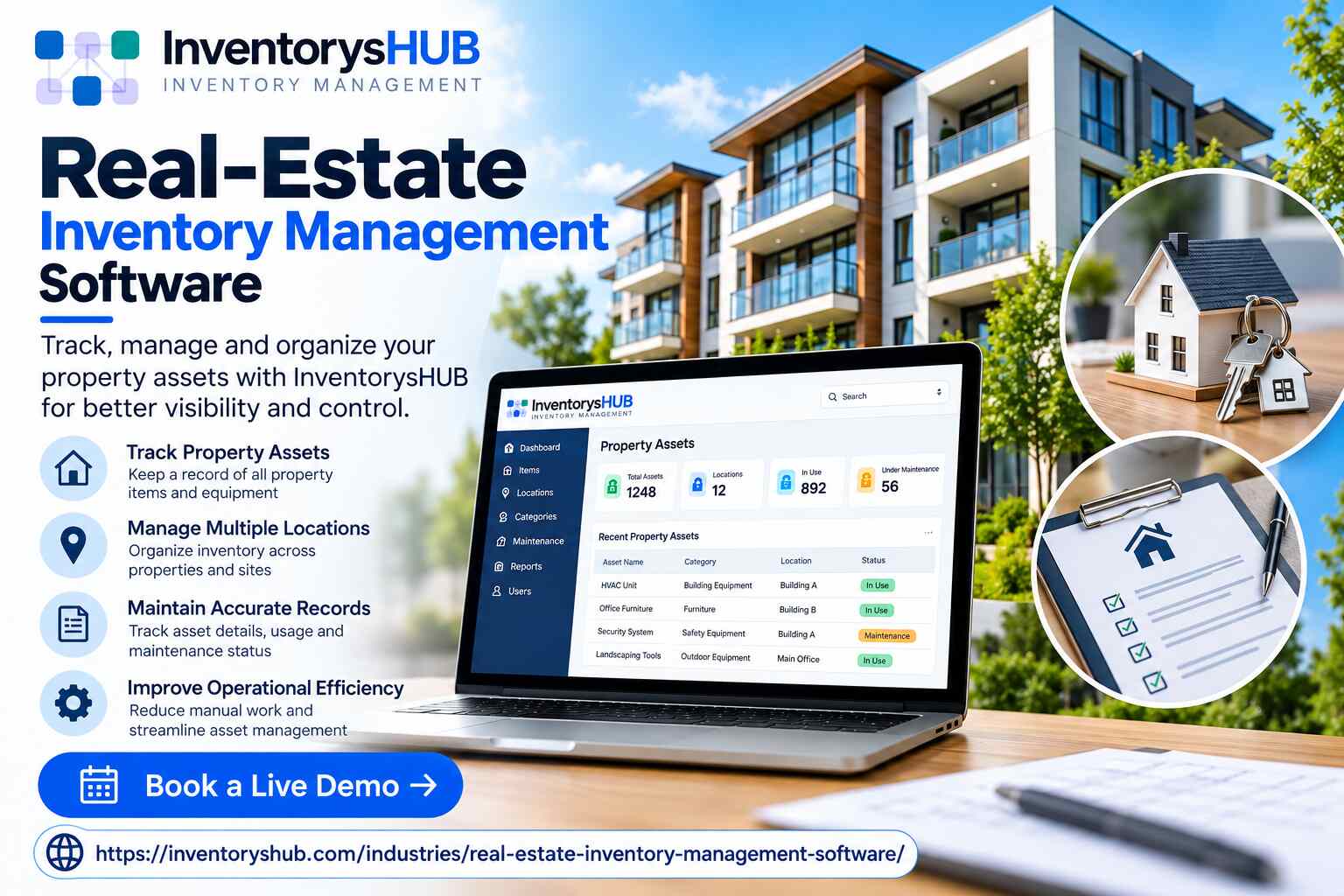
Real estate businesses handle a wide range of resources every day, from furniture and appliances to maintenance tools, electrical supplies, and office equipment. When these assets are spread across multiple buildings, keeping their records accurate can become a challenge. Property managers need a clear understanding of what is available, where it is located, and when it may need attention.
Learn more about Real-estate inventory management: https://inventoryshub.com/industries/real-estate-inventory-management-software/
Managing these resources effectively is an important part of running organized property operations. When inventory information is incomplete or outdated, employees may spend unnecessary time searching for equipment, checking different records, or purchasing items that are already available elsewhere. A consistent inventory process helps businesses make better use of their resources and improve coordination between teams.
Understanding the Challenges of Property Asset Management
Property management involves many responsibilities, including tenant communication, maintenance coordination, inspections, and preparing properties for occupancy. Inventory tracking may appear to be a small task compared with these responsibilities, but it can affect several parts of daily operations.
For example, imagine a property manager preparing an apartment for a new tenant. The team needs to confirm that furniture and appliances are available before the move-in date. If inventory records are outdated, employees may need to inspect storage areas or contact other locations to verify availability.
Similar challenges can arise in commercial buildings, office spaces, and properties undergoing renovation. Equipment may be moved between locations without updating the records, while damaged items may remain listed as available.
These situations highlight why accurate inventory information matters. A reliable process helps property managers make decisions based on current records rather than assumptions.
Why Accurate Inventory Records Matter
Inventory records provide a foundation for understanding the resources a business manages. Without consistent information, it becomes difficult to determine whether items are available, assigned to a location, awaiting repair, or no longer in use.
A useful inventory record may include the item name, category, quantity where applicable, current location, condition, and relevant purchase details. Businesses can choose the information that best supports their operational needs.
Using consistent naming conventions is equally important. When different employees describe the same item in different ways, searching and comparing records can become confusing. Standardized categories make information easier to understand and help teams follow the same process.
Regularly updating these records after purchases, transfers, repairs, and disposals can improve their reliability over time.
Managing Assets Across Multiple Properties
Businesses with several properties face additional challenges because equipment and supplies may move between buildings. A maintenance team might borrow tools from another location, or furniture may be transferred when a rental unit is renovated.
If these movements are not documented, employees may have difficulty finding items later. A simple transfer process can prevent much of this confusion.
Whenever an asset moves, the responsible employee should update its recorded location and include any relevant details. This creates a clearer history of where the item has been assigned.
Location-based records can also help managers identify resources that are available elsewhere before purchasing replacements. The process should remain straightforward enough for employees to follow during busy working days.
Improving Purchasing and Resource Planning
Purchasing decisions become easier when businesses have a reliable picture of their existing inventory. Without accurate records, employees may order additional equipment because they cannot confirm whether suitable items are already available.
Before placing an order, teams can review current inventory, verify quantities, and check the condition of existing items. If suitable equipment is available at another property, transferring it may be a practical alternative.
However, avoiding unnecessary purchases should not come at the expense of operational needs. Essential supplies must remain available, and damaged or unsuitable items should not be treated as usable inventory.
The goal is to support informed purchasing decisions by giving employees accurate information when they need it.
Connecting Inventory Tracking With Maintenance
Maintenance activities depend on the availability of tools, replacement parts, cleaning supplies, and other equipment. When teams cannot locate the required resources, organizing repairs may take longer than expected.
Maintaining inventory records alongside relevant condition information can help property managers understand which items are available and which require attention.
For assets that need periodic inspections or servicing, businesses can maintain appropriate maintenance records and update inventory information when an item is repaired, replaced, or removed from service.
This approach improves coordination between property managers and maintenance personnel. It also helps businesses make more informed decisions about whether equipment should continue to be used, repaired, or replaced.
Building Consistent Inventory Management Habits
Technology can support inventory organization, but employees still need a clear process to keep information accurate. Simple, repeatable habits often make the biggest difference.
Businesses can establish a routine that includes recording newly purchased items, documenting asset transfers, reporting damaged equipment, and reviewing inventory records regularly.
It is also useful to assign responsibility for maintaining inventory information. Employees should know who updates records, who checks discrepancies, and how changes should be reported.
Regular inventory checks help compare recorded information with physical items. When differences are found, teams can investigate the cause and correct the relevant records.
These practices create a stronger foundation for inventory accuracy and make the process easier to maintain as operations grow.
The Role of Inventory Management Software
As a real estate portfolio expands, maintaining information across multiple spreadsheets and manual records can become increasingly time-consuming. Businesses may benefit from evaluating inventory management software that matches their requirements.
Depending on the available features, software may help organize inventory information, improve access to records, support reporting, and simplify certain tracking activities.
InventorysHUB is one option businesses can explore when evaluating inventory management solutions. Property managers should review the available features and determine whether they align with their asset types, number of locations, reporting needs, and daily workflows.
Choosing software should involve more than comparing features. Businesses should also consider how easily employees can maintain records and whether the solution supports their actual operational processes.
Measuring Improvements Over Time
Inventory management should be reviewed periodically to determine whether the process is working effectively. Businesses can begin with a few practical indicators, such as the accuracy of inventory records, the time required to locate equipment, and the frequency of unresolved discrepancies.
Managers can also review whether duplicate purchasing incidents are decreasing and whether inventory checks are completed consistently.
These observations help identify recurring problems and reveal where additional training or process improvements may be needed. The objective is to make inventory information more useful without creating unnecessary administrative work.
Conclusion
Real estate asset management becomes more manageable when businesses maintain accurate records, document inventory movements, and establish clear responsibilities. These practices help property teams locate resources, coordinate maintenance, and make more informed purchasing decisions.
As operations grow, suitable inventory management software may provide additional support for organizing information and improving visibility across locations. The best results come from combining appropriate technology with consistent procedures and regular reviews.
By treating inventory as an important part of everyday property operations, real estate businesses can build a more reliable process for managing their resources and supporting long-term operational efficiency.
Businesses interested in improving their inventory processes can explore InventorysHUB and evaluate whether its available capabilities fit their requirements.
#RealEstate #PropertyManagement #InventoryManagement #AssetManagement #AssetTracking #RealEstateTechnology #PropertyOperations #InventorysHUB