Below Knee Prosthetic Care and Maintenance Tips
-

- August 30th, 2026
- 3,210 views
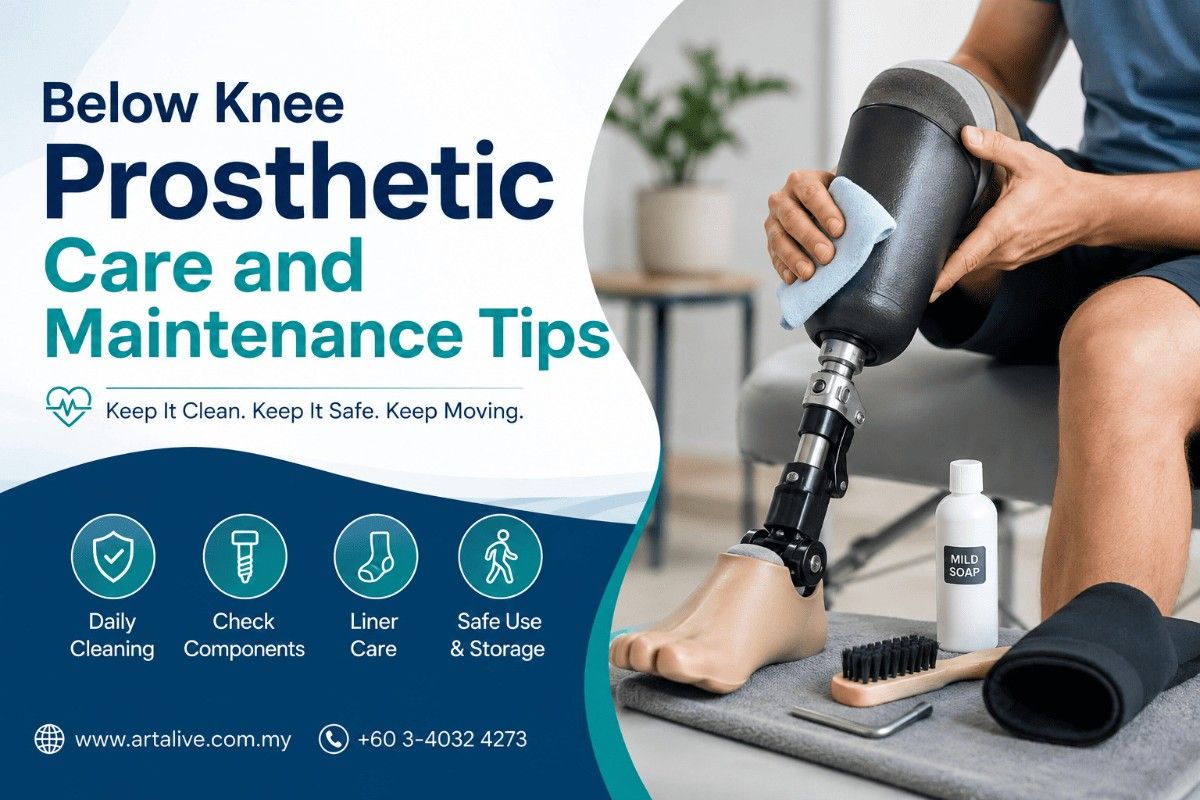
A below knee prosthetic leg can restore independence, confidence, and mobility after limb loss. However, just like any medical device, proper care and maintenance are essential to keep your prosthetic comfortable, safe, and durable. Regular cleaning, timely adjustments, and routine inspections can prevent skin irritation, improve performance, and extend the lifespan of your prosthesis.
At Artalive Sdn Bhd, our certified prosthetists help individuals throughout Malaysia maintain their prosthetic devices for optimal comfort and function. Whether you have recently received your first prosthetic leg or have been using one for years, these care tips will help you protect your investment and improve your quality of life.
Why Below Knee Prosthetic Care Is Important
Proper below knee prosthetic care goes beyond keeping your device clean. Daily maintenance helps:
Prevent skin infections and irritation
Improve comfort throughout the day
Reduce wear and tear
Increase the lifespan of your prosthetic leg
Maintain proper alignment and balance
Avoid costly repairs
Ignoring routine maintenance may result in discomfort, poor fit, unpleasant odors, or damage to essential prosthetic components.
Daily Prosthetic Socket Care
The prosthetic socket is the part that comes into direct contact with your residual limb. Since it is worn for many hours each day, keeping it clean is essential.
Prosthetic Socket Care Tips
Wipe the inside of the socket every evening using a damp cloth and mild soap.
Dry the socket completely before wearing it again.
Avoid harsh chemicals or alcohol-based cleaners unless recommended by your prosthetist.
Check for cracks, loose parts, or rough edges.
Inspect the socket daily for dirt, sweat buildup, and damage.
A clean socket helps reduce bacteria, odors, and skin irritation.
Prosthetic Liner Cleaning
The liner protects your skin and provides cushioning inside the socket. Because it absorbs sweat throughout the day, regular cleaning is essential.
Prosthetic Liner Cleaning Routine
Wash your liner daily using warm water and mild, fragrance-free soap.
Rinse thoroughly to remove soap residue.
Allow the liner to air dry completely before use.
Avoid direct sunlight or excessive heat.
Replace liners according to your prosthetist's recommendations.
A properly cleaned liner improves hygiene, comfort, and suspension.
Keep Your Residual Limb Healthy
Healthy skin is essential for successful prosthetic use.
Daily skin care includes:
Wash your residual limb every day.
Dry your skin completely before wearing the prosthesis.
Moisturize only at night if recommended.
Inspect for redness, blisters, cuts, or swelling.
Contact your prosthetist if irritation lasts longer than 20 minutes after removing the prosthesis.
Early treatment of skin problems helps prevent complications.
Regular Prosthetic Maintenance
Routine prosthetic maintenance keeps your device functioning safely.
You should regularly inspect:
Prosthetic foot
Pylon
Connectors
Suspension system
Screws and bolts
Cosmetic cover (if applicable)
If you hear unusual noises, notice instability, or experience discomfort while walking, schedule an inspection immediately.
Never attempt to repair your prosthesis yourself.
Schedule Regular Prosthetic Adjustments
Your body changes over time. Weight fluctuations, muscle development, and changes in your residual limb can affect the fit of your prosthesis.
Professional prosthetic adjustments help:
Improve walking comfort
Prevent pressure sores
Restore proper alignment
Reduce back and knee pain
Improve balance
Most users benefit from routine follow-up appointments every few months, depending on their activity level.
Protect Your Prosthetic from Damage
Simple habits can significantly increase the life of your prosthetic leg.
Do
Store it in a cool, dry place.
Clean it daily.
Wear appropriate footwear.
Follow your prosthetist's recommendations.
Attend scheduled maintenance appointments.
Avoid
Dropping the prosthesis.
Exposure to excessive heat.
Salt water unless designed for waterproof use.
Using damaged components.
Ignoring unusual sounds or movement.
How Long Does a Prosthetic Leg Last?
One of the most common questions patients ask is about prosthetic leg lifespan.
The lifespan depends on:
Activity level
Body weight
Daily usage
Quality of components
Maintenance routine
On average:
Prosthetic feet often last 3 to 5 years.
Prosthetic liners may require replacement every 6 to 18 months, depending on wear.
Sockets may last 2 to 5 years, although some users require earlier replacement due to changes in limb shape.
Regular maintenance helps maximize the lifespan of every component.
Signs You Need Professional Service
Do not ignore these warning signs:
Persistent discomfort
Loose fit
Skin irritation
Cracks in the socket
Worn liners
Clicking or squeaking sounds
Difficulty walking
Poor balance
Prompt servicing prevents minor issues from becoming major repairs.
Why Choose Artalive Sdn Bhd?
Choosing an experienced prosthetic clinic Kuala Lumpur ensures your prosthesis receives expert care throughout its lifespan.
At Artalive Sdn Bhd, our team provides:
Certified prosthetic specialists
Custom below knee prosthetic fittings
Professional socket adjustments
Component replacement
Ongoing maintenance services
Personalized rehabilitation support
As a trusted prosthetic leg specialist Malaysia, we focus on helping every patient achieve greater mobility, comfort, and independence through high-quality prosthetic care.
Conclusion
Proper below knee prosthetic care is one of the best ways to protect your mobility and extend the life of your prosthesis. Daily cleaning, regular prosthetic socket care, consistent prosthetic liner cleaning, and professional prosthetic adjustments all contribute to better comfort and long-term performance.
If you notice discomfort, changes in fit, or signs of wear, don't wait. Schedule an appointment with the experienced team at Artalive Sdn Bhd. Our certified prosthetists are committed to helping you maintain a comfortable, safe, and reliable prosthetic leg for years to come.
Frequently Asked Questions
How do I clean my prosthetic?
Clean the prosthetic socket daily using mild soap and warm water. Wash the prosthetic liner separately every day, rinse thoroughly, and allow it to air dry completely before wearing it again. Avoid harsh chemicals unless recommended by your prosthetist.
How long does a prosthetic leg last?
Most prosthetic legs last between 3 and 5 years, depending on the quality of components, activity level, body weight, and maintenance routine. Liners and sockets may need replacement sooner due to normal wear or changes in the residual limb.
When should I replace the socket?
A prosthetic socket should be replaced if it becomes uncomfortable, develops cracks, no longer fits properly, causes skin irritation, or if your residual limb changes significantly. Your prosthetist can assess whether adjustments or a new socket is needed.