Burst Pipes at 2 am: How Sydney Homeowners Can Contain the Chaos Until Help Arrives
-

- Published Updated
- 2,520 views
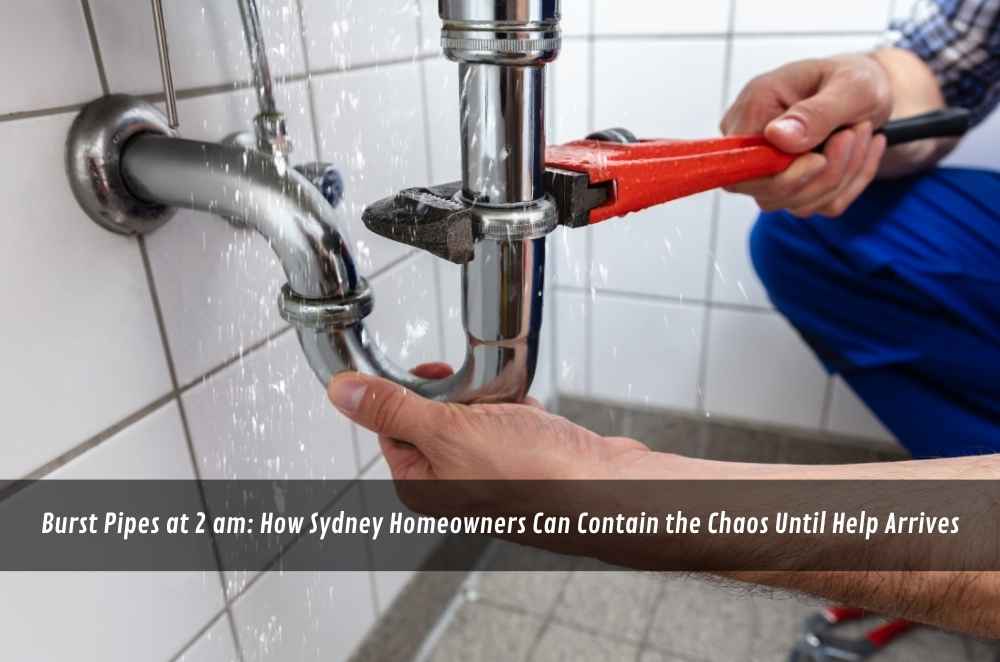
Nothing wrecks a quiet night faster than the sound of water gushing where it shouldn’t. In an apartment block the fallout reaches neighbours fast; in a freestanding home it can soak timber floors before you find the stop valve. Knowing the first steps buys you precious minutes and may shave thousands off repairs.
Midnight Mayhem: Why Plumbing Fails When the Shops Are Shut
Pipes rarely choose a polite hour to fail. Sydney’s mix of older terraces and rapidly built apartments means corroded copper, ageing flexi-hoses, and PVC under pressure. Add summer storms that overload gutters or winter cold snaps in the west that cause rapid contraction, and failures spike outside business hours.
If water is pouring out, stem the flow, clear the area, then call an emergency plumber in Sydney. That single move can turn a frantic scramble into a managed repair.
Four Immediate Actions That Limit Damage
Shutting the main runs first place, but panic often leads to missed steps. Work through this short sequence instead of rushing:
Turn off the closest isolation valve
Locating the actual mains tap in the dark can be tricky. Most inner-city terraces have it at the front boundary; units have a mini version inside the laundry cupboard.Kill power near standing water
Water pooling around appliances raises electrocution risks. Flick the circuit breaker for that zone before wading in.Open taps downstream
Bleeding the line relieves pressure. Kitchen and garden taps are fine—just remember to close them again once the repair crew arrives.Move porous furnishings
Timber furniture, rugs, and boxes act like giant sponges. Sliding them onto aluminium foil trays or plastic lids keeps them off the floor without heavy lifting.
Warning Signs You Might Spot Hours Earlier
Rarely does a pipe burst without whispering first. Keep an eye (and ear) out for:
A faint hiss in the wall after every flush
Moist plaster crumbling near skirting boards
Flexi-hoses under sinks that balloon at the crimp
Hot-water tanks dripping from the base, not the relief valve
A slow leak found at lunch can still escalate by dinner. Our internal guide on subtle plumbing warning signs walks through visual checks for each room.
Temporary Fixes That Won’t Void Your Warranty
Hardware stores stock self-fusing silicone tape and epoxy putty sticks, both rated for potable water. Wrap tape around pin-hole sprays on copper; mould putty around threaded joins that have loosened. These products hold for a few hours, buying time for a proper repair. They’re also fully removable, which keeps appliance warranties intact.
PVC joins leaking from hairline cracks respond well to a quick-set two-part adhesive. Dry the area with a heat gun on low, sand lightly, then apply adhesive around the circumference. Wait the specified cure time before repressurising the line. Document the patch with photos; your strata or insurer may ask later.
Deciding When to Bring in the Pros
Some homeowners try soldiering on after a temporary patch, but three triggers should end the DIY phase:
The leak sits inside a wall or ceiling cavity—hidden rot grows fast.
Water quality drops: rust, sediment, or a sulphur smell signals pipe decay.
You’ve already patched the same stretch within six months.
Professionals pressure-test, camera-scope, and, when needed, reroute sections to future-proof the line. They also handle Sydney Water compliance sign-offs, something owner-builders often overlook.
Insurance, Photos, and the Paper Trail
Document everything. Insurers favour prompt action, so note the time the leak started, when you shut the mains, and when the plumber arrived. Snap clear photos of water levels, damaged items, and the failed fitting. Store purchase receipts for carpets or cabinetry—many policies cover like-for-like replacement, not cheaper equivalents.
The NSW State Emergency Service advises photographing storm-related water ingress within the first 24 hours to streamline claims. Its homeowner checklist is available from the NSW State Emergency Service site.
After the Repair: Preventing Round Two
Once the emergency passes, book a non-urgent follow-up while memories are fresh. A licensed plumber can:
Audit pipe materials and flag sections nearing end-of-life
Replace suspect flexi-hoses with stainless braided variants
Adjust pressure-limiting valves if mains pressure tops 500 kPa
Install intelligent leak detectors that message your phone at the first sign of flow when no tap is open
These steps are cheaper than new flooring. More importantly, they protect strata common property where by-laws often shift liability back to owners.
Leaving Things Better Than You Found Them
No one sticks around the kitchen at 2 am admiring the handiwork, but taking structured action in those frantic minutes makes a difference. Turn off the water, disconnect power, document the scene, patch only if safe, and get a professional onsite quickly. A little calm thinking up front means the recovery starts on your terms, not the water’s.