Business Intelligence vs Data Science: Key Differences, Tools, and Use Cases
-

- Published Updated
- 1,496 views
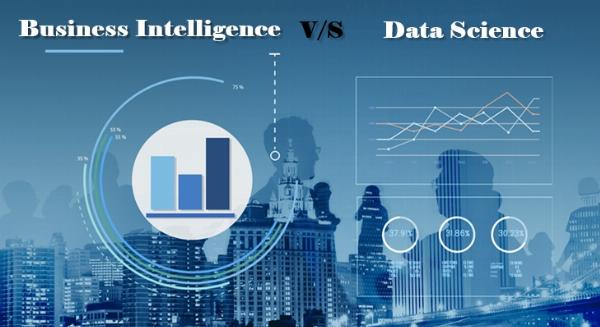
Business Intelligence vs Data Science is a common topic for organizations deciding how to turn data into decisions. Both disciplines work with data but differ in goals, methods, output, and required skills. Understanding the distinctions helps align investments, staffing, and governance to specific business outcomes.
- Business intelligence (BI) focuses on descriptive analytics: dashboards, reporting, and operational KPIs derived from structured data.
- Data science emphasizes predictive and prescriptive analytics using statistics, machine learning, and experimentation on larger or varied datasets.
- BI and data science are complementary: BI provides monitoring and context, while data science delivers forecasting, optimization, and advanced models.
- Teams typically include BI analysts, data engineers, and data scientists; governance, data quality, and tooling choices influence success.
Business Intelligence vs Data Science: Definitions and Primary Goals
What is Business Intelligence?
Business Intelligence (BI) comprises methods and tools for collecting, integrating, visualizing, and reporting historical and current business data. BI delivers dashboards, scorecards, and standard reports that help operational teams monitor performance against key performance indicators (KPIs) and make data-informed decisions. Typical BI outputs are descriptive: they answer what happened and why, using SQL, data warehouses, ETL (extract, transform, load) processes, and visualization platforms.
What is Data Science?
Data Science applies statistics, machine learning, and computational methods to extract patterns, build predictive models, and recommend actions. Data scientists use programming languages such as Python or R, leverage algorithms for supervised and unsupervised learning, and work with larger or more complex datasets, including unstructured data. The focus is forward-looking—forecasting demand, classifying customers, detecting anomalies, or optimizing decisions.
Data, Tools, and Techniques
Data Sources and Infrastructure
BI typically consumes curated, structured data from data warehouses and operational databases. Data science may use the same sources plus data lakes, streaming feeds, logs, and external datasets for feature engineering. Both rely on data engineering for ETL, data pipelines, and storage architecture. Data governance frameworks (for example, GDPR for personal data and ISO standards for information security) affect both activities and should guide data access and lineage policies.
Common Tools and Languages
Typical BI toolsets include SQL databases, reporting platforms, and visualization libraries for dashboarding. Data science toolsets add statistical libraries, machine learning frameworks, notebook environments, and model deployment tools (MLOps). Familiar technologies include SQL, Python, R, version control, and automated model training systems.
Analytic Techniques
BI emphasizes aggregation, filtering, cohort analyses, and visual storytelling. Data science employs regression, classification, clustering, natural language processing, and time-series forecasting. Evaluation criteria differ: BI quality is often measured in data accuracy and timeliness; data science emphasizes model performance metrics such as precision, recall, and calibration.
Roles, Skills, and Team Structures
Typical Roles
Common roles include BI analyst or developer (dashboarding, reporting), data analyst (ad-hoc analysis), data engineer (pipelines and infrastructure), and data scientist (models and experiments). Organizational size and maturity determine whether roles are dedicated or combined. The U.S. Bureau of Labor Statistics provides occupational data and trends relevant to analytics and data science careers (source).
Key Skills
BI practitioners should master SQL, data modeling, and visualization best practices. Data scientists need statistics, machine learning, programming, and experimentation design. Both require domain knowledge, communication skills, and attention to data quality. Collaboration across teams ensures models and dashboards produce trustworthy, actionable insights.
When to Use BI vs Data Science
Use Cases Best Suited to BI
BI is suitable for operational monitoring, executive reporting, routine KPI tracking, and regulatory compliance reporting. When questions are known and repeatable, BI provides fast, reliable answers and supports decision processes with near real-time or scheduled updates.
Use Cases Best Suited to Data Science
Data science is appropriate for forecasting, customer segmentation, personalization, anomaly detection, and optimization problems where predictive accuracy or discovering hidden patterns matters. When experimentation and model validation are needed, data science delivers added value beyond descriptive reports.
Integrating BI and Data Science in Practice
Workflow and Collaboration
Effective analytics stacks use both disciplines: BI dashboards surface operational issues; data science models generate predictions that feed into dashboards or operational systems. MLOps and model monitoring ensure production models remain reliable, while BI provides continuous monitoring of business impact and data drift indicators.
Governance and Measurement
Data governance, version control, and reproducibility practices are essential. Measure impact using both business KPIs (revenue, conversion, retention) and technical metrics (model accuracy, latency, data freshness). Aligning evaluation across teams ensures models deliver measurable improvements.
Future Trends
Trends include real-time analytics, automated machine learning (AutoML), augmented analytics (AI-assisted data exploration), and tighter integration of streaming data with dashboards and models. Advances in data privacy, explainability, and responsible AI frameworks will shape how organizations deploy both BI and data science capabilities.
Conclusion
Business Intelligence vs Data Science is not an either/or choice; both are complementary. BI provides the descriptive foundation and operational monitoring, while data science extends capabilities into prediction, optimization, and automation. Choosing the right mix depends on business questions, data maturity, team skills, and governance requirements.
FAQ
What is the difference between Business Intelligence vs Data Science?
Business Intelligence focuses on descriptive analytics—reporting, dashboards, and monitoring historical and current performance. Data Science focuses on predictive and prescriptive analytics—building models to forecast outcomes, detect patterns, and recommend actions. BI answers "what happened" and "what is happening"; data science answers "what will likely happen" and "what should be done."
Can the same person do BI and data science?
In smaller organizations, individuals may perform both roles, combining SQL and visualization expertise with basic statistical modeling. In larger or more complex environments, specialization improves depth: data engineers maintain pipelines, BI analysts produce reports, and data scientists build and validate models.
How do BI and data science measure success?
BI success is typically measured by data accuracy, dashboard adoption, and time-to-insight. Data science success is measured by model performance metrics, business impact through A/B testing or controlled experiments, and improvements in relevant KPIs.
What skills are most important to start a career in BI or data science?
For BI: SQL, data modeling, visualization tools, and domain knowledge. For data science: statistics, programming (Python or R), machine learning fundamentals, and experiment design. Communication skills and an understanding of data governance are important for both paths.
How do organizations combine BI and data science for the best results?
Organizations combine BI and data science by establishing shared data platforms, clear governance, cross-functional teams, and deployment pipelines that allow models to feed BI dashboards and production systems. Continuous monitoring and alignment on KPIs ensure analytic initiatives produce measurable business value.