How International Students Can Plan Their Medical Education in the Caribbean
-
- Published Updated
- 2,595 views
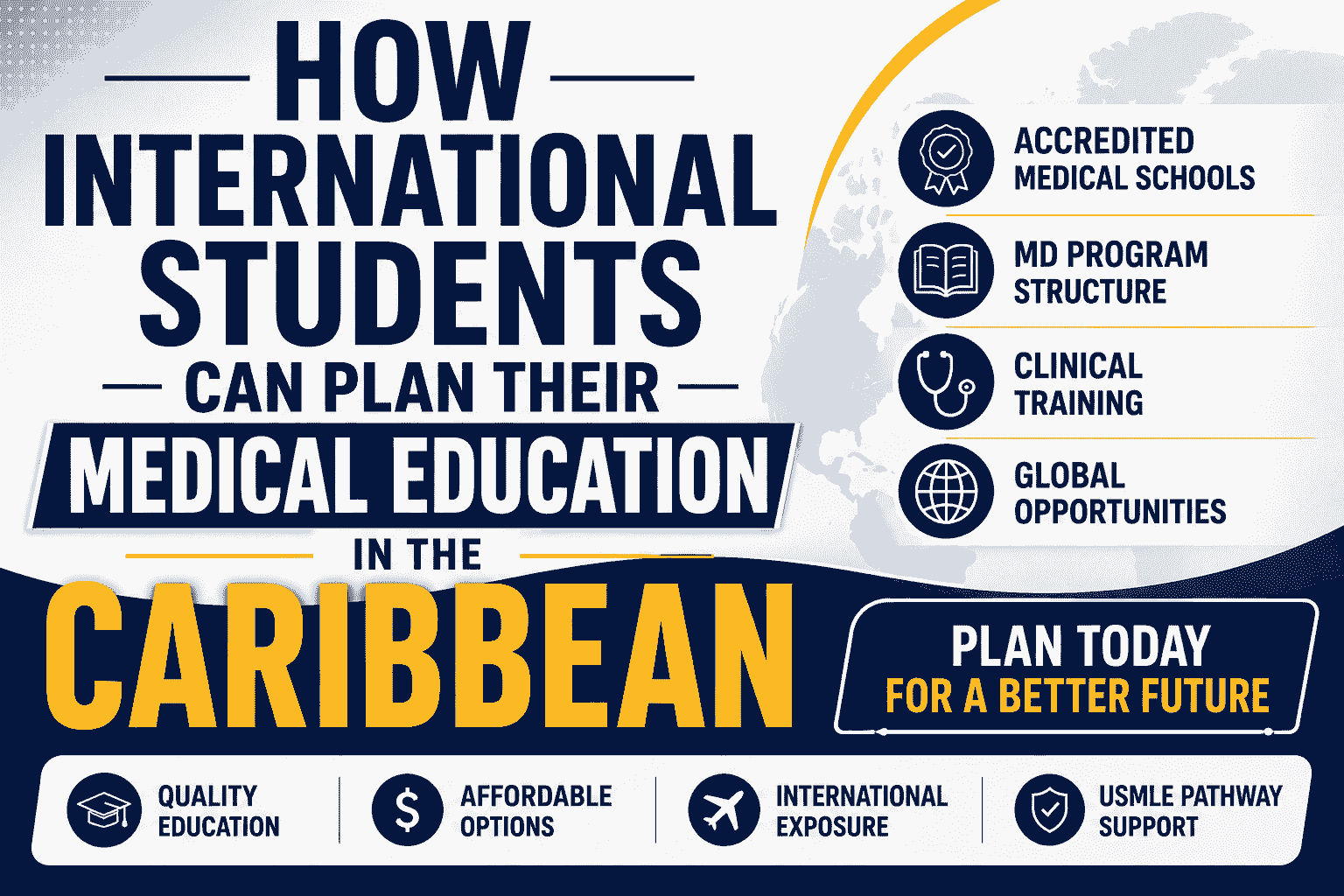
Studying medicine in another country is a major decision. International students need to think about their academic goals, admission requirements, course structure, clinical training, and plans after graduation. Good planning can make the process easier and help students understand what they should prepare before starting medical school.
For students looking at medical schools in the Caribbean, it is important to look at the complete medical education journey instead of choosing a school only because of its location. Students should compare programs carefully and use current information from official sources before making a decision.
Understand Your Long-Term Career Goals
The first step is to understand what you want to do after completing your medical education. Some international students may plan to return to their home country, while others may want to continue their medical career in the USA, Canada, or another country.
Your career goal matters because medical licensing, postgraduate training, and examination requirements can vary between countries. Understanding these requirements early can help you choose a program that fits your future plans.
Students should also remember that their career path does not end with medical school. Depending on the country where they want to work, they may need to complete examinations, certification processes, residency training, and licensing requirements.
Research Medical Schools in the Caribbean
Once you understand your career goals, you can start researching medical schools in the Caribbean. Do not compare schools only on the basis of location, fees, or general online reviews. Look at the actual medical program and understand how it is organised.
Important factors include admission requirements, program duration, curriculum, clinical training, examination preparation, and the school's current status. Students should also check whether the program matches the requirements connected to their intended career pathway.
Taking time to compare these details can help students avoid making a decision based on incomplete or outdated information.
Check the Admission Requirements
Admission requirements should be checked before you begin the application process. Different medical schools in the Caribbean can have different academic and application requirements, so students should always check the official requirements of each school.
Common areas to review include previous college education, prerequisite courses, GPA, English language ability, academic transcripts, recommendation letters, personal statements, and identification documents. Preparing these requirements early can make the application process more organised.
Students should also check whether an entrance examination such as the MCAT is required. For example, CCU states that the MCAT is not mandatory and lists a minimum cumulative GPA of 3.0 and at least 90 college credit hours among its eligibility requirements. CCU Eligibility Requirements
Understand the Structure of the MD Program
Before applying, students should understand how the MD program is divided into different stages. Medical education generally involves learning medical sciences first and then developing practical clinical skills through clinical training.
Understanding the program structure helps students know what they will study at each stage. It can also help them plan their academic schedule and understand when they will move from classroom-based learning to more practical medical training.
Students should check the total duration of the program, the subjects included, the transition to clinical education, and how electives or additional training fit into the program.
Review the Curriculum Carefully
The curriculum is one of the most important things to consider when comparing medical schools in the Caribbean. Students should look at how medical sciences, clinical skills, patient care, and practical learning are included in the program.
It is also useful to understand how the curriculum relates to future examination plans. Students who are considering a career in the USA, for example, should become familiar with the USMLE pathway and the requirements that may apply to international medical graduates.
Look at Clinical Training Opportunities
Clinical training is an important stage of medical education because students begin applying their knowledge in real clinical settings. When comparing medical schools in the Caribbean, students should carefully review the clinical component of each program.
Look at the length of clinical training, the core specialties covered, the locations where rotations are available, and how electives are organised. This information can help students understand the practical side of their medical education.
Understand the Examination and Certification Pathway
International students should learn about the examinations and certification requirements connected to their future plans while they are still considering medical school. This is particularly important for students who are interested in postgraduate medical training in the USA.
The U.S. pathway for international medical graduates can involve USMLE examinations and ECFMG Certification. Students should understand the requirements early and plan their preparation during medical school rather than waiting until graduation.
Requirements can change, so students should use current information from official organisations when planning their examination and certification pathway.
Prepare Your Application Documents
International students should start preparing their documents well before the application deadline. This gives them enough time to collect official records and check that all information is complete and accurate.
Depending on the university, students may need academic transcripts, recommendation letters, a personal statement, a CV or resume, passport documents, photographs, and other application materials. Requirements should be checked directly with the university because they are not the same everywhere.
CCU currently lists a completed application, personal essay, CV or resume, official transcripts, two recommendation letters, two passport-size colour photographs, a passport copy, and an application fee among its application requirements. CCU Caribbean Medical School Requirements
Plan for Life as an International Student
Moving to another country for medical school requires personal preparation as well. Students should think about accommodation, travel, living expenses, study materials, personal documents, and other daily needs before beginning their program.
It is also important to prepare for the change in environment. Living away from family and studying in a different country can require some adjustment. Having basic arrangements in place before the program begins can make the transition smoother.
A realistic budget is also helpful. Students should understand their expected expenses and plan their finances according to the length of their medical education.
Plan Your Next Step Before Graduation
Planning should continue throughout medical school rather than starting only after graduation. Students should keep track of the examinations, certification requirements, clinical training, and other steps connected to their future career.
Those who want to pursue postgraduate training should learn about the application process early. Residency and licensing requirements can depend on the country, so students should not assume that the same process applies everywhere.
A simple way to understand the overall journey is:
Choose a suitable medical school → Complete medical education → Complete required examinations → Meet applicable certification requirements → Apply for postgraduate training → Meet licensing requirements
The exact pathway will depend on the student's career goals and the country where they plan to practise medicine.
Conclusion
Planning medical education carefully can help international students make informed decisions. Students considering medical schools in the Caribbean should look at admission requirements, program structure, curriculum, clinical training, examination pathways, and future career requirements before applying.
There is no single factor that makes a medical school suitable for every student. Academic background, career goals, personal circumstances, and future plans should all be considered when comparing programs.
The best approach is to research carefully, check current official information, prepare documents early, and understand the complete pathway from medical school to the next stage of your medical career.