What Should You Know Before Choosing a Cash App Clone for Your Fintech Business?
-

- Published Updated
- 78 views
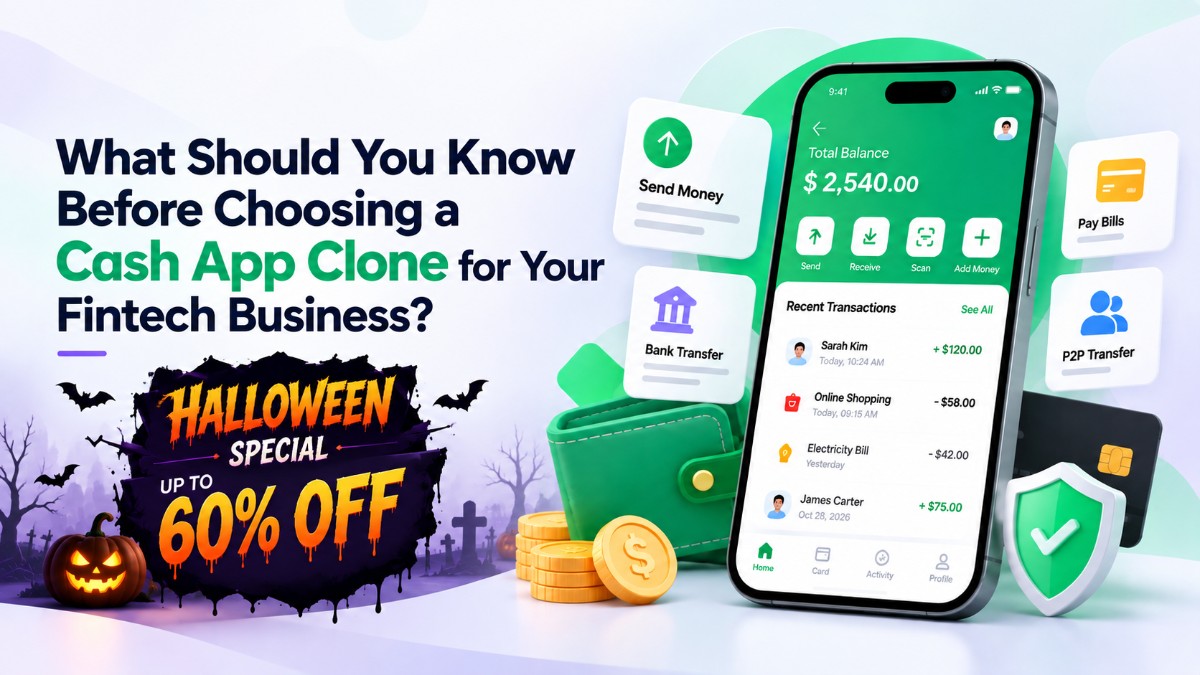
Launching a fintech payment platform can look simple from the outside. Users send money, receive payments, manage wallets, and view transactions. But behind those basic actions are security controls, transaction processing, authentication, integrations, and compliance considerations.
If you're considering a Cash App Clone, the important question isn't simply, "Does it look like Cash App?" Instead, you should ask whether the solution can support your business model, target market, transaction requirements, security expectations, and future growth.
What Should You Check Before Choosing a Cash App Clone?
Before choosing a Cash App Clone, evaluate these areas:
Core payment features: P2P transfers, wallets, transaction history, and payment processing.
Security: Authentication, encryption, access controls, fraud monitoring, and secure transaction handling.
Customization: Ability to adapt branding, features, workflows, and payment methods.
Scalability: Infrastructure should support increasing users and transaction volumes.
Integrations: Check support for payment gateways, banking services, KYC providers, notifications, and APIs.
Compliance: Your platform must address the financial regulations applicable to the countries and services you operate in.
Development support: Confirm whether updates, bug fixes, maintenance, and technical assistance are available.
The right solution should fit your business—not force your business to fit a prebuilt product.
What Is a Cash App Clone?
A Cash App Clone is a customizable fintech application inspired by the functionality of popular digital payment platforms. It can provide features such as digital wallets, peer-to-peer payments, transaction tracking, user accounts, notifications, and payment integrations.
However, a clone doesn't have to be an exact copy. A better approach is to use the underlying concept as a starting point and customize the product around your own customers and business requirements.
Which Features Matter Most?
When comparing different solutions, don't focus only on how many features are listed on a sales page. Look at whether those features actually work together as part of a reliable payment workflow.
Essential User Features
A practical digital payment platform may include:
User registration and secure login
Digital wallet management
Peer-to-peer money transfers
Bank account or payment integrations
Transaction history
Payment notifications
User profile management
QR-based payments
Admin transaction monitoring
Depending on your business model, you may also need merchant payments, recurring payments, virtual cards, or additional financial services.
Why Security Should Be a Priority
Fintech applications handle sensitive financial and personal information, so security cannot be treated as an optional add-on.
Ask the development provider how the application handles authentication, authorization, sensitive data, transaction validation, API security, and suspicious activity. You should also understand how security updates and vulnerabilities will be handled after launch.
A visually impressive application is not enough if its underlying architecture is difficult to secure.
Can You Customize the Cash App Clone?
Customization is one of the biggest factors to consider.
Your platform may need different transaction limits, supported currencies, payment methods, user roles, fee structures, or verification workflows. Make sure the solution allows you to modify these components without rebuilding the entire application from scratch.
Look for a solution that can accommodate your digital wallet platform, payment workflows, branding, and future feature requirements.
Think About Scalability Before Launch
A fintech platform should be designed with growth in mind. Even if you're starting with a limited user base, the architecture should allow you to add users, transactions, integrations, and new services without major disruption.
Ask whether the provider can explain the application's architecture, database strategy, API structure, deployment process, and approach to performance optimization.
Don't Overlook Compliance
Financial technology is highly dependent on location, business model, payment services, and regulatory requirements. Requirements can differ significantly between countries and even between different types of financial services.
Before launching, speak with qualified legal or compliance professionals about the regulations applicable to your specific operation. Your development team can implement technical workflows, but compliance decisions should be based on appropriate professional guidance.
How Much Support Will You Get After Launch?
The relationship with your development provider shouldn't necessarily end when the application goes live.
Ask about:
Bug fixing
Security updates
Server and deployment support
Feature upgrades
Third-party API changes
Performance monitoring
Technical documentation
Good post-launch support can make a significant difference when your payment platform starts handling real users.
Final Takeaway
Choosing a Cash App Clone is less about finding the platform with the longest feature list and more about finding a solution that fits your fintech business. Evaluate security, customization, scalability, integrations, compliance requirements, and long-term technical support before making a decision.
If you're planning to launch your own digital payment platform, start by defining your target users, payment workflows, revenue model, and required integrations. Then choose a development solution around those requirements.
Halloween Special: If you're planning your fintech launch now, you can explore the limited-time offer of up to 60% OFF on Cash App Clone development and discuss your required features with a development team.