Chef vs Catering Staff Uniforms: Key Differences
-

- Published Updated
- 6,844 views
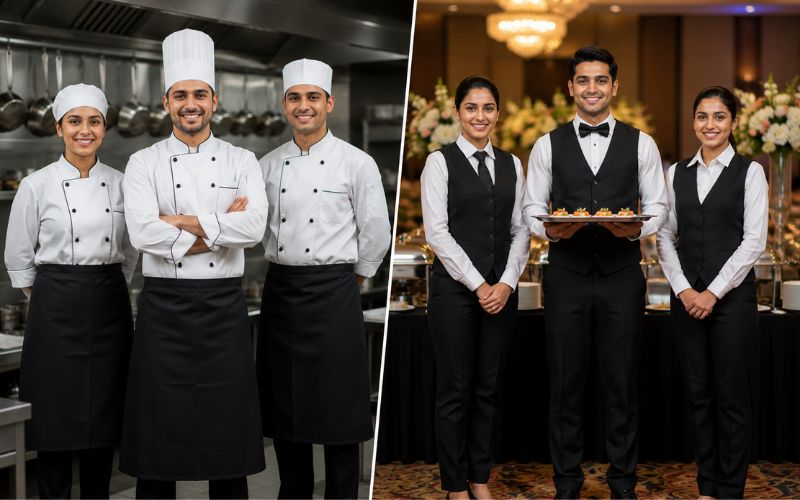
In the hospitality industry professional appearance plays a vital role in shaping customer perception, ensuring hygiene and maintaining operational discipline. Clothing is more than style it is about functionality, safety and brand identity both in the kitchen and service setting. Pressed-cooking stations to fancy event arrangements, all jobs require well thought-out clothes that are work-friendly and at the same time provide a professional appearance.
Understanding Chef vs Catering Staff Uniforms helps businesses choose the right workwear for different job roles. As the need to have high-end solutions such as Customized Chef Uniforms Dubai has grown, companies are emphasizing on comfort and durability, as well as branding. Hospitality companies like Futuremind Uniforms are assisting businesses in making uniforms that are uniform and practical and that can boost the confidence of the personnel and the experience of the customer.
Understanding the Roles behind the Attire
Chefs operate under controlled high intensity kitchen conditions where there is heat, sharp knives and constant cooking activities. Their clothing is taken to provide them with protection, hygiene and convenience in their movement during the long hours of work. All the components of their clothing endorse safety and efficiency in food handling and work in a fast-paced restaurant environment.
Catering workers, however, work in dynamic and customer facing facilities like event, banquets and outdoor services. They have their clothing that is more about presentation, moving around and representing the brand. They require business suits that will help them communicate with the guests and at the same time they should be comfortable working during long hours and other working conditions.
visit:
Key Differences between Chef and Catering Staff Attire
1. Purpose of Design and Functionality
The clothing of chefs is mainly aimed at the safety of the kitchen, heat resistance, and control over hygiene. It safeguards against spillages, burns and contamination besides providing ease of movement in small cooking areas. Clothing of the catering staff, however, is concerned with meeting with the guests, presenting the brand and comfort in moving on the extensive grounds. The purpose difference is a clear indication of the difference in the operations of Chef vs Catering Staff Uniforms in the hospitality industry.
2. Fabric Strength and Material Selection
Chef uniforms are normally designed in heavy cotton mixes or heatproof material which can withstand high temperature and frequent washing. These substances make them durable and safe in the harsh kitchen conditions. On the contrary, catering attire incorporates light and wrinkle resistant fabrics like polyester blends, which keep a sharp look throughout the lengthy events without getting crumpled, and enable the staff to move freely and effectively.
3. Comfort and Breathability Requirements
The two roles need comfort, which is attained in different ways. Chefs need breathable but tough materials that will decrease the heat load when working hours are long. Staff catering should have ultra-light, airy materials which will be flexible during the activities of service. Their clothing should be able to facilitate constant mobility, standing and communication with the guests so that they are comfortable and professional in all the working long shifts.
4. Hygiene and Safety Standards
Kitchen uniforms are designed with high standards of hygiene with long sleeves, two layers and protective design to reduce the chances of contamination. It is also necessary to have head coverings. Hygiene is also ensured by catering staff uniforms although it is more aimed at cleanliness and presentation. Their attire will make them look well-groomed and professional in front of guests serving food, which will enhance trust and quality of service.
5. Design Aesthetics and Branding Elements
The typical clothing of chefs is stylish and conventional with little brand recognition and more practicality and functionality. Catering uniforms are more graphic, with embroidered logos, coordinated colors and modern cuts, to identify the company. This distinction assists in differentiating between the internal kitchen teams and the customer-facing personnel and still retain the overall brand consistency.
6. Mobility and Work Flexibility
Chefs work in cramped kitchen areas and thus need to wear clothes that aid in repetitive movements such as chopping, stirring and plating. Their garments are designed to be durable as opposed to being flexible. Catering employees have to move around vast areas, serve clients and organize their events and therefore they have to dress in lightweight yet flexible outfits that allow them to move easily and respond to calls.
7. Durability and Maintenance Needs
The chef uniforms are exposed to a lot of stains, heat and hard washing processes and therefore very tough fabrics that will not be damaged with time are needed. Staff uniforms in catering are also long-lasting, although they are designed in such a manner that they are easy to maintain and can be quickly cleaned to keep them clean and presentable to be worn in subsequent events with minimal wear and tear.
8. Professional Identity and Role Recognition
Chef dress is a sign of cooking skills, discipline and kitchen hierarchy usually a sign of power and experience in the kitchen setting. Frontline Catering staff uniforms focus on hospitality, communication and brand representation. They form a well-organized identity system, in which duties are well divided, and harmony is upheld in the hospitality processes.
Conclusion
Professional clothing in the hospitality industry is not only the dress code but also the efficacy, security and brand image. Being aware of Chef vs Catering Staff Uniforms would enable companies to assign appropriate dressing depending on job description to ensure that both functionality and appearance is well balanced in various working conditions.
As chefs need protection, durability, and performance in their kitchen wear, catering staffs must have fashionable, relaxed and brand-conscious clothing to increase their engagement with guests. Such a sharp line of demarcation can assist in enhancing workflow and reinforcing the general quality of services in any hospitality arrangement.