How to Choose a Reliable Medical Courier Service Provider: Compliance, Costs, and Checklists
-

- February 23rd, 2026
- 1,021 views

FREE SEO Topical Map Generator: Find Your Next Content Ideas
Selecting a medical courier service provider requires balancing speed, regulatory compliance, and secure chain-of-custody procedures. This guide explains what to look for in a medical courier service provider, with actionable steps, a named checklist, and common mistakes to avoid.
- Detected intent: Commercial Investigation
- Primary focus: compliance, temperature control, secure chain-of-custody
- Use the SAFE-T Checklist to evaluate providers (Secure, Accurate, Fast, Evidence-traceable, Temperature-controlled)
- Core considerations: licensing, insurance, data privacy (HIPAA), and emergency response
Choosing a medical courier service provider
When comparing a medical courier service provider, prioritize documented compliance (DOT, IATA where applicable), temperature-controlled logistics, and HIPAA-safe handling of patient data. A provider with documented SOPs for specimens, a traceable chain of custody, and insured, trained drivers reduces risk and protects clinical timelines.
Key selection criteria
- Regulatory compliance: training in infectious-substances handling and familiarity with 49 CFR/IATA regulations.
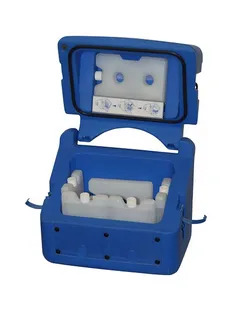
- Temperature control: validated cold-chain packaging, continuous temperature monitoring for frozen/refrigerated samples.
- Chain of custody: timestamped pickups/deliveries, tamper-evident packaging, and digital signatures.
- Data security: HIPAA-compliant data handling, encrypted tracking portals, and limited access to PHI.
- Insurance and liability: cargo insurance and explicit coverage for biological materials.
Regulatory and safety standards
Medical transport is subject to multiple rules: U.S. Department of Transportation (49 CFR) for hazardous/infectious shipments, IATA for air transport, and clinical lab requirements under CLIA. For specimen-handling best practices, consult authoritative public health guidance such as the CDC's specimen transport recommendations (CDC guidance). Also verify staff training records for handling Category A/B substances when applicable.
SAFE-T Checklist for hiring a medical courier
The SAFE-T Checklist is a practical framework to evaluate providers quickly.
- Secure: Proof of insurance, background checks, tamper-evident packaging protocols.
- Accurate: Digital tracking, SLA for pickup/delivery windows, documented error rates.
- Fast: Emergency/expedited routing options and contingency plans for outages.
- Evidence-traceable: Chain-of-custody forms, audit logs, and time-stamped confirmations.
- Temperature-controlled: Validated coolers/freezers, continuous monitoring, and corrective action records.
Core cluster questions
- What certifications and training should a medical courier hold?
- How is chain-of-custody documented for clinical specimens?
- Which temperature-control measures are required for blood and tissue transport?
- What insurance and liability coverage are standard for biological sample transport?
- How are HIPAA and patient data protected during pickup and delivery?
Real-world example: urgent lab transfer scenario
Scenario: A regional clinic needs same-day transport of refrigerated blood samples to a central lab 60 miles away. An appropriate provider dispatches a temperature-controlled vehicle within 30 minutes, uses validated coolers with logged temperature sensors, collects a signed chain-of-custody form, and uploads delivery confirmation with a timestamp and ID. The clinic verifies data in the courier portal and the lab begins processing within the required stability window.
Practical tips for contracting and operations
- Require SLA language that specifies pickup/delivery windows, temperature breach responses, and credit/penalty terms.
- Run a pilot route for at least two weeks to measure on-time performance and temperature stability before a full contract.
- Ask for redacted training records and a sample chain-of-custody to confirm procedures align with internal compliance policies.
- Integrate tracking feeds with internal lab information systems (LIS) or set up automated notifications for dispatch and delivery events.
Trade-offs and common mistakes
Choosing the lowest bid often sacrifices reliability and regulatory oversight. Common mistakes include:
- Failing to verify temperature-monitoring validation reports, which can lead to compromised samples.
- Assuming generic liability insurance covers biological materials—confirm explicit coverage for specimens.
- Overlooking data security: an unencrypted tracking portal can expose PHI and cause HIPAA violations.
How to measure ongoing performance
Establish a scorecard with metrics: on-time delivery rate, temperature excursion rate, chain-of-custody discrepancies, and incident response time. Schedule quarterly reviews and require corrective action plans for repeated failures.
FAQ: What is a medical courier service provider and why does it matter?
A medical courier service provider specializes in transporting clinical specimens, pharmaceuticals, medical devices, or human tissues under controlled conditions and regulatory requirements. Proper providers protect sample integrity, comply with hazardous-materials rules when needed, and secure patient data.
FAQ: How to evaluate HIPAA-compliant courier services?
Verify written HIPAA policies, data encryption for tracking portals, signed Business Associate Agreements (BAAs), and role-based access controls. Ask for a third-party security assessment if PHI is transferred electronically.
FAQ: What questions should be asked of a biological sample courier during onboarding?
Request documentation for training on infectious materials, temperature-control validation, insurance certificates covering biological shipments, example chain-of-custody forms, incident escalation procedures, and references from similar clinical clients.
FAQ: How to evaluate a medical courier service provider's compliance?
Check regulatory training records, proof of compliance with DOT/IATA where applicable, written SOPs for specimen handling, completed temperature validation reports, and sample audit logs demonstrating chain-of-custody integrity.
FAQ: What are typical turnaround times and costs to expect?
Turnaround depends on distance, urgency, and service level. Expect higher costs for expedited same-day or temperature-controlled routes; balance cost with the clinical risk of delayed or compromised specimens. Include SLA-based credits or penalties for repeated failures in any contract.