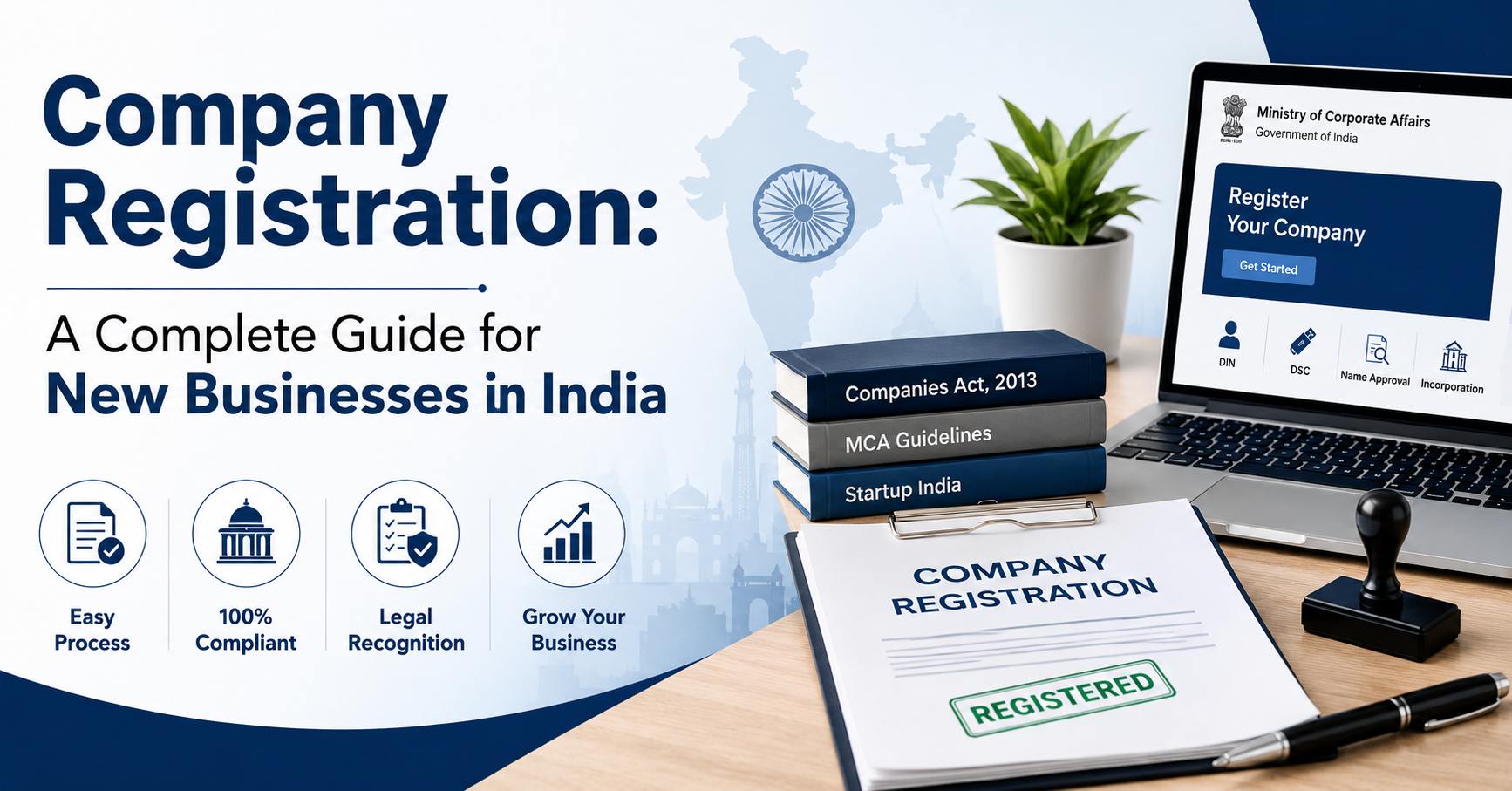
Company Registration: A Complete Guide for New Businesses in India
-

- June 23rd, 2026
- 3,306 views

FREE SEO Topical Map Generator: Find Your Next Content Ideas
Starting a business is an exciting journey, but it begins with one important step—company registration. Registering a company gives your business a legal identity, improves credibility, and helps you access various financial and growth opportunities. Whether you are launching a startup, expanding an existing venture, or formalizing a family business, understanding the company registration process is essential.
Many entrepreneurs seek the support of experienced company registration consultants and top CA firms to ensure a smooth and hassle-free registration process. Professional guidance helps avoid errors, delays, and compliance issues while allowing business owners to focus on growth.
What is Company Registration?
Company registration is the legal process of incorporating a business entity under the Companies Act in India. Once registered, the company becomes a separate legal entity distinct from its owners. This provides legal recognition and allows the business to operate within the framework of applicable laws and regulations.
A registered company can enter into contracts, open bank accounts, raise funds, own assets, and conduct business activities legally.
Why is Company Registration Important?
Registering your company offers several benefits, including:
Legal Recognition
A registered company is recognized by government authorities and financial institutions, making business operations more reliable and professional.
Limited Liability Protection
In most company structures, shareholders' personal assets are protected from business liabilities and debts.
Improved Credibility
Customers, investors, suppliers, and lenders are more likely to trust a legally registered business.
Better Funding Opportunities
Registered companies can attract investors, venture capitalists, and financial institutions more easily.
Tax and Compliance Benefits
Proper registration helps businesses comply with tax regulations and avail themselves of various government schemes and incentives.
Types of Companies That Can Be Registered in India
Private Limited Company
A Private Limited Company is one of the most popular business structures for startups and growing businesses. It offers limited liability protection and separate legal status.
One Person Company (OPC)
An OPC is suitable for individual entrepreneurs who want the advantages of a company structure while maintaining sole ownership.
Limited Liability Partnership (LLP)
An LLP combines the flexibility of a partnership with limited liability protection.
Public Limited Company
This structure is suitable for larger businesses planning to raise capital from the public.
Section 8 Company
A Section 8 Company is established for charitable, educational, social, or non-profit purposes.
Documents Required for Company Registration
The documents required may vary depending on the type of company. Generally, the following documents are needed:
- PAN Card of directors and shareholders
- Aadhaar Card or other identity proof
- Address proof
- Passport-sized photographs
- Registered office address proof
- Utility bills for the office premises
- Digital Signature Certificate (DSC)
- Director Identification Number (DIN)
Professional company registration consultants can help organize and verify these documents to prevent application rejection.
Step-by-Step Company Registration Process
Step 1: Obtain Digital Signature Certificate (DSC)
A DSC is required for filing electronic forms with the Ministry of Corporate Affairs (MCA).
Step 2: Apply for Director Identification Number (DIN)
Every proposed director must obtain a DIN before becoming a company director.
Step 3: Reserve the Company Name
The proposed company name must be unique and comply with MCA naming guidelines.
Step 4: Prepare Incorporation Documents
Required documents such as Memorandum of Association (MOA) and Articles of Association (AOA) are prepared and submitted.
Step 5: File Incorporation Application
The incorporation application is filed online with the Ministry of Corporate Affairs.
Step 6: Certificate of Incorporation
Once approved, the MCA issues a Certificate of Incorporation, officially recognizing the company.
Step 7: PAN and TAN Allotment
The company receives its Permanent Account Number (PAN) and Tax Deduction and Collection Account Number (TAN).
Step 8: Open a Business Bank Account
After incorporation, a corporate bank account can be opened for business transactions.
Role of Company Registration Consultants
The company registration process may seem straightforward, but it involves multiple legal and compliance requirements. Experienced company registration consultants simplify the process by:
- Advising on the most suitable business structure
- Preparing and verifying documentation
- Managing government filings
- Ensuring compliance with MCA regulations
- Handling registration-related queries
- Reducing processing delays and errors
Their expertise allows entrepreneurs to focus on launching and growing their business.
Why Businesses Prefer Top CA Firms for Company Registration
Many business owners choose top CA firms because they offer comprehensive professional support beyond registration. Their services often include:
Expert Financial Guidance
Top CA firms provide strategic advice regarding business structure, taxation, and financial planning.
Regulatory Compliance Support
They ensure compliance with corporate laws, tax regulations, and statutory requirements.
Tax Planning Services
Professional tax planning helps businesses optimize their tax liabilities while remaining compliant.
Ongoing Business Advisory
Many top CA firms offer accounting, auditing, GST, payroll, and advisory services that support long-term business growth.
Risk Management
Professional consultants help identify potential legal and financial risks during the registration process.
Common Mistakes to Avoid During Company Registration
Many entrepreneurs make avoidable mistakes during incorporation. These include:
- Choosing an inappropriate business structure
- Selecting a company name that violates MCA guidelines
- Submitting incomplete documents
- Ignoring compliance requirements
- Delaying statutory registrations
- Failing to seek professional advice
Working with experienced company registration consultants can significantly reduce these risks.
How Long Does Company Registration Take?
The registration timeline depends on document readiness, application accuracy, and government processing times. In many cases, registration can be completed within a few business days when all documents are correctly submitted.
Professional guidance often accelerates the process and minimizes delays caused by documentation errors.
Conclusion
Company registration is the foundation of a successful business. It provides legal recognition, enhances credibility, and creates opportunities for growth and investment. While the registration process involves several legal and procedural steps, experienced company registration consultants can make the journey smooth and efficient.
Businesses that partner with top CA firms benefit from expert guidance, regulatory compliance, tax planning, and long-term advisory support. By choosing the right professionals, entrepreneurs can focus on building their business with confidence while ensuring that all legal requirements are met from the very beginning.