Custom Printing Boxes: Design, Sustainability, and Brand Impact
-
- Published Updated
- 1,308 views
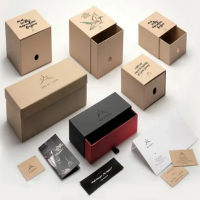
Custom printing boxes are a key element of modern packaging strategies, combining functional protection with visual communication to shape customer perception and logistics performance. This article explains design principles, common materials and printing methods, regulatory and sustainability considerations, and production workflows that influence cost and quality.
- Custom printing boxes integrate branding, protection, and information for products across industries.
- Material choice (corrugated, folding carton, rigid) and print technology (digital, flexo, litho) determine appearance and unit cost.
- Sustainability and compliance—FSC certification, ISO standards, and recycling rules—affect sourcing and claims.
- Design workflows include dielines, color management, proofing, and finishing like UV coating, embossing, and die-cutting.
How custom printing boxes elevate brand experience
Packaging is often the first physical interaction between a customer and a product. Well-executed custom printing boxes communicate brand identity through color, typography, imagery, and texture while providing product protection and regulatory information. Key design objectives include legibility of mandatory labeling, maximizing shelf impact, and creating unboxing experiences that reinforce brand values.
Materials, printing methods, and finishing options
Common substrates
Choices include corrugated board for shipping durability, folding carton for retail presentation, and rigid board for premium items. Paperboard grades, GSM values, and fluting types influence stiffness, cushioning, and printability.
Printing technologies
Digital printing enables short runs and variable data printing without plates. Flexography is widely used for high-speed runs on corrugated board; lithography (offset) delivers high-resolution color for folding cartons. Consider spot colors (Pantone or brand-matched systems) versus CMYK process for accurate brand reproduction.
Finishing techniques
Finishing enhances durability and perceived value. Common options include varnish (aqueous or UV), lamination, embossing/debossing, foil stamping, and die-cut windows. Each finishing step adds cost and may affect recyclability; designers should evaluate trade-offs during specification.
Sustainability, compliance, and sourcing
Sustainable practices are increasingly expected. Recyclable and recycled-content materials, minimal inks and coatings, and efficient pack designs reduce environmental impact. Certifications and standards guide responsible sourcing—Forest Stewardship Council (FSC) certification is a common benchmark for wood-fiber products and can be verified through the FSC program. Forest Stewardship Council
Regulatory considerations vary by market and product. Food-contact packaging, for example, may be subject to specific rules from national authorities; electronics and chemicals may require hazard labeling per regional regulations. Quality and environmental management frameworks such as ISO 9001 and ISO 14001 are often used by suppliers to show systematic controls.
Design process, proofing, and production workflows
From brief to dieline
Start with a packaging brief that defines dimensions, product protection needs, target audience, run size, and budget. Create dielines for the chosen box style (e.g., tuck-end, crash-lock bottom, mailer). Dielines include bleed, safety lines, glue areas, and fold scores to ensure accurate cutting and assembly.
Color management and proofs
Accurate color reproduction requires color profiles, calibrated monitors, and press proofs. For large runs, press proofs or contract proofs reduce the risk of color shifts. For variable designs or low-volume releases, digital proofs can be a cost-effective alternative.
Sampling and pilot runs
Prototypes and short pilot runs validate structural integrity, print registration, and finishing compatibility. Testing for stacking strength, transit vibration, and shelf display helps avoid costly revisions after full production.
Supply chain considerations and quality assurance
Lead times depend on substrate availability, printing method, and finishing. Longer lead times are common for special coatings, custom dies, or overseas production. Quality assurance includes incoming material inspection, inline press checks, and final inspection against approved samples and tolerances.
Supplier credentials—third-party audits, traceability, and compliance records—help manage risk. For international shipments, consider packaging regulations, customs documentation, and any country-specific labeling laws to ensure compliance.
Cost drivers and optimization strategies
Major cost drivers are material type, print run length, number of print colors, finishing processes, and tooling/die charges. Cost optimization tactics include nesting multiple designs on a single sheet, reducing die complexity, consolidating color separations, and selecting sustainable substrates that balance cost and recyclability.
Lifecycle thinking
Evaluating the full lifecycle—raw material sourcing, production energy, transportation, reuse/recycling, and end-of-life—supports more durable design and reduces total environmental cost which can be an important consideration for corporate procurement and consumer perception.
FAQ
How much do custom printing boxes cost?
Costs vary widely based on material, size, print method, finishing, and order quantity. Small runs with digital printing and minimal finishing cost more per unit than large litho or flexo runs. Request quotes from multiple suppliers and include die and setup charges when comparing prices.
What materials are best for eco-friendly custom printing boxes?
Recycled corrugated board and paperboard with high post-consumer content are common eco-friendly choices. Avoid non-recyclable laminates and choose water-based inks and aqueous coatings when possible. Certifications such as FSC and adherence to local recycling guidelines improve credibility.
How much time does production typically take?
Standard lead times can range from a few days for short-run digital jobs to several weeks for large runs that require tooling, finishing, and inland or overseas shipping. Early engagement with suppliers shortens approval loops and reduces delays.
What are common quality checks for printed boxes?
Quality checks include dimensional accuracy, color consistency, print registration, adhesive bond strength, and tests for functional performance like compression and transit resilience. Documentation of tolerances and acceptance criteria helps manage disputes.
Can packaging help with regulations and labeling?
Yes. Packaging can incorporate required product information, safety warnings, barcodes, and batch or traceability data. Verify local regulatory requirements for the product category and market before finalizing artwork.