Custom Algorithm Development Services: Build Smarter, More Reliable Software with Bespoke AI
-

- March 12th, 2026
- 298 views

Get a free topical map and start building content authority today.
Custom algorithm development services help organizations turn specific business rules, data patterns, and user needs into reliable, production-ready intelligence. This guide explains what those services do, how they differ from off-the-shelf models, and how to choose or evaluate a provider.
- Custom algorithm development services deliver tailored models and logic that match unique business data and objectives.
- Detected intent: Commercial Investigation
- Includes a practical checklist (CRISP-DM alignment), a short real-world scenario, 4 practical tips, and common mistakes to avoid.
custom algorithm development services: what they are and when to use them
Custom algorithm development services build, validate, and deploy algorithms—often using machine learning, rules engines, or hybrid approaches—specifically tailored to an organization’s data, constraints, and KPIs. Use these services when off-the-shelf solutions cannot meet accuracy targets, latency requirements, regulatory constraints, or integration needs. Related terms: bespoke AI algorithm development, enterprise custom algorithms, machine learning engineering, MLOps.
How custom algorithm development works (practical model)
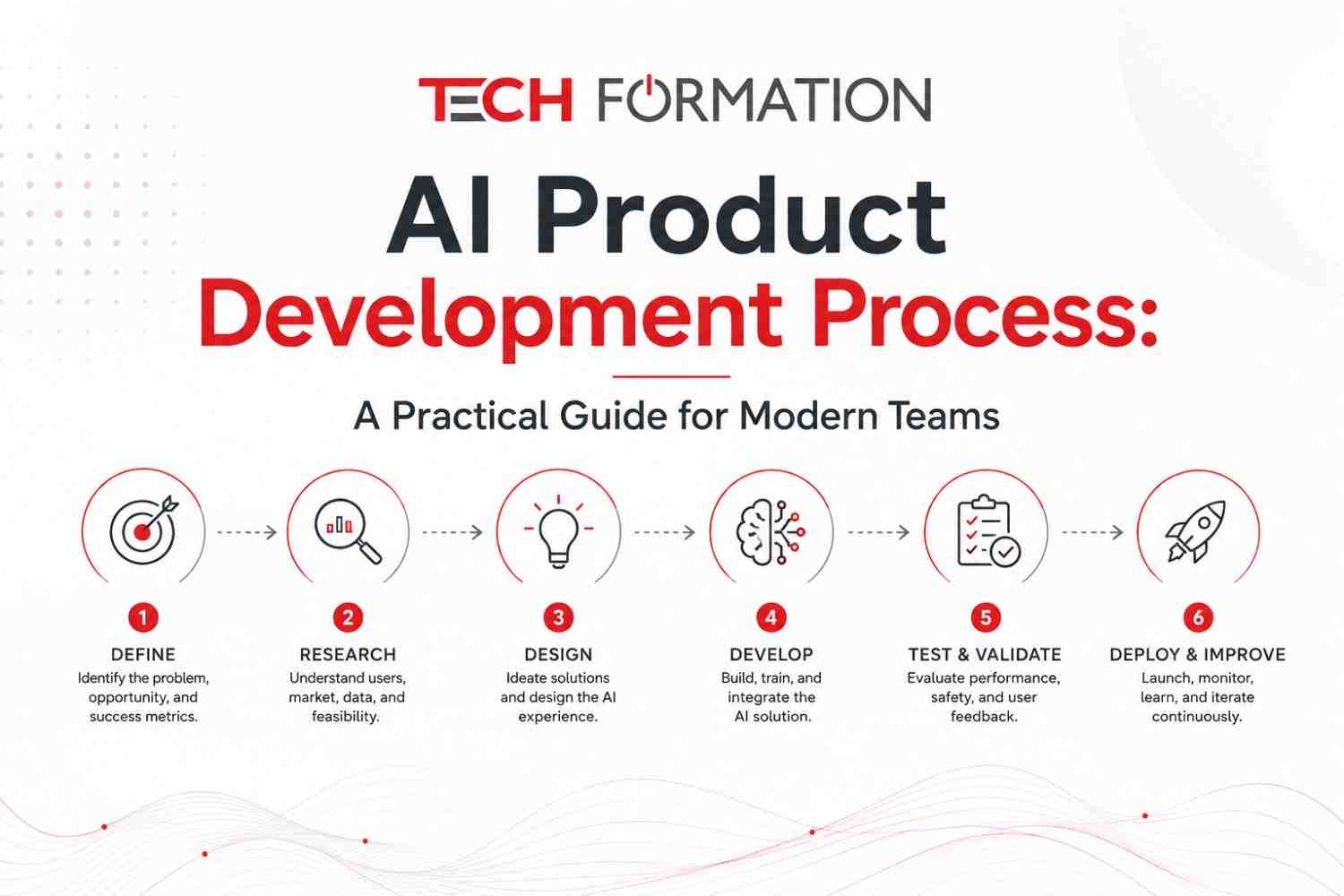
Most projects follow a structured lifecycle. A proven, industry-recognized model for analytics and algorithm projects is CRISP-DM (Cross-Industry Standard Process for Data Mining). Translate CRISP-DM into an ALGO-DEV checklist to keep scope and quality predictable:
- Business Understanding: Define objectives, success metrics, deployment constraints, and compliance requirements.
- Data Understanding: Inventory data sources, assess signal quality, and create a data map for lineage and governance.
- Data Preparation: Clean, label, and transform data; design feature stores and pipelines for production use.
- Modeling: Prototype algorithms (statistical, ML, hybrid) and benchmark against baselines using consistent metrics.
- Evaluation: Validate performance, fairness, robustness, and operational metrics in test environments.
- Deployment & Monitoring: Implement CI/CD, monitoring, and retraining triggers as part of MLOps.
ALGO-DEV checklist (compact)
- Define target metric and minimum acceptable performance.
- Verify data availability and legal permissions for training.
- Prototype with explainability and baseline comparisons.
- Plan production integration, latency, and scaling requirements.
- Establish monitoring, alerting, and retraining cadence.
Technical considerations: data, evaluation, and production
Effective custom algorithms require more than model selection. Key technical areas include data pipeline design, feature engineering, model evaluation (A/B testing, backtesting), latency and throughput planning, and robust monitoring. For enterprise projects, governance and risk management are important—refer to authoritative guidelines such as the NIST AI Risk Management Framework for governance best practices: NIST AI RMF.
Real-world scenario: fraud scoring at a payments company
A mid-size payments provider faced rising chargeback rates and strict latency limits for real-time authorization. Off-the-shelf fraud lists produced too many false positives and could not incorporate proprietary behavior signals. A custom algorithm development engagement implemented a hybrid model: rule-based filters for known high-risk patterns plus a lightweight gradient-boosted model that used session-level features. The result: 22% reduction in false positives, a 15% drop in chargebacks, and sub-100ms inference latency integrated into the authorization path. The project used the CRISP-DM steps and an ALGO-DEV checklist to ensure production readiness.
Practical tips for evaluating providers
- Request a small, time-boxed pilot that includes a success metric and delivery milestones.
- Insist on reproducible experiments and versioned artifacts (code, data snapshots, model binaries).
- Ask about infrastructure: who manages deployment, monitoring, and retraining—provider, client, or a shared model?
- Verify data governance practices, label provenance, and compliance with relevant standards (privacy, PCI, HIPAA where applicable).
Trade-offs and common mistakes
Custom algorithm projects carry trade-offs. Building bespoke solutions improves fit to the business but increases development cost, maintenance burden, and vendor lock-in risk. Common mistakes to avoid:
- Optimizing only for training accuracy instead of business-impact metrics (revenue, false positive cost).
- Neglecting production constraints: models that work in batch but fail under real-time latency or memory limits.
- Skipping data lineage and governance, which makes audits and debugging hard later on.
- Underestimating operational needs—monitoring, retraining, and incident response planning.
How to compare cost and outcomes
Compare proposals on both technical and business terms: expected uplift (expressed in the same KPI), time to production, ongoing maintenance costs, and risk allocation. A clear statement of work should list deliverables (data schema, model artifact, inference API, monitoring dashboard) and acceptance criteria tied to the ALGO-DEV checklist.
Core cluster questions
- How long does a typical custom algorithm development project take?
- What data governance is required for bespoke AI algorithm development?
- How are enterprise custom algorithms deployed and monitored in production?
- Which evaluation metrics matter when comparing custom algorithms to off-the-shelf models?
- What are the common integration patterns for embedding algorithms into existing software?
Vendor selection: contract and SLAs
When contracting, include SLAs for model performance, inference availability, and response times for incidents. Specify ownership of intellectual property and a plan for model handover with documented artifacts. For regulated industries, require audit logs, data lineage, and model explainability reports as deliverables.
Practical next steps checklist
- Define the target business metric and current baseline.
- Prepare a prioritized list of data sources and access arrangements.
- Run a short pilot with a measurable objective and fixed scope.
- Plan for production: deployment environment, monitoring, and retraining policy.
FAQ
What are custom algorithm development services and when should a business choose them?
Custom algorithm development services are engagements that create tailored models or algorithmic logic to meet specific business requirements. Choose them when off-the-shelf models fail to meet accuracy, latency, compliance, or integration needs, or when proprietary data offers a competitive advantage.
How long do bespoke AI algorithm development projects typically take?
Small pilots can take 6–12 weeks. Production projects often take 3–9 months, depending on data readiness, integration complexity, and regulatory review.
What is the difference between bespoke AI algorithm development and buying a vendor model?
Bespoke development customizes models to internal data, workflows, and constraints; vendor models offer faster deployment and lower upfront cost but may provide lower accuracy, less explainability, or limited compliance guarantees.
How should a company measure success for enterprise custom algorithms?
Measure success against business KPIs (e.g., revenue uplift, false positive reduction, cost savings), plus operational metrics like latency, uptime, and model drift rates. Include guardrails for fairness and compliance where relevant.
What are common maintenance responsibilities after deployment?
Maintenance typically includes monitoring performance and drift, retraining with new labels or features, updating for schema changes, and running periodic audits for fairness and compliance. Clearly assign these tasks in the contract or operational playbook.