Best Cyclone Dust Collector in Noida | Shimi Research
-

- Published Updated
- 1,672 views
Running a factory comes with many everyday challenges. Machines need regular maintenance, production has to stay on schedule, raw materials need to be handled carefully, and the workplace needs to remain clean. One problem that often gets overlooked is dust.
For some industries, dust is produced almost continuously. Cutting, grinding, crushing, drilling, woodworking, and material handling can all release particles into the air. If these particles are not collected properly, they can slowly spread across the workplace.
At first, it may only look like a housekeeping issue. But after some time, dust can settle on machines, collect around work areas, and make maintenance more difficult.
That is where a proper dust collection system can help.
If you are searching for the Best Cyclone Dust Collector in Noida, the right approach is not to simply pick the largest machine or the cheapest option available. Your production process should decide what kind of collector you need.
Where Does Industrial Dust Come From?
Every industry has its own source of dust.
A metalworking unit may generate particles while cutting or grinding. A woodworking facility may deal with sawdust and wood particles. A mineral-processing plant may produce heavier and more abrasive material.
Even when two factories use similar machinery, their dust-control requirements can be different.
The amount of dust also matters. A machine that runs for a few hours a day will obviously have different requirements from equipment that operates continuously.
Before selecting a collector, it helps to look at the entire process and identify exactly where the dust is coming from.
Once you understand the source, it becomes much easier to decide how the dust should be captured.
How Does a Cyclone Collector Separate Dust?
The basic idea behind a cyclone collector is surprisingly simple.
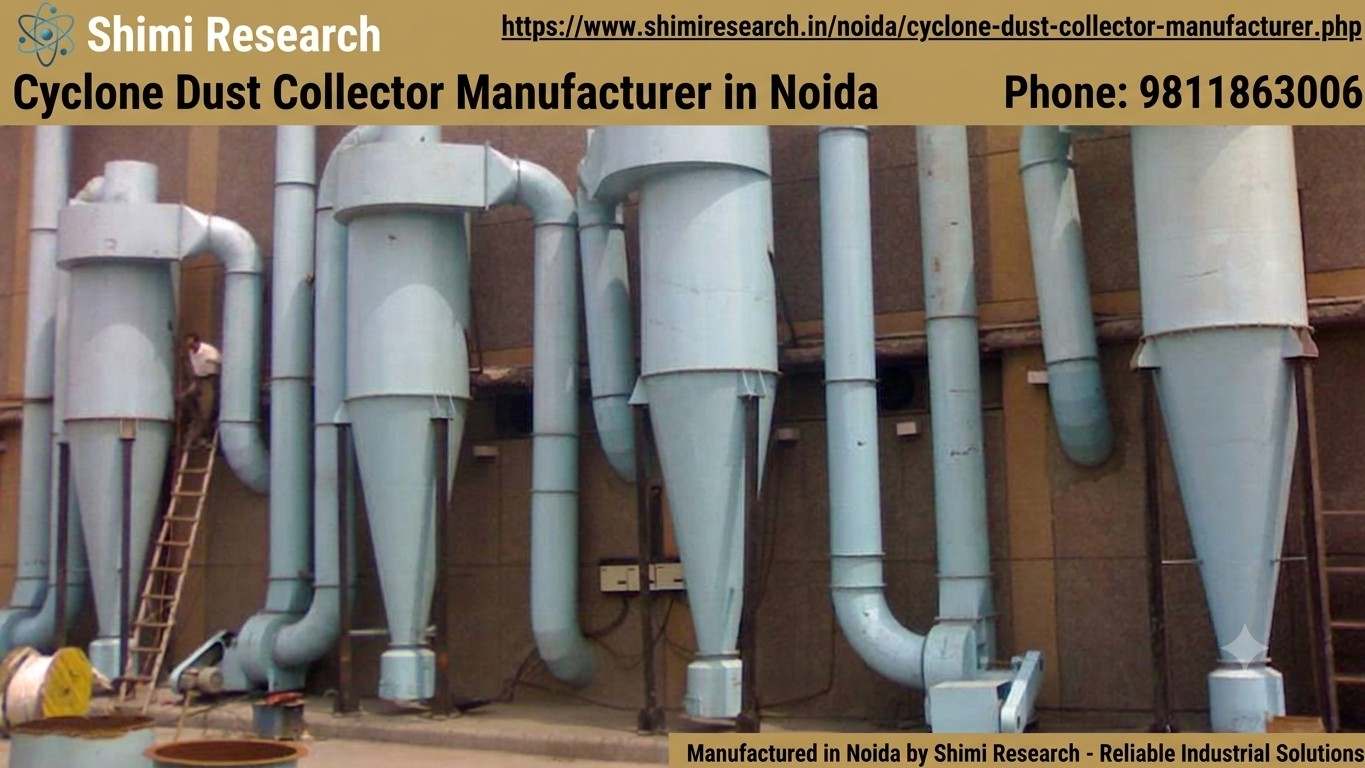
Dusty air enters the chamber and begins to rotate. As the air spins, heavier particles are pushed outward toward the walls of the chamber. Once they lose enough speed, gravity takes over and the particles fall into the collection hopper.
The cleaner air moves upward and exits the system.
There is no complicated mystery behind the process. The design simply uses airflow and centrifugal force to separate heavier particles from the air.
This makes cyclone collectors particularly useful in applications where large quantities of coarse or relatively heavy dust are generated.
A Cyclone Separator System can also be used as the first stage of a larger filtration setup. The cyclone removes the heavier material, while another filtration stage can handle smaller particles.
What Should You Look at Before Choosing a System?
This is probably the part that deserves the most attention.
Instead of starting with a catalogue, start with your factory.
Ask yourself:
- What material am I processing?
- How much dust is produced?
- What type of particles are generated?
- How many machines need extraction?
- How much airflow is required?
- Where can the collector be installed?
- Will additional filtration be necessary?
These questions may seem basic, but they can make a big difference.
For example, a collector designed for a small production area may not perform well when connected to several machines. Similarly, buying a very large unit for a small operation may simply increase the purchase and operating cost without providing any real advantage.
If you are comparing a Cyclone Dust Collector Delhi solution, it is better to select equipment based on actual operating requirements rather than assumptions.
What If the Dust Is Very Fine?
This is something many buyers should think about.
Cyclone collectors are particularly effective with larger and heavier particles. But not every industrial process produces only large particles.
Some operations also create very fine dust that remains suspended in the air.
In such cases, a cyclone can still be useful, but it may not be the final filtration stage. A secondary filter or another suitable air-cleaning system may be required to deal with finer material.
This is one reason the complete system should be planned together.
When considering Air Filtration Systems Delhi, look at the entire airflow path instead of focusing on just one piece of equipment.
The goal should be to decide what happens to the air from the moment it leaves the production machine until it exits the filtration system.
Why Capture Dust Before It Spreads?
Imagine trying to clean a room while someone is continuously throwing flour into the air.
You could keep sweeping the floor, but the problem would never really disappear.
Industrial dust can behave in a similar way.
If dust is allowed to escape from the production area, it can travel to other parts of the facility. Once it spreads, collecting it becomes much harder.
Capturing it close to the source is generally a more practical approach.
A properly designed Dust Extraction System Delhi can draw dusty air away from the point where particles are generated.
The extraction hood, ductwork, fan, and collector all have to work together. If one part is poorly designed, the whole system may not perform as expected.
So, simply installing a high-capacity fan is not necessarily the answer.
How Does Good Dust Control Help the Workplace?
A cleaner workplace is obviously easier to manage.
When less dust settles on equipment and surfaces, cleaning requirements can become more manageable. Maintenance teams can also work in a more organized environment.
Dust control can also help protect machinery from unnecessary buildup. Components that are exposed to excessive dust may require more frequent cleaning and attention.
For this reason, Industrial Air Pollution Control should be considered as part of the overall production setup.
It is not just about making the factory look cleaner. It is about controlling airborne and settled particles in a practical way.
Does General Ventilation Make a Difference?
Yes, especially in larger facilities.
Local dust extraction focuses on specific machines or production points. General ventilation looks at how air moves throughout the building.
Both can have a role.
For example, local extraction can capture dust directly from a grinding machine, while general ventilation can help manage the movement of air within the surrounding area.
When planning Industrial Ventilation Solutions India, the factory layout should be considered carefully.
Machine locations, working areas, building size, heat generation, airflow, and the type of contaminants present can all influence the final design.
A good ventilation plan should support the dust collection system rather than work against it.
Can One System Work for Every Factory?
Usually, no.
And that is perfectly normal.
Industrial dust collection is not really a one-size-fits-all situation.
A factory producing large quantities of heavy particles may require a different arrangement from a facility producing fine dust. A plant with several production lines may also need a different ducting and airflow design.
Even the available installation space can change the final equipment choice.
This is why it is useful to explain your actual production process to the manufacturer before placing an order.
A good manufacturer will ask questions about your application rather than immediately suggesting a standard machine.
Why Is the Manufacturer Important?
A dust collector may look simple from the outside, but designing the complete system requires practical knowledge.
The manufacturer needs to understand airflow, particle characteristics, equipment capacity, ducting, filtration, installation conditions, and maintenance requirements.
An experienced Cyclone Dust Collector Manufacturer Delhi can help bring these different parts together.
Shimi Research provides industrial dust collection and pollution-control solutions for different applications. Instead of treating every customer the same way, a proper consultation can help identify what type of system fits the specific process.
That can save you from making an expensive decision based only on machine size or price.
What About Pollution Control Equipment?
Dust collection is one part of a larger industrial pollution-control approach.
Depending on the process, a facility may require dust collectors, filters, extraction systems, ventilation equipment, or other control devices.
The right combination depends on what the factory produces and what type of emissions need to be controlled.
Companies searching for Pollution Control Equipment Delhi should therefore consider the complete application instead of buying equipment individually without understanding how each component will interact with the others.
Don't Forget About Maintenance
A dust collection system is not something you install and then forget about.
Like any industrial equipment, it needs attention.
Collection areas should be checked regularly. Ducts may need inspection. Fans and other components should be monitored. Filters, where used, need appropriate cleaning or replacement.
The good news is that proper maintenance does not have to be complicated when the system has been designed correctly.
Before purchasing, ask about routine maintenance, access to important components, spare parts, servicing, and operating requirements.
These small details can make a big difference after installation.
Is the Most Expensive System Always the Best?
Not at all.
A higher price does not automatically mean a better solution for your factory.
At the same time, choosing the cheapest option without understanding its capacity can create problems later.
The best choice is the one that matches your actual requirements.
You want enough capacity to handle the process comfortably, but you also want to avoid paying for equipment that is unnecessarily large or complicated.
Think about the complete cost of ownership, including installation, electricity, maintenance, replacement parts, and future servicing.
Final Thoughts
Choosing the Best Cyclone Dust Collector in Noida starts with understanding your own factory.
Look at where the dust comes from, what type of particles are produced, how much material is generated, and how the air moves through your production area.
A cyclone collector can be an effective way to separate heavier particles from dusty air. If your process also creates fine particles, additional filtration may be needed.
The important thing is to look at the complete picture.
The collector is only one part of the system. Extraction points, hoods, ducting, fans, filters, ventilation, installation, and maintenance all contribute to the final performance.
Instead of asking only, “Which dust collector should I buy?”, a better question is:
“What kind of dust-control system will actually work for my production process?”
Once you answer that question, choosing the right equipment becomes much easier.
A well-planned system can reduce dust buildup, make cleaning more manageable, protect equipment, and create a more organized production environment.
And in the long run, that is what makes a dust collection system genuinely useful—not how impressive the machine looks, but how well it fits into the everyday working of your factory.