Modern Data Lake Architecture: Design Patterns for Scalable Big Data Platforms
-

- Published Updated
- 1,758 views
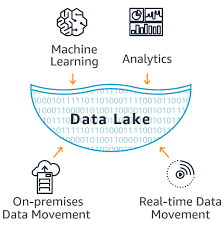
Data lake architecture provides a framework for storing, processing, and analyzing large volumes of structured and unstructured data. A well-designed data lake architecture enables flexible ingestion, scalable storage, metadata-driven discovery, and a range of analytics from batch queries to machine learning.
- Data lake architecture organizes raw and curated data across storage, processing, catalog, governance, and consumption layers.
- Key design choices include storage format, ingestion strategy (ETL vs ELT), metadata management, and security controls.
- Common patterns emphasize scalability, schema-on-read, data governance, and separation of compute and storage.
Data Lake Architecture: Core Concepts
At its core, data lake architecture describes how data flows from producers to consumers through a set of layers and services. Typical layers include raw storage, processing/compute, metadata/catalog services, governance and security, and consumption interfaces for analytics and machine learning. The architecture supports schema-on-read, enabling storage of diverse data types (logs, images, structured tables) without upfront schema enforcement.
Main Components of a Data Lake
Storage Layer
Object storage or distributed file systems are commonly used for the storage layer because they scale economically and handle large volumes of files and blobs. Data is often stored in open, columnar formats (for example, Parquet or ORC) for efficient analytics, while raw formats such as JSON, CSV, or binary are preserved for traceability.
Ingestion and Integration
Ingestion pipelines move data into the lake from transactional systems, IoT devices, logs, and external feeds. Strategies vary from batch ETL (extract, transform, load) to streaming ELT (extract, load, transform), with streaming frameworks enabling lower-latency analytics and event-driven processing.
Metadata and Catalog
A data catalog or metadata service provides discovery, lineage, schema information, and business context. Accurate metadata supports governance, search, and automated classification, making the lake usable for analytics teams and data scientists.
Processing and Compute
Processing engines range from parallel SQL query engines to distributed processing frameworks used for batch transformations, streaming, and model training. Modern architectures separate compute from storage so compute resources can scale independently.
Governance and Security
Governance includes access control, encryption, data masking, retention policies, and audit logging. Applying role-based access controls, data classification, and lifecycle policies helps meet compliance requirements and reduces risk.
Design Patterns and Best Practices
Zone-based Organization
Organize data into zones such as raw (ingested data), cleansed/curated (transformed and validated), and serving (optimized for consumption). Zones provide separation of concerns and support traceability from raw source to analytics dataset.
Schema-on-Read and Open Formats
Adopt schema-on-read and open file formats to maximize flexibility and interoperability between processing engines. Storing data in columnar formats for analytical queries improves I/O efficiency.
Lineage and Cataloging
Capture data lineage and maintain a searchable catalog so analysts can find datasets and understand their provenance and quality. Automated lineage tools help trace transformations and dependencies.
Separation of Storage and Compute
Design for independent scaling of storage and compute to reduce cost and increase agility. This enables different workloads (ETL, ad-hoc queries, model training) to run without interfering with one another.
Common Challenges and How to Address Them
Data Swamp Risk
Without governance and metadata, a data lake can become a data swamp. Enforce cataloging, access policies, and lifecycle rules to maintain quality and usability.
Performance and Cost Management
Optimize storage formats, partitioning, and compression to reduce query costs. Monitor usage patterns and apply tiered storage or retention policies to control long-term expenses.
Security and Compliance
Implement encryption at rest and in transit, fine-grained access controls, and auditing. Align governance with relevant standards or regulations applicable to the organization.
Data Lake vs. Data Warehouse vs. Lakehouse
A data warehouse typically enforces schema-on-write and is optimized for structured, curated datasets and BI workloads. A data lake emphasizes raw and diverse data, flexible schemas, and broad analytics use cases. The lakehouse pattern combines elements of both: open storage, transaction support, and structured query performance to support analytics and machine learning on a single platform.
For frameworks and standards relating to big data systems, consult guidance from organizations such as the National Institute of Standards and Technology (NIST) for interoperability and architectural considerations. NIST Big Data Program
Operational Considerations
Monitoring and Observability
Track pipeline health, data freshness, job failures, and query performance. Observability helps reduce downtime and improves trust in analytical outputs.
Data Quality and Testing
Automate data quality checks, schema validation, and regression testing for pipelines. Incorporate alerts and remediation workflows for anomalies.
Getting Started
Begin with a pilot project focused on a specific use case, such as log analytics or a machine learning dataset. Establish core cataloging and governance practices early, and iterate on storage and processing patterns based on workload characteristics.
FAQ
What is data lake architecture and how does it differ from a data warehouse?
Data lake architecture stores raw and diverse data with schema-on-read, supporting a wide range of analytics and machine learning. Data warehouses enforce schema-on-write and are optimized for structured, curated datasets used in reporting and BI. Lakehouses aim to combine the strengths of both approaches.
Which storage formats are best for a data lake?
Open, columnar formats such as Parquet and ORC are widely used for analytical workloads. Avro and JSON are common for event or semi-structured data. Choose formats that balance performance, compatibility, and tooling support.
How should data governance be implemented in a lake environment?
Implement a catalog, role-based access controls, encryption, data classification, and retention policies. Automate lineage capture and quality checks to ensure compliance and trust.
Can a data lake support real-time analytics?
Yes. Combining streaming ingestion with near-real-time processing engines enables low-latency analytics and event-driven data products alongside batch processing.