
Days Between Dates: How to Calculate the Number of Days Between Two Dates
-

- September 21st, 2026
- 2,066 views
Introduction
Knowing the days between dates is useful for planning vacations, tracking deadlines, calculating project durations, managing subscriptions, and measuring the time between important events. Whether you need to find the days between two dates, determine the number of days between two dates, or simply count days between dates, understanding the calculation can save time and prevent mistakes.
A date difference can be calculated manually, with a calendar, or by using an online date calculator. The easiest option for most people is a dedicated tool such as ToolFlora.com, which can quickly determine the number of days separating two dates.
What Does Days Between Dates Mean?
The days between dates refers to the number of calendar days separating one date from another. For example, if an event starts on March 1 and ends on March 10, the difference is 9 days when the starting date is not counted as a complete elapsed day.
The result can vary depending on whether you want to include the start date, end date, or both. Therefore, it is important to understand the counting method before calculating a date difference.
How to Calculate Days Between Two Dates
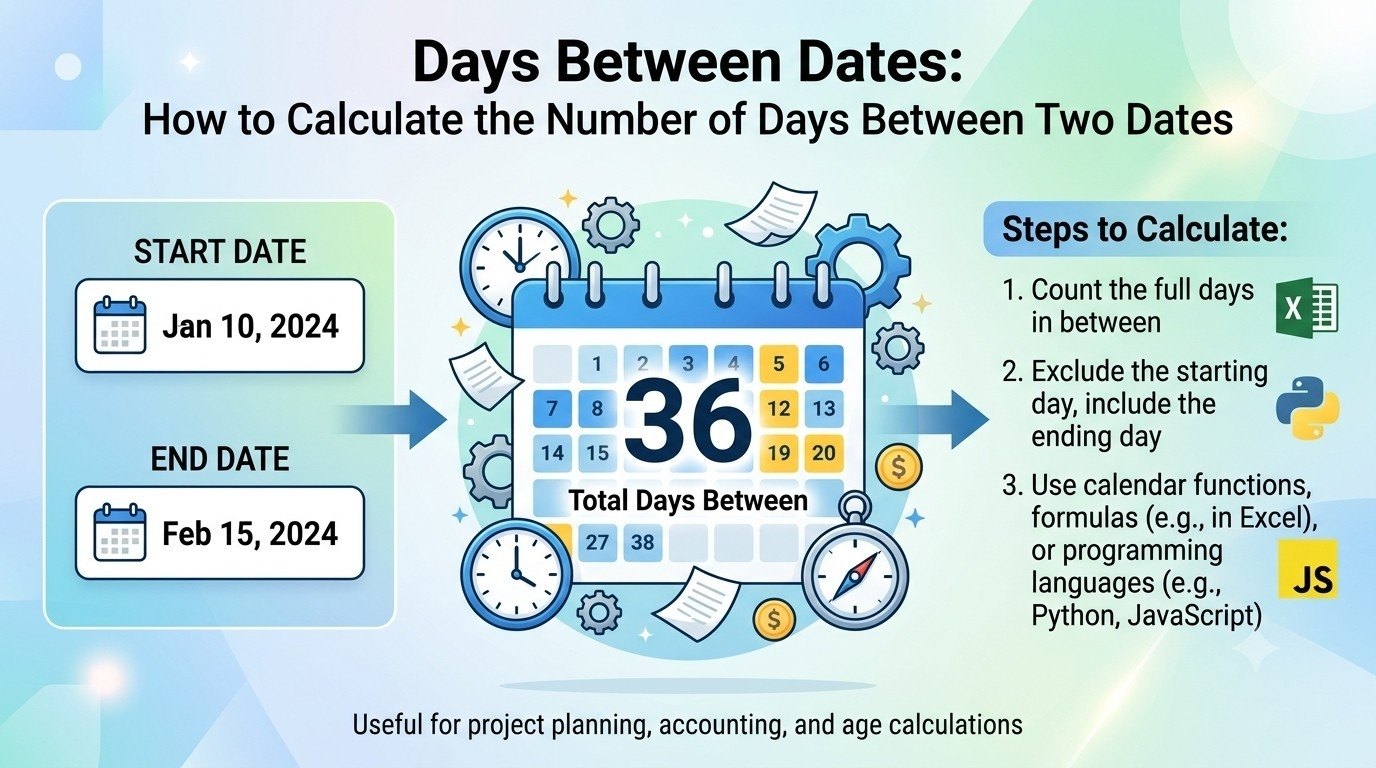
To calculate the days between two dates, follow these basic steps:
Identify the starting date.
Identify the ending date.
Determine the number of days remaining in the starting month.
Add the complete days in the months between the dates.
Add the days elapsed in the ending month.
Account for leap years when February has 29 days.
For example, suppose you want to calculate the number of days from April 10 to April 20. Subtracting the earlier date from the later date gives a difference of 10 days.
For longer periods, manual calculations can become complicated because different months have different numbers of days.
Understanding the Number of Days Between Two Dates
The number of days between two dates is generally calculated by subtracting the earlier date from the later date. Modern date calculators automatically account for months with 28, 29, 30, or 31 days and can also handle leap years.
For example:
January 1 to January 10 = 9 days
May 10 to May 20 = 10 days
December 20 to January 1 = 12 days
These examples demonstrate why simply counting calendar numbers is not always enough.
How to Count Days Between Dates
If you want to count days between dates manually, decide first whether the starting or ending date should be included. In many standard date-difference calculations, the start date is excluded and the end date represents the final point.
For business deadlines, travel planning, contracts, or event planning, the counting convention may be different. Always check the required calculation method when accuracy is important.
Inclusive vs. Exclusive Date Counting
One common source of confusion is whether the first and last dates should be included. An exclusive calculation measures the elapsed time from one date to another without counting the starting date as a full day.
An inclusive calculation counts both the starting and ending dates. For example, from July 1 through July 5, an inclusive count is five calendar days, while the elapsed difference between the two dates is four days.
This distinction is particularly important for hotel bookings, leave periods, legal deadlines, event schedules, and billing periods.
Tips for Accurate Date Calculations
When you count days between dates, keep the following points in mind:
- Check the exact year for both dates.
- Remember that February can have 28 or 29 days.
- Consider whether the calculation should be inclusive or exclusive.
- Make sure the dates are entered in the correct order.
- For international schedules, consider differences in time zones when calculating exact durations.
- Use an automated calculator when working with dates spanning multiple years.
Manual Calculation vs. Online Calculator
Manual date calculations are practical when the dates are close together. However, calculating longer periods requires checking each month's length and accounting for leap years. This increases the possibility of mistakes.
An online date calculator provides a quicker alternative. You simply enter the start and end dates, and the tool calculates the difference automatically. This is particularly useful when you need to perform several date calculations or verify a manually calculated result.
Why Use an Online Date Calculator?
An online calculator makes date calculations faster and reduces common errors. Instead of manually checking every month and accounting for leap years, you can enter two dates and receive the result immediately.
A date calculator is especially helpful when calculating long periods, checking project timelines, determining vacation duration, or comparing historical and future dates.
Conclusion
Calculating the days between dates is straightforward for short periods but can become challenging when dates span several months or years. Understanding whether dates are inclusive or exclusive is equally important for getting the correct result. An online calculator provides a convenient way to find the days between two dates, determine the number of days between dates, and accurately count days between dates without complicated manual calculations.
For a quick and convenient calculation, visit toolflora.com and use its date-related tools to simplify everyday calculations.
