How Digital Marketing Services Can Build a More Effective Demand Engine
-

- September 22nd, 2026
- 108 views
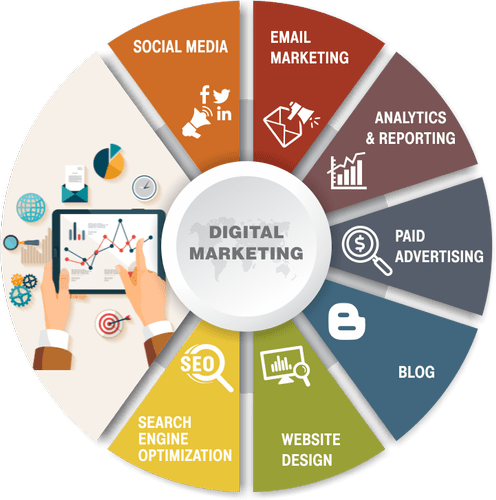
Digital marketing is often treated as a collection of individual activities.
SEO is handled separately. Paid advertising runs on another platform. Social media follows its own content calendar. Lead management may sit with the sales team.
This approach can create activity without creating a connected customer journey.
Digital Marketing Services can bring these activities together around common business objectives.
Start With the Right Audience
Marketing begins with understanding who the business wants to reach.
Audience research can explore:
Customer problems
Search behavior
Buying motivations
Industry requirements
Competitor positioning
Common objections
Preferred communication channels
This information can guide messaging, content, advertising, and channel selection.
Turning Visibility Into Opportunities
Traffic alone doesn't guarantee business growth.
A company may receive thousands of visitors but generate very few qualified inquiries.
The customer journey needs to move from awareness to interest and eventually toward action.
This can involve:
Relevant content
Clear service pages
Landing pages
Strong calls to action
Lead capture
Follow-up systems
Conversion tracking
Each stage contributes to the overall demand process.
Building Better Lead Generation
Lead Generation Services can help businesses create structured processes for attracting and capturing potential customers.
This may include:
Lead generation campaigns
Landing pages
Lead magnets
Search campaigns
Social campaigns
Qualification systems
Lead scoring
CRM integration
The objective should not simply be to generate a large number of leads.
Lead quality matters because sales teams need opportunities that have a reasonable connection to the company's offer.
The Role of Performance Marketing
Paid campaigns can provide businesses with a faster way to reach specific audiences.
Performance Marketing Services focus on measurable campaign outcomes rather than activity alone.
Campaign performance can be evaluated using metrics such as:
Cost per lead
Conversion rate
Qualified opportunities
Customer acquisition cost
Return on advertising spend
Revenue contribution
These measurements help businesses understand whether advertising is contributing to meaningful outcomes.
Why Conversion Matters
Generating demand is only part of the process.
When potential customers reach a website or landing page, the experience needs to make the next step clear.
Conversion optimisation can examine:
Page messaging
Forms
Calls to action
Navigation
Landing page structure
Mobile experience
Trust elements
Small improvements can sometimes make better use of existing traffic.
Connecting Channels
A customer might first encounter a business through an advertisement, later search for the company, read an article, and then engage through social media.
When these channels communicate a consistent message, the overall customer experience can become more coherent.
SEO, paid campaigns, content, and social activity should therefore support a common strategy rather than operate as isolated activities.
Measuring the Demand Engine
Marketing teams should regularly review performance.
Useful measurements include:
Qualified leads
Cost per acquisition
Conversion rates
Lead quality
Pipeline contribution
Channel performance
Customer acquisition cost
The purpose of measurement is not simply reporting.
It allows businesses to identify what should be improved, reduced, or expanded.
Turning Visibility Into Opportunities
Traffic alone doesn't guarantee business growth.
A company may receive thousands of visitors but generate very few qualified inquiries.
The customer journey needs to move from awareness to interest and eventually toward action.
This can involve:
Relevant content
Clear service pages
Landing pages
Strong calls to action
Lead capture
Follow-up systems
Conversion tracking
Each stage contributes to the overall demand process.
Building Better Lead Generation
Lead Generation Services can help businesses create structured processes for attracting and capturing potential customers.
This may include:
Lead generation campaigns
Landing pages
Lead magnets
Search campaigns
Social campaigns
Qualification systems
Lead scoring
CRM integration
The objective should not simply be to generate a large number of leads.
Lead quality matters because sales teams need opportunities that have a reasonable connection to the company's offer.
The Role of Performance Marketing
Paid campaigns can provide businesses with a faster way to reach specific audiences.
Performance Marketing Services focus on measurable campaign outcomes rather than activity alone.
Campaign performance can be evaluated using metrics such as:
Cost per lead
Conversion rate
Qualified opportunities
Customer acquisition cost
Return on advertising spend
Revenue contribution
These measurements help businesses understand whether advertising is contributing to meaningful outcomes.
Why Conversion Matters
Generating demand is only part of the process.
When potential customers reach a website or landing page, the experience needs to make the next step clear.
Conversion optimisation can examine:
Page messaging
Forms
Calls to action
Navigation
Landing page structure
Mobile experience
Trust elements
Small improvements can sometimes make better use of existing traffic.
The Role of Performance Marketing
Paid campaigns can provide businesses with a faster way to reach specific audiences.
Performance Marketing Services focus on measurable campaign outcomes rather than activity alone.
Campaign performance can be evaluated using metrics such as:
Cost per lead
Conversion rate
Qualified opportunities
Customer acquisition cost
Return on advertising spend
Revenue contribution
These measurements help businesses understand whether advertising is contributing to meaningful outcomes.
FAQs
What do digital marketing services include?
They can include SEO, paid advertising, social media, content marketing, lead generation, conversion optimization, analytics, and related digital activities.
What are lead generation services?
They help businesses attract, capture, qualify, and manage potential customer opportunities.
What is performance marketing?
It is a measurable approach to paid marketing where campaigns are evaluated against defined outcomes and performance metrics.
Conclusion
Digital marketing becomes more effective when the different parts of the customer journey work together.
Audience research, content, search, paid advertising, lead generation, conversion optimisation, and performance measurement can form a connected demand engine rather than a collection of separate marketing activities.