What Is a Digital Museum? How Technology Reinvents Heritage
-

- Published Updated
- 1,883 views
For generations, visiting a museum meant standing in hush-quiet corridors, peering through reflective glass cases, and reading small printed placards under low yellow lighting. You were strictly an observer, cautioned never to reach out or touch the glass. While preservation remains essential, the way culture is shared has fundamentally changed. Today, cultural institutions around the world are opening up physical and virtual vaults to the public in entirely new ways.
At the center of this transformation is the modern Digital Museum. Entering 2026, cultural spaces are no longer confined by physical floor plans or geographical borders. Through spatial computing, high-precision photogrammetry, and intelligent interactive storytelling, historical institutions are morphing into responsive digital repositories that invite visitors to participate, examine, and immerse themselves in human heritage like never before.
Understanding the Fundamentals of a Digital Museum
At its most fundamental level, a Digital Museum is an institution that leverages digital technologies to preserve, interpret, and display cultural, artistic, and scientific artifacts. Unlike a simple web page with photos of antiquities, a modern digital gallery builds multi-layered environments where artifacts exist as three-dimensional interactive digital twins.
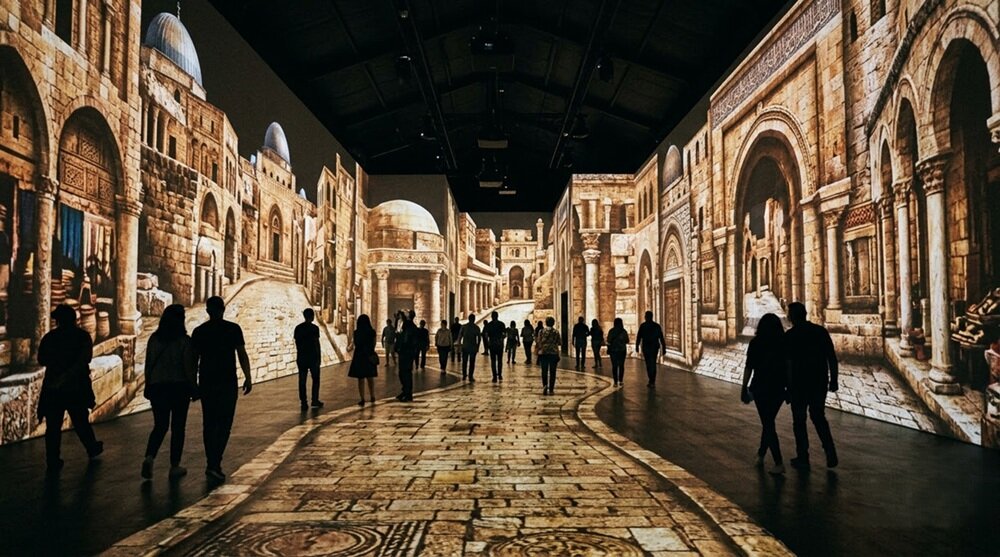
This evolution occurs on two fronts. On one side, physical museum halls incorporate spatial audio, laser projection mapping, and augmented reality overlays onto real-world relics. On the other side, purely online spatial platforms allow anyone with a web browser or wearable headset to walk through digital galleries from thousands of miles away. In experiential cultural curation, building a cutting-edge digital museum means turning static history into a living, educational dialogue that connects emotionally with audiences of all ages.
Core Technologies Powering the Digital Museum in 2026
Recent breakthroughs in computer vision and spatial displays have accelerated what heritage spaces can achieve. Several key technologies form the backbone of today's digital exhibition spaces:
· Sub-Millimeter 3D Photogrammetry & LiDAR Scanning: Curators can now capture physical sculptures, ancient masonry, and fragile textiles down to sub-millimeter surface textures. These high-fidelity digital twins ensure that even if an ancient relic suffers environmental decay, an exact digital twin survives forever for global research and study.
· Spatial Computing and Markerless Augmented Reality: Rather than looking away at a smartphone screen, visitors wear lightweight spatial glasses. As they view an ancient Greek urn or Roman coin, contextual overlays project original vivid colors, metallurgical scans, or historical reenactments directly into their field of view.
· Interactive Conversational AI Curators: Trained on vetted academic archives and primary historical documents, generative AI personas allow visitors to engage in natural dialogue. A guest can literally ask an interactive historical persona questions about daily life during the Renaissance and receive historically accurate, real-time responses.
· Volumetric Video and Spatial Audio Mapping: Audio is no longer a standard recorded voice over a pair of communal headphones. Directional sound fields reproduce authentic acoustic resonance of ancient cathedrals, temples, or industrial machinery, matching the exact spatial movement of the visitor.
Comparing Physical and Digital Museum Formats
Examining the functional attributes of traditional galleries alongside digital heritage platforms highlights how both models complement each other:
· Physical Museum Displays: Offers irreplaceable tangible authenticity and original material presence. However, they face physical square-footage constraints, geographical access barriers, and strict light exposure limits to prevent delicate artifact degradation.
· Virtual Digital Museum Spaces: Provides unlimited spatial capacity, worldwide 24/7 accessibility, and safe digital interaction with delicate artifacts. While they lack the physical aura of tangible antiquities, they democratize education for schools and remote communities globally.
· Hybrid Phygital Installations: Combines genuine physical artifacts with dynamic projection mapping, gesture-based touchscreens, and mixed-reality layers. This delivers the highest visitor retention rate by anchoring sensory wonder to verified physical artifacts.
Real-World Applications of Digital Museum Spaces
Across the cultural sector, innovative implementations demonstrate that digitalization expands visitor curiosity rather than replacing physical attendance:
1. Heritage Preservation in the Modern Digital Museum
Many archaeological wonders face persistent threats from climate change, natural disasters, and over-tourism. Creating detailed digital archives allows endangered heritage sites—such as delicate rock art or sunken maritime shipwrecks—to remain accessible to archaeologists and the public without risking physical degradation.
2. Immersive Educational Galleries in a Digital Museum
Modern students frequently disengage from text-heavy exhibition panels. By placing students inside 360-degree historical battlefields, planetary orbits, or biological cell simulations, digital galleries turn learning into an active discovery process. Experiencing an intuitive digital museum environment allows learners to manipulate historical instruments and conduct virtual scientific experiments that would be impossible in traditional classrooms.
3. Global Democratization of Rare Cultural Collections
Major national museums typically exhibit only five to ten percent of their vast collections at any given time, keeping the remainder locked in climate-controlled storage vaults. Digital platforms unlock these dormant treasures, allowing independent researchers, rural schools, and global art enthusiasts to explore complete collections on demand.
Best Practices for Curating an Engaging Digital Museum
Deploying technology for its own sake often results in shallow, distracting gimmicks. Successful digital exhibition design follows strict curatorial standards:
· Narrative-Driven Technology: Hardware and visual effects must always serve the underlying historical narrative. If a holographic projection does not deepen emotional understanding of the artifact, it quickly becomes visual clutter.
· Universal Accessibility and Intuitive Navigation: Digital exhibits must cater to users of all ages and abilities. This includes spatial audio descriptions for the visually impaired, real-time subtitling, adjustable font scaling, and zero-learning-curve gesture or touch controls.
· Academic Rigor and Vetted Provenance: Digital twins and AI-guided narratives must adhere to rigorous scholarly verification. Curators must clearly cite sources and ensure digital reconstructions accurately represent historical consensus without distorting facts.
The Future of the Digital Museum Ecosystem
Looking toward the future, the boundary between physical museum spaces and digital exploration will continue to soften. As generative spatial simulations and decentralized archival ledgers mature, communities will have the opportunity to curate their own folk histories, preserving oral traditions and local folklore alongside famous masterworks.
The mission of cultural curation has always been to bridge the past with the present so we can better understand the future. By embracing digital technologies with purpose and scholarly integrity, the modern museum ensures that humanity's shared stories remain vibrant, accessible, and deeply inspiring for centuries to come.