How to Download and Use a Free EDB to PST Converter: Step-by-Step Guide
-

- April 26th, 2026
- 303 views

FREE SEO Topical Map Generator: Find Your Next Content Ideas
Converting Exchange database files (EDB) to Outlook PST files is a common task for mailbox recovery, migration, or offline analysis. This guide explains how to get an EDB to PST converter free download and perform a reliable conversion, covering the steps, a named checklist for safety, common mistakes, and practical tips. The primary focus is on safe, repeatable procedures for converting EDB to PST so mailboxes and items remain intact.
EDB to PST converter free download: what to prepare before downloading
Before searching for an EDB to PST converter free download, prepare by identifying the Exchange version, locating the EDB file(s), and making a verified copy. Confirm available disk space and a separate working system or VM for conversions. If the EDB belongs to an active Exchange server, either brick-level offline copies or use Exchange‑aware export methods; never run conversions against a live production EDB without a safe snapshot.
Step-by-step: download and convert EDB files to PST
1. Verify the EDB file and environment
Check file integrity and timestamp. Use checksum or a verified backup. Note the Exchange Server version (2010, 2013, 2016, 2019) because some converters report better compatibility with specific versions. If the EDB is from a mounted database, create an offline copy using backup tools or a database-level snapshot.
2. Locate a free converter and download safely
Search for an EDB to PST converter free download offered by reputable vendors or open-source projects. Always download from the vendor's official site, scan the installer with antivirus, and verify hashes when available. Avoid unknown torrent or mirror sites. If Exchange provides built-in export options (for example, mailbox export cmdlets in Exchange Management Shell), consider those as supported alternatives; see the official Microsoft documentation for mailbox export procedures (Microsoft: New-MailboxExportRequest).
3. Run conversions on a copy and in a controlled environment
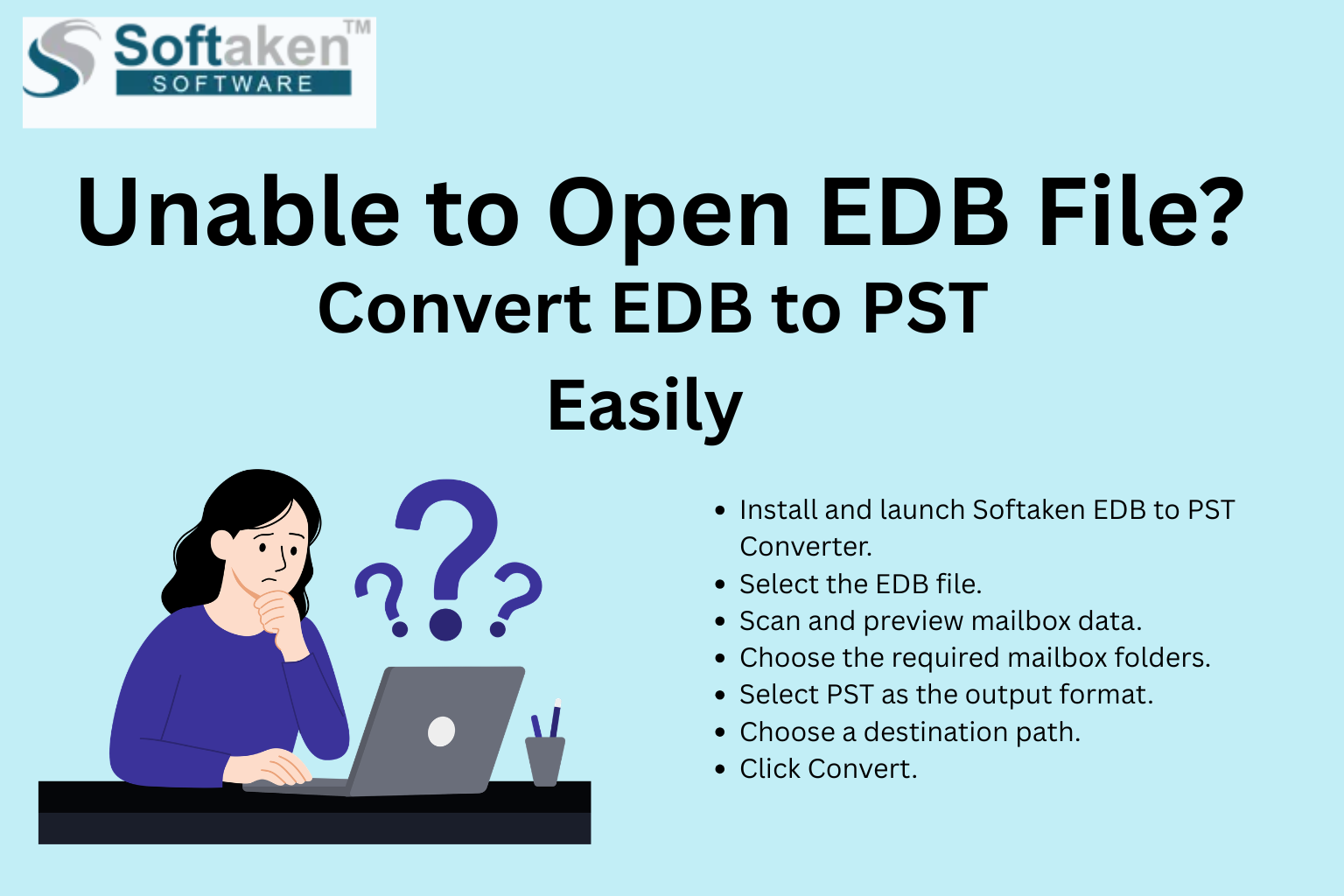
Install the converter on a test workstation or VM. Load only copies of EDB files. Use the converter's preview or scan features first to inspect mailbox structure. Select target mailboxes or folders and export to PST one mailbox at a time to limit errors. Keep logs and note any skipped items.
4. Validate PST output
Open exported PSTs in a current version of Outlook or use a PST validation tool. Check mailbox counts, folder names, email headers, attachments, and calendar items. Spot-check a sampling of mail items for content fidelity. Only after validation is complete should PSTs be moved to production storage or imported into another mailbox.
S.A.F.E. EDB→PST checklist (named framework)
Use the S.A.F.E. checklist before and during conversion:
- Snapshot: Create verified backups or snapshots of the EDB.
- Authenticity: Download from official vendor pages and verify signatures/hashes.
- Filter: Export mailbox-by-mailbox and use filters to limit scope.
- Evidence: Validate output, keep logs, and preserve original copies.
Practical tips for reliable conversions
- Always work on copies of EDB files; never modify originals.
- Prefer a dedicated VM with enough RAM and disk throughput to avoid timeouts on large mailboxes.
- If available, use converters that support Exchange version and public folder structures to avoid data loss.
- Keep a clear naming convention for PST files (user-mailbox_YYYYMMDD.pst) and store checksums for later verification.
Common mistakes and trade-offs
Common mistakes
- Converting directly from live EDB without a backup — risk of corruption or inconsistent exports.
- Assuming all converters preserve metadata (read/unread status, original entry IDs) — verify before relying on output.
- Skipping validation — undetected missing items can cause operational problems later.
Trade-offs to consider
Free converters may offer limited features or slower performance compared with paid enterprise tools that provide advanced filtering, scripting, and automation. Built-in Exchange exports (Exchange Management Shell) are supported but may require elevated permissions and additional setup. Choose based on volume, required fidelity, and compliance needs.
Short real-world example
Scenario: A small law firm needs to provide mail records from an old Exchange 2013 server. The admin created a VSS snapshot of the database, copied the EDB to a secured VM, downloaded a free EDB to PST converter from an official vendor page, and exported three user mailboxes to separate PSTs. Each PST was opened in Outlook to confirm folder structure and attachments. The S.A.F.E. checklist was followed, and checksums were stored with the final archive.
Core cluster questions (for related articles or internal links)
- How to verify an EDB file before conversion?
- What are the differences between EDB and PST file formats?
- When to use Exchange Management Shell instead of a third-party converter?
- How to handle public folders when exporting EDB files?
- What are best practices for archiving PST files after conversion?
Final checklist before finishing conversion
Before archiving or importing PSTs, ensure backups are stored, validation is complete, logs are preserved, and a rollback plan exists. Label and secure the PST files and record permissions for future audits.
FAQ: Is an EDB to PST converter free download safe to use?
Downloading an EDB to PST converter free download can be safe if the file comes from an official vendor or trusted open-source project, the installer is scanned, and the conversion occurs on copies of the EDB in a controlled environment. Follow the S.A.F.E. checklist and validate outputs.
How long does it take to convert EDB files to PST?
Conversion time depends on EDB size, mailbox volume, disk throughput, and tool efficiency. Small mailboxes may convert in minutes; multi-gigabyte databases can take hours. Run a small test export to estimate total time.
Can a free converter recover deleted mailbox items from an EDB?
Some tools include recovery features for soft-deleted items, but this varies. If recovery of deleted items is required, verify the converter’s capabilities and test on a copy of the database first.
Do converters preserve email metadata and folder structure?
Many converters preserve folder structure, timestamps, and most metadata, but behavior varies. Validate by spot-checking exported PSTs for headers, read/unread status, calendar items, and attachments.
What is the best way to import converted PST files back into Exchange or Outlook?
Import PSTs using Outlook’s Import/Export or Exchange mailbox import commands depending on target environment. For large-scale imports, use scripted or server-side import tools and verify permissions and mailbox quotas before importing.