Why Are Dutch and Belgian Households Cancelling Their Cable in 2026, and What Are They Watching Instead?
-

- Published Updated
- 412 views
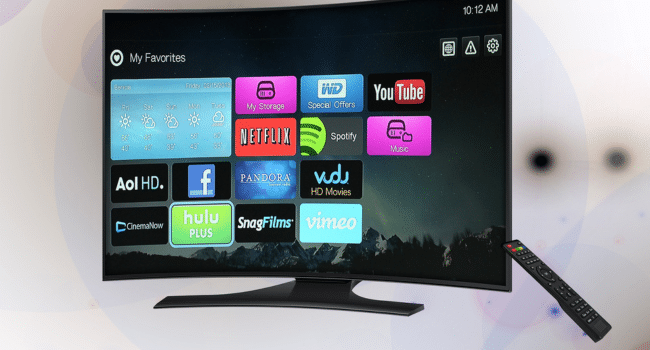
In the Netherlands, the average household cable TV subscription costs between 45 and 75 euros per month depending on the provider and bundle. Ziggo, KPN, and T-Mobile Thuis have all raised prices in the past two years. In Belgium, Telenet's Whop bundles and Proximus Flex packages sit in roughly the same range.
That's between 540 and 900 euros per year for a service that most households use for maybe eight to ten channels out of the 200 they're paying for.
The cord-cutting movement in the Netherlands and Belgium is not catching up to the US. It's running on its own timeline, driven by local factors that get missed when you read the international streaming press.
What Is Actually Driving Cord-Cutting in the Benelux Right Now?
Three things, in the order that actually matters to real households.
First: broadband quality. The Netherlands has one of the highest fibre penetration rates in Europe, around 70% of households with fibre-to-the-home access. Belgium is behind but catching up, particularly in Flanders where Proximus has been building aggressively since 2022. When your internet is fast enough to stream 4K reliably, the technical argument for cable TV collapses.
Second: price. Streaming-only households in the Netherlands are spending roughly 30 to 50 euros per month total: Netflix for entertainment, Disney+ for family content, Videoland for Dutch series, maybe an IPTV subscription for live channels. That is a 200 to 400 euro annual saving compared to a full cable bundle. Over five years that is real money.
Third: content fragmentation. This is the one cable providers never talk about honestly. Sports rights in particular are fragmented across Ziggo Sport, ESPN Netherlands, DAZN, and Viaplay. Viaplay holds significant sports rights in the Netherlands and operates as a separate streaming subscription. A cable TV package in 2026 does not actually guarantee you can watch all the football you want. People end up paying for cable plus streaming anyway. Once that reality lands, the cable starts to look very optional.
Why Is IPTV Growing Faster Than Other Cord-Cutting Options?
IPTV occupies a gap that Netflix and Disney+ don't fill: live television. Sports, live news, local programming. For Dutch viewers, that means NPO Journaal at 8pm and the Eredivisie on a Sunday afternoon. For Belgian viewers, that means De Afspraak on Canvas and the Pro League.
Streaming platforms have made almost no headway on live local broadcasting rights. NPO Start and VRT Max cover public broadcasting on-demand but do not carry commercial channels or live sports. RTL XL covers RTL's back catalogue. Streamz in Belgium handles DPG Media content. None of these replace the live channel experience of cable TV.
IPTV solves exactly that remaining use case, at a fraction of the cable price. A solid IPTV subscription in 2026 typically runs between 15 and 35 euros per month: live television with thousands of channels, catchup, and on-demand for a fraction of what Ziggo charges for a comparable live TV package.
What Is TiviMate and Why Do IPTV Users Keep Recommending It?
TiviMate is an IPTV player application: software that takes your IPTV subscription's channel list and presents it as a proper television guide with EPG, favourites, multi-screen viewing, and recording. It runs on Android TV devices and Amazon Firestick.
It's become the default recommendation in IPTV communities because it is the most polished option available for the living room setup. The interface is built for a remote control. The EPG rendering is fast. Multi-screen mode for simultaneous sports is something competitors haven't matched.
TiviMate itself is separate from the subscription. You buy or find a subscription separately and load it into TiviMate. The player does not care where the streams come from.
How Are Dutch Households Getting Started with IPTV?
The typical setup in the Netherlands: an Android TV box (commonly an NVIDIA Shield or a cheap X96 box from bol.com at 30 to 50 euros) connected to the main TV, TiviMate installed, an IPTV subscription loaded in. Total hardware cost is a one-time spend. Monthly recurring cost is the subscription.
The key for Dutch users is finding a subscription built for the Dutch market: not a generic European package that happens to include NPO as an afterthought with no EPG data and poor stream reliability. Dutch viewers have specific expectations. NOS 8 o'clock news, Eredivisie coverage, local regional channels in some cases.
Services like Tivimate IPTV Nederland are built around the Dutch channel lineup with proper EPG data for Dutch programming and subscription tiers designed for Dutch household viewing habits, rather than trying to serve 40 European countries simultaneously.
Is the Situation in Belgium Any Different?
More complicated, actually.
Belgium's cable market is dominated by Telenet in Flanders and Proximus across the country. Both are expensive. The bigger complexity is that Belgian viewers need two entirely different channel sets depending on which region they're in.
A Flemish viewer in Ghent switching to IPTV needs VTM, Canvas, Een, Vier: Flemish public and commercial broadcasters. They may also use VRT Max for public broadcasting catch-up and Streamz for premium Belgian series from DPG Media. A viewer in Liege needs La Une, RTL-TVI, La Deux: entirely different channels from different broadcast groups. A generic IPTV subscription that claims to cover Belgium usually covers one of these reasonably and the other barely.
The EPG situation is even more chaotic. Belgian channel EPG data requires separate XMLTV sources for the Flemish and Wallonian channels, and the channel ID matching needs to be done specifically for Belgian provider feeds. Most subscriptions haven't done this work.
For Belgian households, both Flemish and Wallonian, Tivimate iptv belgië is designed to handle both language communities within the same subscription, which is not as common as you would expect in the IPTV market.
What Does This Mean for the Broader Broadcasting Landscape?
Uncomfortable truth for cable providers: they're not competing on content anymore. The content they exclusively carry is shrinking. Sports rights are being acquired by streaming platforms including Viaplay and DAZN. Local public broadcasting is freely available online via NPO Start and VRT Max. The cable providers' main value proposition is 'convenience', and IPTV is increasingly just as convenient, running on the same TV, on a 40-euro box from bol.com or MediaMarkt.
The Dutch and Belgian cable markets will not collapse overnight. Older demographics and households without tech-comfortable members will stay on cable for years. But among under-45 households with solid broadband, the shift is already happening.
Frequently Asked Questions About Cord-Cutting in the Netherlands and Belgium
Q: What is the cheapest legal way to watch Dutch TV channels like NPO and RTL without cable in 2026?
NPO channels are available free via NPO Start without any subscription. RTL channels require an RTL XL subscription at around 4.99 euros per month. For Dutch series and films, Videoland (also from RTL) offers a streaming library. For a complete live TV replacement including all Dutch channels with a single guide interface, an IPTV subscription running through TiviMate is the most cost-effective approach, typically costing 15 to 25 euros per month for a full Dutch channel package.
Q: Is it possible to watch Belgian channels like VTM and La Une outside Belgium?
VTM Go and VRT Max are available via app but geo-restricted to Belgian IP addresses. RTL Play (Wallonian content) is similarly restricted. Streamz, the DPG Media streaming service, is also Belgium-only. For Belgian viewers who want to access these channels while abroad, or who want them integrated into a unified TV guide interface rather than jumping between apps, an IPTV subscription covering the Belgian market is the practical solution.
Q: How much can a Dutch or Belgian household actually save by cancelling cable?
A household currently paying 65 euros per month for cable TV (without broadband) switching to an IPTV subscription at 20 euros per month saves 45 euros per month. That is 540 euros per year, or 2,700 euros over five years. The one-time hardware cost of an Android TV box or Firestick is 30 to 80 euros, available from bol.com and MediaMarkt. Most households recover this hardware cost within the first two months of switching.
Q: Do Dutch and Belgian IPTV providers offer customer support in Dutch and French?
Quality varies significantly by provider. Generic European IPTV providers typically offer support in English only. Providers specifically built for the Dutch and Belgian markets offer support in Dutch, and some offer French-language support for Wallonian subscribers. This is worth confirming before subscribing: EPG configuration issues, channel outages, and M3U URL updates are the most common support reasons and having support in your own language makes a meaningful difference.
Q: What happens to my IPTV if my internet goes down?
IPTV requires an active internet connection. If your broadband goes down, IPTV stops working, unlike cable which continues independently of your internet. This is the practical reliability difference between cable and IPTV worth considering for households where television access during internet outages matters, for example for elderly family members or in areas with less stable broadband.
Q: Can I use an IPTV subscription on my television and my phone at the same time?
Most IPTV subscriptions allow one to three simultaneous connections. A subscription with two connections allows one person watching on the main TV via TiviMate and another watching on a phone via IPTV Smarters simultaneously. Confirm the connection limit with your provider before subscribing, especially for households with multiple regular viewers.