Science Education Guide to Earth’s Circumference
-

- Published Updated
- 7,654 views
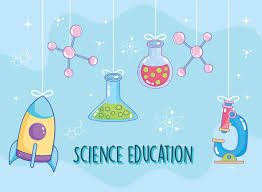
Learn how science education helps students understand the world circumference in km and Earth science concepts.
Science Education and the Importance of Understanding the World Circumference in KM
Science education plays a major role in shaping the future of society. It helps people understand how the world works, encourages critical thinking, and develops problem-solving skills. From understanding gravity and electricity to learning about space and the environment, science education opens the door to knowledge and innovation.
One interesting topic often discussed in science education is the world circumference in km. This concept helps students understand the size of Earth, geography, navigation, astronomy, and mathematics. Learning such scientific facts improves curiosity and inspires young minds to explore the universe.
In this article, we will explore the importance of science education while naturally discussing the world circumference in km and its significance in modern learning.
What Is Science Education?
Science education is the teaching and learning of scientific concepts, theories, experiments, and discoveries. It covers subjects such as:
- Physics
- Chemistry
- Biology
- Astronomy
- Environmental Science
- Earth Science
The main goal of science education is to help students understand natural phenomena and develop logical thinking skills. It teaches learners how to ask questions, test ideas, and discover solutions.
Science education is important for students of all ages because it prepares them for real-world challenges and future careers.
Why Science Education Matters
Science education benefits individuals and society in many ways. It encourages innovation and helps countries progress in technology, healthcare, engineering, and environmental protection.
1. Develops Critical Thinking
Science encourages students to analyze information carefully before making conclusions. This improves reasoning and decision-making skills.
2. Encourages Curiosity
Scientific learning inspires people to explore how things work. Questions about Earth, planets, animals, weather, and space often begin with science education.
3. Improves Problem-Solving Skills
Experiments and scientific methods teach students how to solve problems logically and creatively.
4. Supports Technological Advancement
Modern inventions like smartphones, satellites, medical equipment, and electric vehicles are all connected to science.
Understanding the World Circumference in KM
One fascinating topic in science education is the measurement of Earth’s size. The world circumference in km refers to the total distance around the Earth.
Scientists have calculated Earth’s circumference to be approximately:
40,075 km
This measurement is taken around the equator and is known as the equatorial circumference.
The polar circumference, measured from pole to pole, is slightly smaller because Earth is not a perfect sphere.
How Scientists Measured Earth’s Circumference
The calculation of the world circumference in km dates back thousands of years. Ancient Greek mathematician Eratosthenes made one of the earliest accurate measurements of Earth’s circumference.
He used:
- Shadows
- Sunlight angles
- Distance between cities
Using geometry and observation, he estimated Earth’s circumference with impressive accuracy.
This discovery became one of the greatest achievements in early science education and astronomy.
Science Education and Geography
Science education helps students understand Earth’s structure, continents, oceans, atmosphere, and climate.
Learning about the world circumference in km also helps explain:
- Time zones
- Navigation systems
- Flight distances
- Satellite communication
- Global weather patterns
Geography and science together help us understand how connected the world truly is.
Role of Science Education in Space Exploration
Space exploration depends heavily on scientific learning. Astronauts, engineers, and researchers use science to study planets, stars, and galaxies.
Understanding Earth’s size and orbit is essential for:
- Rocket launches
- Satellite positioning
- Space missions
- GPS technology
Organizations like NASA and ISRO use scientific calculations related to Earth’s dimensions every day.
Science education prepares future scientists who may contribute to space discoveries.
Modern Technology and Science Education
Technology has transformed the way students learn science today. Online classes, virtual labs, and educational videos make learning more interactive and enjoyable.
Modern science education includes:
- Digital simulations
- Robotics
- Artificial intelligence
- Virtual reality learning
- Interactive science experiments
Students can now explore concepts like the world circumference in km using maps, animations, and 3D Earth models.
Importance of Scientific Literacy
Scientific literacy means understanding scientific concepts well enough to make informed decisions in daily life.
People with good science education can better understand topics such as:
- Climate change
- Health and medicine
- Renewable energy
- Environmental protection
- Space science
Scientific literacy also helps people identify misinformation and think critically about global issues.
Fun Facts About Earth’s Circumference
Here are some interesting facts students often learn in science education:
- Earth’s equatorial circumference is about 40,075 km.
- Earth rotates at roughly 1,670 km per hour near the equator.
- It takes about 24 hours for Earth to complete one rotation.
- Earth is slightly flattened at the poles.
- The Moon’s gravity affects Earth’s oceans and tides.
These facts make science learning exciting and engaging.
Science Education in Schools
Schools play an important role in building interest in science. Teachers use experiments, projects, and practical demonstrations to make learning easier.
Good science education should include:
- Hands-on activities
- Simple explanations
- Real-world examples
- Creative learning methods
- Encouragement for curiosity
When students understand practical concepts like the world circumference in km, they become more interested in geography and astronomy.
Careers Connected to Science Education
Science education opens the door to many career opportunities, including:
- Doctor
- Engineer
- Astronomer
- Environmental scientist
- Data analyst
- Robotics expert
- Research scientist
- Science teacher
As technology continues to grow, careers related to science are becoming more valuable worldwide.
Challenges in Science Education
Although science education is important, some challenges still exist:
- Lack of resources in schools
- Limited access to laboratories
- Outdated teaching methods
- Fear of difficult scientific concepts
Improving science education requires better technology, teacher training, and student engagement.
Future of Science Education
The future of science education looks exciting. Artificial intelligence, virtual learning, and advanced educational tools are changing how students learn.
Future classrooms may include:
- AI-powered tutoring
- Virtual science labs
- Space simulations
- Interactive global classrooms
Students will continue learning about fascinating topics like the world circumference in km using more advanced and engaging methods.