When Your Denture Breaks: An Emergency Guide to Fast, Safe Denture Repair
-

- Published Updated
- 2,426 views
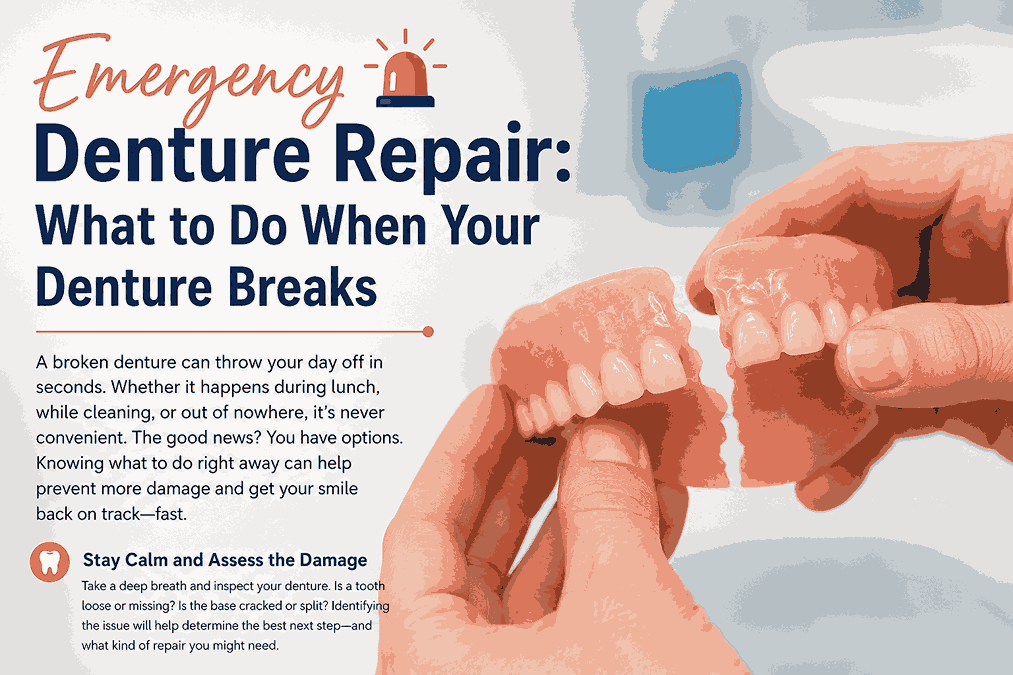
A broken denture can happen when you least expect it. It may slip from your hands while cleaning, crack while eating, or suddenly break after years of everyday use. Besides being frustrating, a damaged denture can make it difficult to eat, speak, or feel comfortable in social situations.
The good news is that many denture problems can be repaired professionally. Knowing what to do immediately can help prevent further damage and make the repair process easier.
Stay Calm and Assess the Damage
The first step is to avoid making the situation worse. Carefully pick up all pieces of the denture and examine the damage.
Look for:
- A crack or split in the denture base
- A broken or missing artificial tooth
- A damaged clasp on a partial denture
- A denture that has completely separated into pieces
- Sharp or rough edges that could irritate your mouth
Keep every piece you can find. Even a small fragment may help a dental professional determine how the denture should be repaired.
Don't Try to Glue Your Denture Back Together
One of the biggest mistakes people make after breaking a denture is reaching for household glue or super glue. While it may seem like a quick fix, it can create bigger problems.
Many household adhesives are not designed for use inside the mouth. They may contain substances that should not come into contact with oral tissues. Glue can also interfere with professional repair and make it harder to restore the denture correctly.
Instead of attempting a DIY repair, keep the broken pieces safely together and contact a qualified dental professional or denture service.
Avoid Wearing a Severely Damaged Denture
If your denture is cracked, broken, sharp, or no longer fits properly, continuing to wear it may cause discomfort or injury.
A damaged denture can rub against your gums and create sore spots. In some cases, broken sections may move while you talk or eat, making the denture unstable.
If wearing the denture causes pain or feels unsafe, remove it until it can be assessed professionally.
Store the Denture Safely
Once the denture is removed, place it somewhere clean and protected. A denture container is ideal, particularly if you need to transport it to a dental professional.
Keep all broken pieces together and avoid wrapping them loosely in tissue, where they could accidentally be thrown away.
If the denture normally needs to remain moist according to your dental professional's instructions, follow those storage recommendations. Avoid exposing it to very hot water, as excessive heat can potentially alter the shape of some denture materials.
Contact a Professional as Soon as Possible
Emergency denture repair does not always mean you need to visit an emergency hospital. In many situations, the appropriate first contact is a dentist, prosthetist, or professional denture repair service.
Explain what happened and describe the type of damage. If possible, take the complete denture and all broken pieces with you.
A professional can examine the denture and determine whether it can be repaired safely or whether replacement would be a better option.
For patients looking for professional assistance, FBA Dental Services provides denture-related services including repairs and adjustments, helping patients address common problems with damaged or uncomfortable dentures.
What Types of Dentures Can Be Repaired?
The type of repair depends on the material, construction, and extent of the damage. Common repairs may include:
Broken denture bases: Cracks or fractures in the acrylic base may sometimes be repaired and restored.
Broken denture teeth: Missing or damaged artificial teeth can potentially be replaced.
Damaged partial denture components: Certain components of partial dentures may require professional repair or adjustment.
Loose or poorly fitting dentures: Sometimes the problem is not a complete break but a change in fit. A professional assessment can determine whether an adjustment, reline, repair, or replacement is appropriate.
Not every damaged denture can be repaired. If the denture has been repaired multiple times, is severely worn, or no longer provides a suitable fit, replacement may be recommended.
How Long Does Emergency Denture Repair Take?
Repair time depends on the type and severity of the damage, as well as the laboratory or dental service handling the repair.
A simple repair may be completed relatively quickly, while more complicated damage can take longer. It's best to explain the situation when making an appointment and ask about the expected turnaround time.
If you rely on your dentures every day, planning ahead can also help. Having a professional check your dentures regularly may identify small cracks, worn areas, or fit problems before they turn into a major break.
When Should You Seek Urgent Dental Help?
A broken denture itself is usually a denture-repair issue, but certain symptoms require more immediate attention.
Seek urgent dental care if you have significant bleeding, severe mouth pain, swelling, difficulty breathing, or difficulty swallowing. If you believe you have swallowed or inhaled part of the denture, seek appropriate medical attention promptly.
Your safety comes first. Don't continue using a damaged denture simply because you need it for eating or speaking.
Preventing Future Denture Breaks
Once your denture has been repaired, a few simple habits can reduce the risk of future damage.
Clean your denture carefully over a soft surface or folded towel so it is less likely to break if dropped. Handle it with both hands when removing or inserting it. Follow recommended cleaning and storage instructions, and avoid using excessively hot water.
Regular professional checks are also worthwhile, especially if your dentures are several years old. Changes in your mouth, normal wear, and repeated repairs can eventually affect how well a denture fits and functions.
The Bottom Line
A broken denture can be stressful, but panicking or attempting a DIY repair can make the problem worse. Collect the broken pieces, avoid household adhesives, stop wearing the denture if it is painful or unsafe, and arrange a professional assessment as soon as possible.
The right repair may restore the denture and help you return to comfortable eating and speaking without immediately needing an entirely new set.