Loan Against PF: EPF Advance Rules, Eligibility & Online Claim Process
-

- Published Updated
- 8,127 views
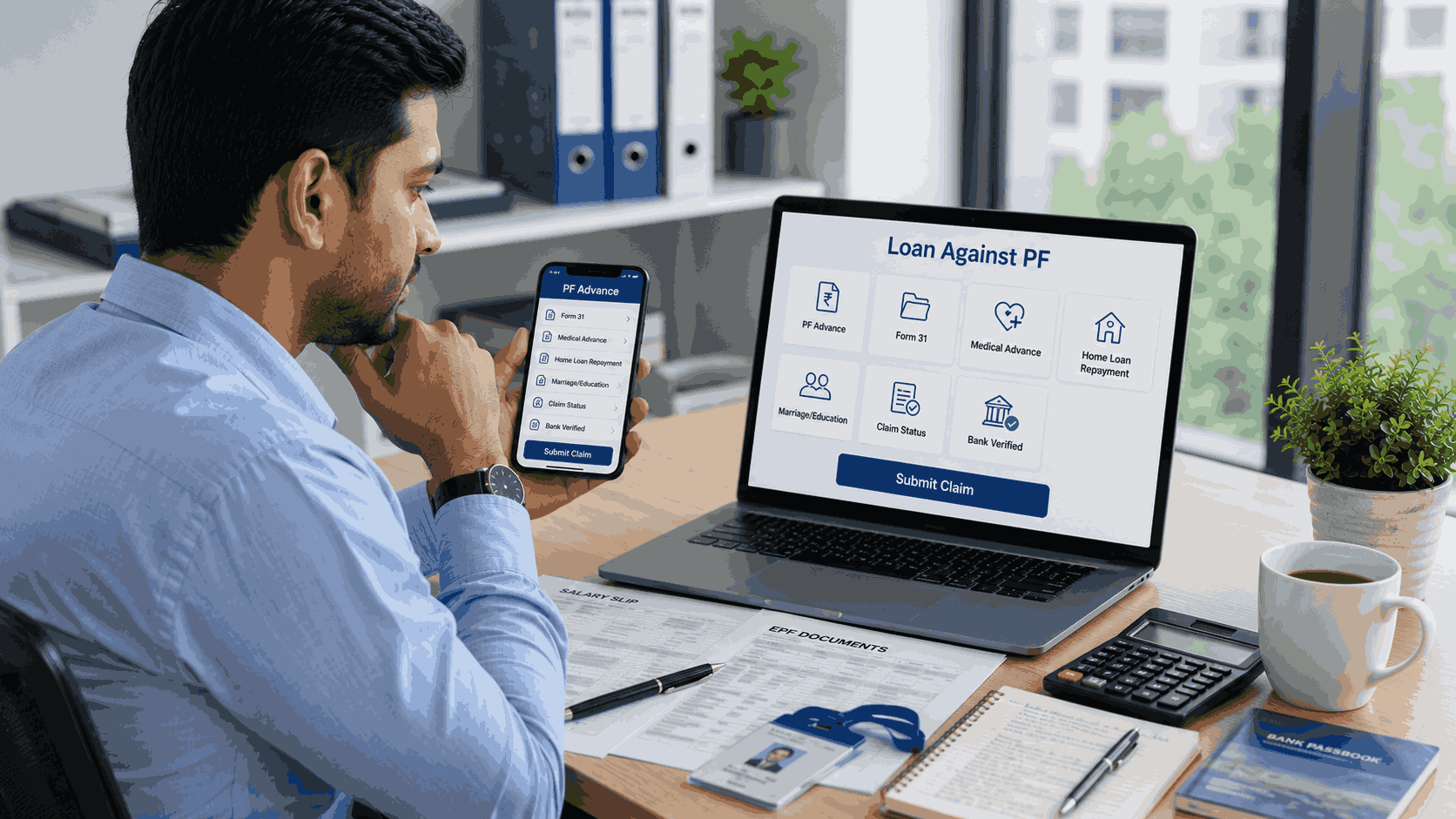
Loan against PF is a commonly searched term among salaried employees who want to use their Employees’ Provident Fund savings during financial needs. However, it is important to understand one key point first: EPFO does not provide a “loan” in the normal banking sense. What people usually call a loan against PF is actually an EPF advance or partial withdrawal from the member’s own PF balance. In most eligible cases, this amount is non-refundable, which means the member does not repay it like a personal loan.
Most users searching for “loan against PF” want to know whether they can borrow money from PF, how much amount can be withdrawn, what the eligibility rules are, which form is required and how to apply online. This guide explains the complete process in simple language. Square Insurance believes that financial awareness is not limited to insurance only; it also includes understanding employee benefits, retirement savings and emergency fund options like EPF.
What is Loan Against PF?
Loan against PF means using your Provident Fund balance to get money for specific approved purposes. In practical terms, this is called EPF advance or PF advance. It is not a regular loan because there is no EMI, no interest charged by EPFO and no repayment schedule.
The amount is taken from your own EPF savings. That is why it reduces your retirement corpus. While it can be helpful during emergencies, it should be used carefully because EPF is primarily designed for long-term retirement security.
Is Loan Against PF Really a Loan?
No, loan against PF is not a traditional loan. A personal loan is borrowed from a bank or financial institution and must be repaid with interest. EPF advance, on the other hand, is a partial withdrawal from your own PF account for approved reasons.
This difference is important. Since EPF advance is not a loan, it does not affect your credit score and does not create monthly EMI pressure. But it also reduces the amount that would have continued earning EPF interest over time. So, while there is no direct interest cost, there is an opportunity cost because your retirement savings become lower.
When Can You Take Loan Against PF?
You can take a loan against PF only for specific reasons allowed under EPFO rules. It is not available for every personal expense. Common eligible reasons include medical emergency, marriage, higher education, purchase or construction of house, home loan repayment, house renovation, disability-related equipment, natural calamity and certain pre-retirement needs.
Each purpose has its own eligibility conditions. Some advances require a minimum service period, while some do not. For example, medical-related advance is generally more flexible, while housing, marriage and education-related withdrawals usually have specific service requirements and limits.
Loan Against PF for Medical Emergency
PF advance for medical emergency is one of the most useful options for employees. Members may apply for advance for treatment of self, spouse, children or dependent parents. This can help during hospitalization, serious illness or urgent medical expenses.
In many medical cases, EPFO has simplified the process so that members can access funds faster. Still, it is better to keep hospital records, medical documents and bank details ready for personal reference. The claim should be filed under the correct reason to avoid rejection.
Loan Against PF for Marriage and Education
EPF advance may be allowed for marriage and education after meeting the required service conditions. It can be used for the member’s own marriage, children’s marriage or sibling’s marriage, depending on applicable rules. Education-related advance may be used for higher education expenses.
This facility can reduce the need for high-interest borrowing, but it should be used with planning. Since the money comes from your retirement savings, withdrawing too much for marriage or education may affect long-term financial security.
Loan Against PF for House Purchase or Construction
EPFO allows PF advance for housing-related purposes such as purchase of land, purchase of house, construction of house, home loan repayment and renovation, subject to rules. Housing advance is one of the most searched categories because many employees want to use PF savings for down payment or loan repayment.
The property should generally be in the member’s name, spouse’s name or joint ownership as per applicable conditions. The withdrawal limit depends on the purpose, service period and PF balance. If the wrong category is selected, the claim may be delayed or rejected.
Loan Against PF for Home Loan Repayment
PF advance can also be used for repayment of an existing home loan if the member meets the required conditions. This can help reduce outstanding loan amount, lower interest burden or support financial planning during repayment.
However, members should compare the benefit carefully. If you withdraw a large portion of PF, your retirement corpus will reduce. A home loan repayment decision should balance current debt relief with future retirement security.
Eligibility for Loan Against PF
Eligibility for loan against PF depends on the reason for withdrawal, service period, PF balance, KYC status and member details. Your UAN should be active, Aadhaar should be linked, bank account should be verified and mobile number should be registered.
For online claims, your name, date of birth, gender, Aadhaar, PAN and bank details should match correctly. If KYC is incomplete or there is a mismatch, your claim may not move forward. In some cases, employer details such as date of joining or date of exit may also affect claim processing.
Documents Required for Loan Against PF
For most online EPF advance claims, members need activated UAN, Aadhaar-linked mobile number, verified bank account, PAN where applicable and updated KYC. Depending on the reason, additional documents may be required or may be asked for verification.
For housing-related advance, property or loan-related details may be needed. For disability-related advance, medical certification may be required. For bank verification, a cancelled cheque or bank passbook copy may be useful. Members should keep documents ready even if the online process does not ask for all of them immediately.
How to Apply for Loan Against PF Online
To apply for loan against PF online, login to the UAN member portal using your UAN, password and captcha. Go to the online services section and select the claim option. Verify your bank account details and proceed with the online claim.
Choose Form 31 for PF advance. Then select the correct reason for withdrawal, enter the required amount, provide your address and complete OTP verification. After submission, save the claim reference details. You can track the claim status online through the member portal or claim status service.
Which Form is Used for Loan Against PF?
Form 31 is used for EPF advance or partial withdrawal. If you are applying for what is commonly called a loan against PF, you will usually select Form 31. Form 19 is used for final PF settlement, while Form 10C is used for pension withdrawal benefit.
Selecting the correct form is very important. If you choose the wrong form or wrong withdrawal reason, your claim may be rejected. Always check the purpose carefully before submitting the claim.
How Much Amount Can You Get as Loan Against PF?
The amount you can withdraw depends on the purpose, your PF balance, basic wages, dearness allowance and service period. For some reasons, the limit may be linked to a fixed number of months of wages. For some housing-related purposes, it may be linked to the cost of property or a percentage of PF balance.
You may not always get the full amount requested. EPFO approves the amount based on eligibility and rules for the selected reason. Therefore, before applying, check your passbook balance and select the withdrawal reason correctly.
Loan Against PF Claim Status
After applying, you can check the claim status online. The status may show submitted, under process, approved, settled or rejected. If the claim is approved, the amount is credited to the verified bank account or processed as per the claim category.
If the claim is rejected, read the rejection reason carefully. Common reasons include KYC mismatch, bank account error, wrong claim reason, incomplete service details, Aadhaar mismatch, PAN issue or employer-related data problem. Correct the issue before applying again.
Loan Against PF vs Personal Loan
Loan against PF and personal loan are very different. EPF advance has no EMI and no interest payment, but it reduces your retirement savings. A personal loan gives flexible use of funds, but it comes with interest, EMI and credit score impact.
If the need is genuine and eligible under EPFO rules, PF advance can be helpful. But if you want to protect your retirement corpus or need money for a purpose not allowed under EPFO rules, a personal loan or other financial option may be considered after comparing costs.
Tax Impact of Loan Against PF
EPF advance for approved reasons may not always be treated like full taxable withdrawal, but tax impact can depend on service period, withdrawal type and income tax rules. If EPF withdrawal happens before completing five years of continuous service, tax implications may apply in certain cases.
PAN details are important because tax deduction can be higher if PAN is not updated. If the withdrawal amount is large or service history is complex, it is better to consult a tax expert before applying.
Common Mistakes to Avoid
Many members apply for loan against PF without checking KYC details. This can lead to rejection or delay. Before applying, verify Aadhaar, PAN, bank account, IFSC, name, date of birth and mobile number.
Do not choose the wrong withdrawal reason. Do not enter incorrect bank details. Do not share OTP, UAN password or bank details with unknown callers. If the claim is delayed, track the status first and then raise a grievance if required.
Loan against PF online is commonly known as EPF advance or PF advance. It is not a traditional loan because the member withdraws money from their own EPF balance and usually does not repay it. Members can apply for PF advance through Form 31 for approved reasons such as medical emergency, marriage, education, housing, home loan repayment, disability-related needs and other eligible conditions.
FAQs
What is loan against PF?
Loan against PF means taking an EPF advance or partial withdrawal from your Provident Fund balance for approved purposes.
Is loan against PF a real loan?
No, it is not a traditional loan. It is usually a non-refundable advance from your own EPF savings and does not require EMI repayment.
Which form is used for loan against PF?
Form 31 is used for EPF advance or partial withdrawal, commonly called loan against PF.
Can I take loan against PF while working?
Yes, you can apply for PF advance while working, but only for eligible reasons allowed under EPFO rules.
Does loan against PF affect credit score?
No, EPF advance does not affect your credit score because it is not a bank loan and does not involve EMI repayment.
How can I apply for loan against PF online?
Login to the UAN member portal, select online claim, choose Form 31, select the reason, enter details and submit with OTP verification.
Why was my PF advance claim rejected?
It may be rejected due to KYC mismatch, wrong bank details, incorrect claim reason, Aadhaar mismatch, PAN issue or incomplete member records.
Is loan against PF taxable?
Tax impact depends on withdrawal type, service period and income tax rules. For large withdrawals, it is better to consult a tax expert.