Event Management Courses After 12th: What You Should Know
-

- Published Updated
- 1,963 views
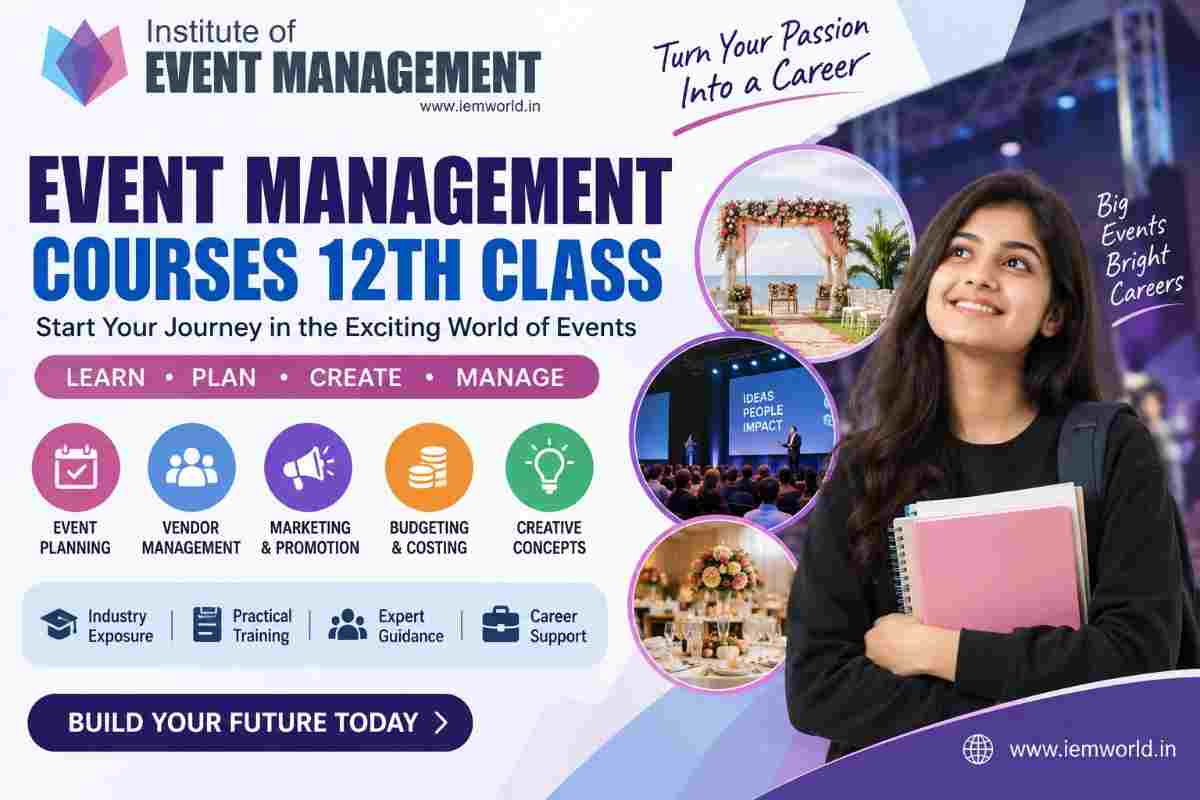
Choosing a career after 12th can feel a little confusing. There are so many options, and honestly, not everyone wants to spend years studying subjects they don't enjoy.
If you like planning things, working with people, handling different tasks, and being around exciting events, event management courses 12th class can be worth exploring.
Event management is not just about weddings or big concerts. The industry includes corporate events, exhibitions, conferences, college festivals, product launches, fashion events, sports events, and many other experiences.
The interesting part? You can start learning the basics soon after completing 12th.
What Is Event Management?
Event management is basically the process of planning and executing an event from beginning to end.
Think about a college fest. Someone has to decide the schedule, arrange the venue, coordinate performers, manage vendors, handle registrations, promote the event, prepare the budget, and make sure everything works on the actual day.
That's event management.
It looks exciting from the outside, but there is quite a lot happening behind the scenes.
Why Consider Event Management After 12th?
If you enjoy creative work and don't want a completely desk-based career, event management can be an interesting field.
Students from different streams can explore this area. You don't necessarily need to have studied a specific subject in school.
What matters more is your interest and willingness to learn practical skills.
A good course can introduce you to areas such as:
- Event planning
- Budgeting and costing
- Vendor management
- Event production
- Marketing and promotion
- Sponsorship
- Client communication
- Hospitality
- Event coordination
- On-ground execution
You don't have to master everything immediately. The idea is to understand how different parts of an event fit together.
What Do Event Management Courses 12th Class Usually Teach?
When comparing event management courses 12th class, don't just look at the number of subjects mentioned on the website.
Look at what you will actually learn.
For example, event planning should teach you how to create timelines, coordinate teams, and manage event requirements. Production should introduce you to stages, sound, lighting, equipment, and setup.
Marketing is another important part.
An event can be beautifully planned, but if nobody knows about it, there is a problem. Students may learn about social media promotion, branding, publicity, sponsorship, and audience engagement.
Then comes budgeting.
Even a small event has expenses. Venue, food, transport, equipment, staff, decorations, artists and other services all need to be planned properly.
That's where management skills become important.
Practical Training Makes a Big Difference
Here's the thing.
You can read about event planning in a textbook, but managing an actual event teaches you something completely different.
For example, imagine you're assigned a small college event. You suddenly have to deal with a vendor who is late, a speaker who changed their arrival time, equipment that isn't working, and a schedule that is already running behind.
That's when you really start learning.
So, when comparing event management courses 12th class, ask whether the program includes practical assignments, projects, workshops, internships, or industry exposure.
Even small projects can help you understand how the industry works.
Creativity Is Important, But So Is Organisation
Many students think event management is mainly about being creative.
Creativity definitely matters. You may need ideas for themes, stage designs, activities, promotions, or audience experiences.
But creativity alone won't run an event.
You also need organisation.
You need to remember deadlines, follow budgets, communicate with vendors, coordinate teams, and keep track of hundreds of small details.
Sometimes the most important skill is simply staying calm when something goes wrong.
And yes, things do go wrong.
Communication Skills Matter
Event managers work with lots of people.
Clients. Vendors. Artists. Sponsors. Guests. Technicians. Designers. Venue teams.
So communication becomes a daily part of the job.
A student who can explain an idea clearly, listen carefully, negotiate politely, and follow up properly already has a useful advantage.
You don't need to be an amazing public speaker from day one.
You can improve with practice.
What Career Options Can You Explore?
After completing relevant training, students can explore different areas of the event industry.
Some possible roles include:
Event Coordinator: Helps manage event schedules, vendors, logistics, and on-ground activities.
Event Planner: Works on planning and organising events according to client requirements.
Production Coordinator: Helps manage technical and production-related requirements.
Wedding Planner: Focuses on wedding planning, vendors, decor, guest management, and execution.
Event Marketing Executive: Works on promotions, social media, branding, and audience engagement.
Client Servicing Executive: Communicates with clients and coordinates their requirements with the internal team.
Your first role doesn't have to be your final career destination. Event management has many directions.
What About Higher Education?
After 12th, some students prefer to begin with a diploma or undergraduate-level program. Others may later pursue postgraduate education after completing graduation.
A Post Graduate Diploma In Event Management is generally a route for graduates rather than students who have just completed 12th.
So don't get confused when you see different course names online.
First decide where you are academically. Then choose a program that matches your current qualification and career goal.
How to Choose the Right Course
There are plenty of institutes and programs available, so don't rush just because a course looks attractive online.
Before enrolling, check:
Course duration: Understand how long the program actually runs.
Syllabus: Look for planning, production, marketing, budgeting, communication, and other practical areas.
Projects: Ask how many projects students complete.
Internships: Find out whether industry exposure is included.
Trainers: Check whether trainers have practical industry experience.
Facilities: If you're attending classroom training, see what kind of practical resources are available.
Career support: Understand exactly what is included instead of assuming "placement assistance" means a job guarantee.
Where Does iemworld Come In?
While researching event management education, you may come across iemworld as an option to explore.
If you're considering a program, don't choose it simply because of the name. Compare the syllabus, training approach, practical exposure, course duration, projects, and career support with other options.
That's a better way to make a decision.
The goal should be simple: find a program where you can actually learn how events work, not just collect a certificate.
Can Students From Any Stream Join?
In many cases, event management education is open to students from different academic backgrounds, depending on the eligibility rules of the particular institute.
Arts, commerce, science, and other backgrounds can all lead into the field.
Your school stream doesn't automatically decide whether you will succeed in event management.
Interest, communication, organisation, creativity, teamwork, and practical experience can become much more important as you develop your career.
Start Building Experience Early
You don't have to wait until your course finishes to gain experience.
Help organise a college event. Volunteer at a local function. Assist with a workshop or exhibition. Take responsibility for registrations or guest coordination.
Even these small experiences can teach you a lot.
Keep photos, schedules, event plans, certificates, and project details where appropriate. Over time, these can help you build a simple portfolio.
And when an interviewer asks, "Have you ever managed an event?"
You can give an actual example instead of just saying you studied event management.
Is Event Management Only About Glamorous Events?
Not really.
Social media usually shows the stage, lights, celebrities, decorations, and happy guests.
It doesn't show the early morning setup, supplier calls, last-minute changes, budget discussions, venue checks, and long working hours.
That's the reality.
If you're comfortable with teamwork, deadlines, changing situations, and practical problem-solving, you may enjoy the field much more.
Expert Insight
"Before choosing an event management course, ask yourself whether you enjoy organising people and solving problems, not just attending events."
That's an important distinction.
Liking events is a good starting point. Managing them professionally is a different skill.
FAQs
Can I study event management after 12th?
Yes, students can explore event management programs after completing 12th, subject to the eligibility requirements of the institute and course.
Is event management a good option after 12th?
It can be suitable for students who enjoy planning, communication, creative work, teamwork, and fast-moving environments.
Do I need to study a particular stream in 12th?
Eligibility varies by program, but many event management courses accept students from different academic streams.
What skills are useful in event management?
Communication, organisation, budgeting, teamwork, creativity, negotiation, time management, and problem-solving are all useful.
Is practical training important?
Yes. Events involve real coordination and problem-solving, so practical projects and industry exposure can make learning more meaningful.
Can I do a postgraduate event management program after 12th?
Postgraduate programs generally require graduation first. Students completing 12th should look at diploma or undergraduate-level options that match their eligibility.
Final Thoughts
Choosing a career after 12th doesn't have to mean following the most obvious path.
If you enjoy planning, working with people, handling different responsibilities, and solving problems under pressure, event management courses 12th class are worth researching.
Compare the syllabus, practical training, projects, internships, trainers, fees, and career support before enrolling.
And don't forget to look beyond the brochure. Ask questions. Attend a demo if possible. Speak to students or alumni.
Whether you explore iemworld or another institute, focus on learning skills that you can actually use when the event day arrives.
Because that's when event management gets real.