Smart Food Factory Design: The Complete Guide for UK Food Manufacturers
-

- Published Updated
- 7,714 views
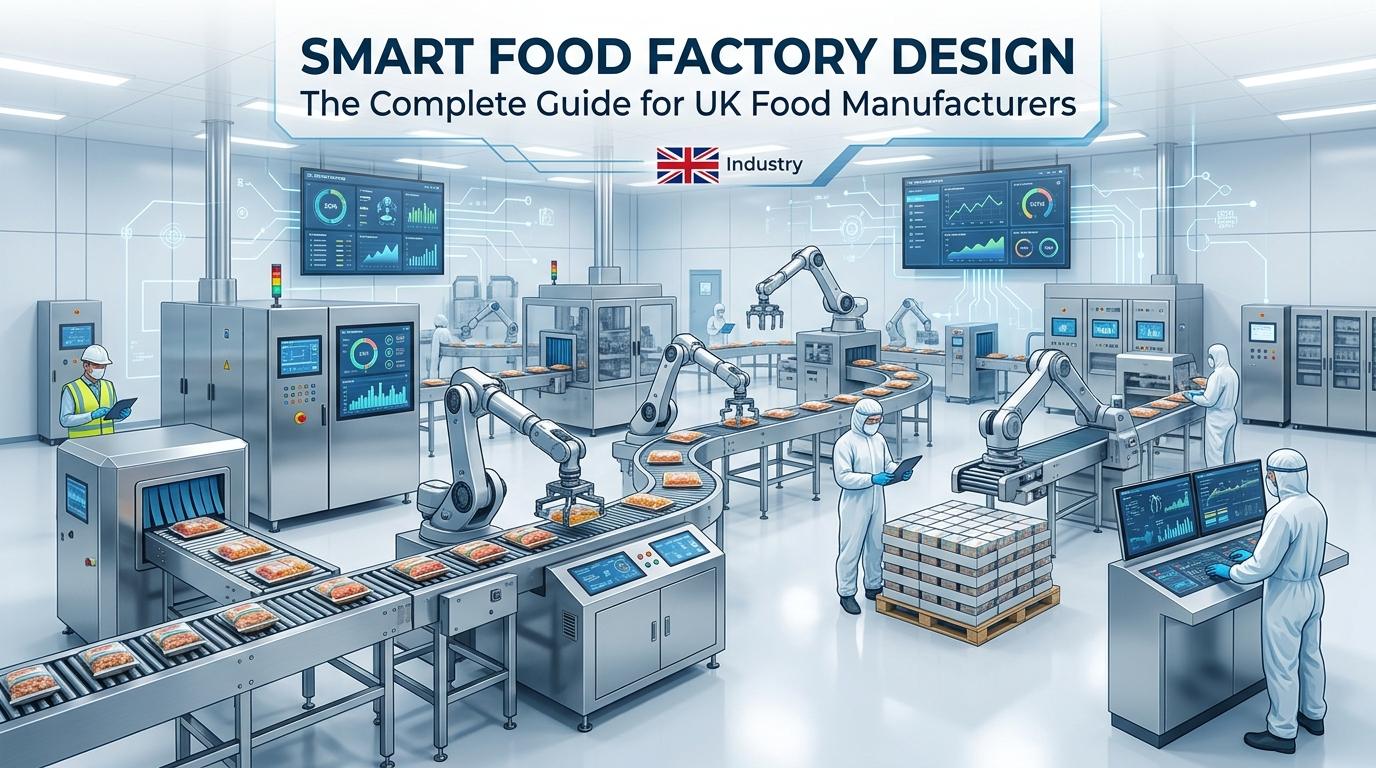
Designing a food factory is one of the most consequential decisions any food business will make. Get it right, and you create a facility that supports safe, efficient, and profitable production for years to come. Get it wrong, and you're looking at costly retrofits, compliance headaches, and workflows that hold your team back.
At Oakley Food Projects, we work with food manufacturers across the UK to plan and deliver factory designs that are practical, compliant, and built with genuine growth in mind. This guide covers the key principles, planning steps, and questions you should be asking before you start.
Why Food Factory Design Is a Strategic Priority
The UK food manufacturing sector is under more scrutiny than ever. Retailers are raising audit standards, energy costs are a boardroom concern, and consumers are increasingly interested in where and how their food is made.
A well-considered food factory design supports all of this by:
- Creating clear, logical production flows that reduce waste and downtime
- Building food safety compliance into the fabric of the building
- Giving your team a working environment that genuinely supports them
- Positioning the business to scale without expensive structural changes later
A thoughtfully designed facility is not just an operational asset, it's a commercial one.
The Core Principles of Effective Food Factory Design
1. Product Flow and Zoning
The golden rule of food factory layout is simple: raw materials travel in one direction, and they never cross finished product or waste streams. Achieving this in practice requires careful zoning from the outset.
Most UK food facilities are divided into four key zones:
| Zone | Typical Use | Key Design Requirement |
|---|---|---|
| High Risk | Ready-to-eat products | Positive air pressure, strict access control |
| High Care | Chilled or cooked products | Controlled environment, segregated drainage |
| Low Risk | Raw ingredient handling | Clear separation from High Risk zones |
| Ambient | Dry goods, packaging materials | Temperature and humidity management |
Getting this zoning strategy right at the design stage rather than trying to retrofit it later is one of the clearest markers of a professionally planned facility.
2. Hygiene and Cleanability
A factory that is straightforward to clean is a factory that is safer, more efficient, and considerably easier to pass through a BRC or SALSA audit. Key design features that support good hygiene include:
- Coved flooring at all wall and floor junctions to eliminate dirt traps
- Food-grade wall cladding that withstands cleaning chemicals and regular washdown
- Self-draining floor gradients directing water towards drainage channels
- Strategically positioned drainage matched to the intensity of wet production activities
- Dedicated cleaning equipment stores that are clearly defined and separate from food areas
These details might seem minor individually, but collectively they shape how hygienic your facility genuinely is in day-to-day operation.
3. Utilities and Services Planning
Services are often where food factory design projects go wrong when they are not planned early enough. Retro-fitting utilities into a building that wasn't designed around them is expensive and disruptive. Key services to plan from day one include:
- Compressed air — food-grade supply lines positioned close to production equipment
- Water services — hot and cold with appropriate flow rates for your processes
- Drainage — correctly sized for your water usage and any CIP (clean-in-place) systems
- Electrical supply — three-phase distribution that matches your equipment schedules
- Ventilation and extraction — managing temperature, condensation, and odours effectively
A specialist in food factory design will ensure your building services are integrated with your manufacturing process from the very beginning.
4. Allergen Management and Segregation
With UK allergen legislation firmly in place, factory design now plays a direct role in allergen risk management. Physical segregation between allergen-containing and allergen-free production areas, dedicated equipment, and clearly defined cleaning protocols all start with the right design decisions at layout stage.
Sustainability in Food Factory Design
Sustainable design is becoming a baseline expectation for UK food businesses, particularly those supplying major retailers. Incorporating sustainability features at the design stage is considerably more cost-effective than adding them retrospectively.
Features worth considering include:
- LED lighting with motion-sensing controls - meaningful energy savings across large factory floor areas
- Heat recovery from refrigeration plant - recapturing warmth that would otherwise be wasted
- Roof-mounted solar panels - increasingly viable on most industrial buildings
- Enhanced building insulation - reducing both heating and cooling loads throughout the year
- Water recycling systems - particularly valuable in facilities with significant washing or rinsing operations
Many of these investments qualify for capital allowances or government incentive schemes, making the financial case alongside the environmental one.
Planning Your Food Factory Design Project
Understanding how a project typically unfolds helps you plan the investment with confidence and clarity.
Step 1 - Feasibility and Brief Define your production volumes, product categories, and growth ambitions. This shapes every subsequent decision.
Step 2 - Concept Design Initial layout options are explored, considering product flow, zoning, and building configuration.
Step 3 - Detailed Design Full engineering drawings, specifications, and schedules are developed ready for planning applications and contractor tendering.
Step 4 - Planning and Statutory Approvals Liaison with local planning authorities, building control, and environmental health as required.
Step 5 - Construction and Fit-Out Delivery of the project to specification by trusted contractors, with close monitoring of programme and cost.
Step 6 - Commissioning and Handover Equipment installation, cleaning validation, and pre-production sign-off before you begin manufacturing.
Choosing the Right Food Factory Design Partner
The consultancy you choose has a significant bearing on the outcome of your project. A strong partner brings:
- Deep, hands-on experience within food manufacturing environments
- Up-to-date knowledge of BRC, SALSA, and retailer-specific audit standards
- A clear, transparent approach to project management and communication
- Reliable relationships with contractors, equipment suppliers, and local authorities
- A genuine understanding of how food is actually made — not just how buildings are drawn
Sector specialists consistently deliver better outcomes than generalist design firms, because they understand the decisions that matter and the ones that are genuinely difficult to undo.
Frequently Asked Questions About Food Factory Design
How long does a food factory design project take in the UK? It depends on scope and complexity. A focused refurbishment can move from brief to completion in three to six months. A new-build facility typically takes twelve to eighteen months or longer, accounting for planning, procurement, and construction.
How is food factory design typically priced? Fees are usually structured as a fixed project fee or as a percentage of the overall construction value. Speaking to a specialist early gives you a realistic picture of what your project involves and what it is likely to cost.
Will I need planning permission for my food factory? Most new-build food factories and significant extensions require planning permission. Change-of-use applications may also apply when converting an existing building. A good design consultant will advise on this and manage the process on your behalf.
How do I make sure my factory design supports BRC accreditation? Engage a consultant with direct BRC experience. The right partner will ensure that zoning, drainage, personnel flow, allergen segregation, and pest proofing all align with the current standard from the outset — rather than being added on later.
Can an existing factory be redesigned or extended rather than replaced? Absolutely. Many UK food businesses choose to refurbish or extend their current facility rather than relocate. A skilled design team will assess feasibility within your existing building envelope and develop a phased plan that keeps disruption to live production to a minimum.
Ready to Discuss Your Food Factory Design Project?
Whether you are planning a brand-new production facility or looking to improve and expand what you already have, early expert input makes a real difference to the outcome.
Oakley Food Projects brings together food industry knowledge and practical design expertise to help UK manufacturers build facilities they can operate confidently, grow into steadily, and be genuinely proud of.
Visit the link for enquiry