Educational Certificate Attestation: Complete FAQ and Step-by-Step Guide
-

- April 16th, 2026
- 224 views

Get a free topical map and start building content authority today.
Educational certificate attestation is the formal process of verifying academic documents so they are accepted by foreign authorities, employers, or institutions. This guide explains what attestation covers, how it differs from apostille and notarization, and practical steps to complete degree certificate verification and apostille for educational documents.
Detected intent: Informational
Quick overview: educational certificate attestation confirms that diplomas, transcripts, and other academic documents are authentic and properly issued. Processes vary by country; common routes are apostille under the Hague Convention or consular legalization. This article includes a named ATTEST checklist, a short real-world example, practical tips, and five core cluster questions for further reading.
What is educational certificate attestation?
Definition and purpose
Educational certificate attestation is an official endorsement that verifies an academic document (such as a degree certificate, diploma, or transcript) is genuine and issued by a recognized institution. Authorities accept attested documents for immigration, employment, higher education admissions, professional licensing, and visa applications.
Common actors and authorities
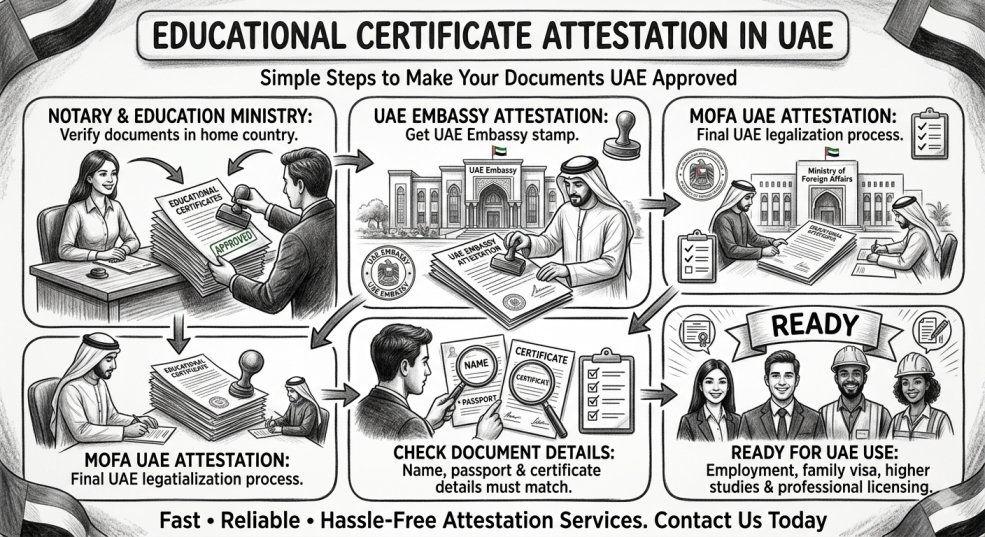
Typical participants in the attestation chain include the issuing university or board, a local notary public, a regional education department or ministry, the national ministry of foreign affairs (or equivalent), and the destination country’s embassy or consulate. For apostille countries, the competent authority designated by the Hague Convention issues the apostille.
How the process works: apostille vs legalization
Key differences
Apostille applies only between countries that are members of the Hague Apostille Convention. An apostille is a single certificate attached to the original document that confirms the signature and seal of the issuing authority. Legalization (also called consular legalization) is a multi-step process required when the destination country is not a Hague member; it typically includes embassy certification.
Related terms: notarization (local verification of signature), authentication (often used interchangeably with attestation), consular legalization, ministry endorsement, and degree certificate verification.
Authoritative reference for apostille rules: Hague Conference on Private International Law.
Step-by-step: getting educational certificate attestation
ATTEST checklist (named framework)
- A — Arrange documents: Collect original certificates, mark sheets, copies, and ID documents. Check embassy or institution requirements for originals vs. certified copies.
- T — Translate (if needed): Obtain certified translations for documents not in the required language. Use a sworn translator where specified.
- T — Track institutional verification: Secure verification from the issuing university or board; some countries require a university letter or verification through an official portal.
- E — Endorse by national authorities: Get notarization and ministry of education or foreign affairs endorsement as required by the destination country.
- S — Submit to embassy/consulate or apostille authority: For Hague members, apply for an apostille; for non-Hague, follow consular legalization steps.
- T — Test acceptance (optional): Confirm receiving authority (employer, university, licensing body) accepts the attested document before sending originals.
Typical timeline and documents
Processing times vary widely: from a few days (apostille in some countries) to several weeks (multi-step legalization). Required documents commonly include the original certificate, notarized copies, translation, proof of identity, and any institutional verification letters. Fees, appointment slots, and courier arrangements affect total time.
Degree certificate verification and related checks
When degree certificate verification is needed
Degree certificate verification often runs in parallel with attestation. Employers, immigration officials, and higher-education admissions may check authenticity by contacting the issuing institution or using government verification portals. Some countries require an additional verification by the ministry of education.
Real-world scenario
Example: A graduate planning to work abroad must submit an attested degree and transcript to a licensing board. First, the university issues a sealed transcript. A notary certifies copies, the national education ministry verifies the university seal, the foreign affairs ministry provides an apostille (country is a Hague member), and the employer accepts the apostilled original. The entire process took five weeks, with translation added for documents not in the employer’s accepted language.
Practical tips for a smoother attestation
- Confirm exact requirements with the receiving authority before starting: embassies and employers often publish checklists.
- Keep multiple certified copies and at least one original; some authorities will return originals only after completing endorsements.
- Use tracked courier services and document imaging (scans) to keep records of submissions and receipts.
- Start early—allow at least 4–8 weeks for multi-step legalization; apostille processes are faster but can still be delayed by local backlogs.
- Ask whether an e-attestation or online verification is accepted—some jurisdictions offer digital solutions that shorten the timeline.
Common mistakes and trade-offs
Common mistakes
- Assuming apostille applies when the destination country does not recognize the Hague Convention.
- Submitting uncertified translations or failing to notarize required copies.
- Using non-official intermediaries without checking credentials; verify agents against official lists or reviews.
- Sending originals when certified copies are sufficient, risking loss or delayed return.
Trade-offs to consider
Speed versus control: using a professional attestation service can save time but adds cost and requires trust. Handling steps directly provides more visibility but may be slower and more complex. Digital verification reduces courier risk but may not be accepted everywhere—always confirm acceptance with the final authority.
5 core cluster questions for related content
- How long does attestation of academic documents typically take?
- Which countries require an apostille for educational documents?
- What documents are needed for attesting a university degree?
- How to get a degree certificate verified by the issuing institution?
- Can translated academic documents be accepted without notarized translations?
Frequently Asked Questions
What is educational certificate attestation?
Attestation is the official confirmation that an academic document is authentic. This may include notarization, ministry endorsements, apostille, or consular legalization depending on the destination country’s rules.
How long does the attestation process take?
Timelines range from a few days (some apostille authorities) to several weeks for multi-stage legalization. Factors include document type, country requirements, translation needs, and current processing backlogs.
Do all countries accept apostille for educational documents?
No. Apostille is accepted only between Hague Convention member countries. For non-member countries, a consular legalization process is usually required, which may involve embassy certification.
Can degree certificate verification be done online?
Some issuing institutions and national authorities provide online verification portals or electronic attestation services. Acceptance depends on the receiving authority; always verify whether digital certificates are accepted in place of physical attested documents.
Is a notarized translation required for attestation?
Many authorities require certified or notarized translations if the document is not in the official language of the receiving country. Check the specific translation standards required by the embassy, university, or licensing body.