Gluten-Free Products Market: Growth Trends, Key Drivers, and Future Prospects
-
- Published Updated
- 5,681 views
Market Overview
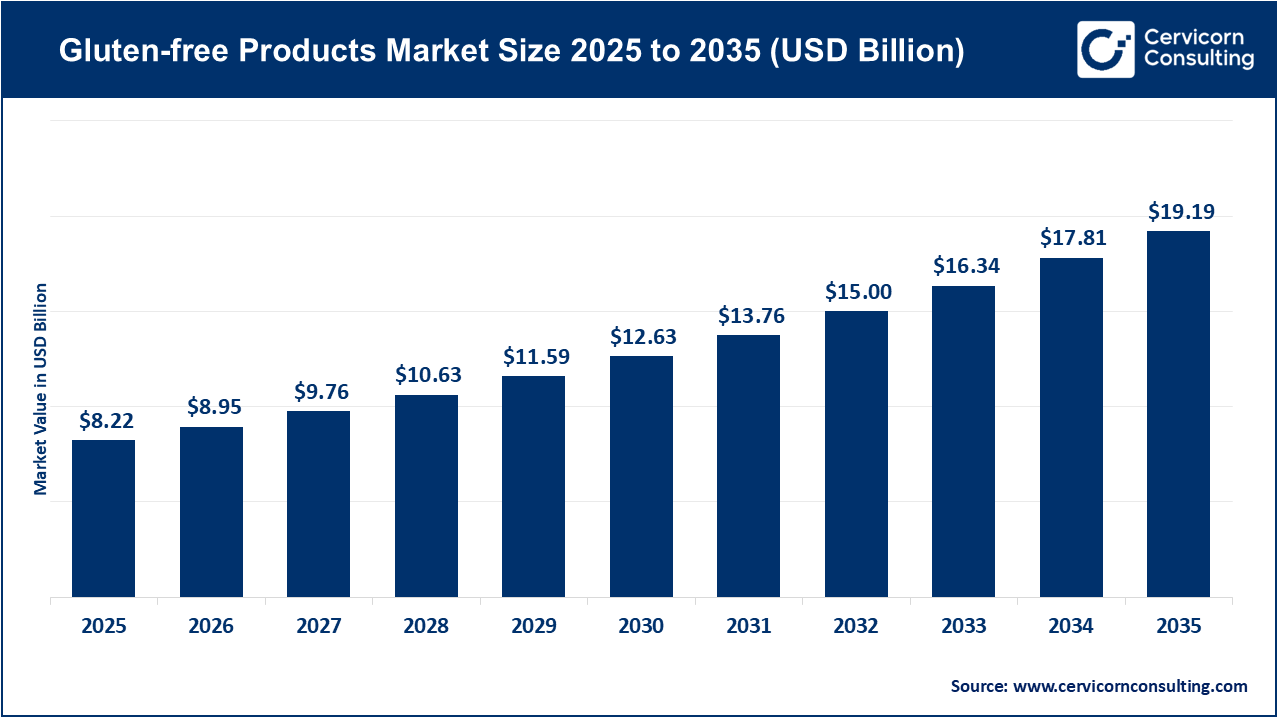
The global gluten-free products market has emerged as a fast-growing category within the health and wellness food sector, fueled by increasing consumer awareness of nutrition and digestive health. The market was valued at approximately USD 8.22 billion in 2025 and is anticipated to reach nearly USD 19.19 billion by 2035, expanding at a CAGR of 8.85% over the forecast period.
Read a Full Report: https://www.cervicornconsulting.com/gluten-free-products-market
Gluten-free products are manufactured without gluten, a protein naturally present in wheat, rye, barley, and related grains. Although these products were initially developed to support individuals with celiac disease, gluten sensitivity, and wheat allergies, they are now widely consumed by health-conscious individuals seeking cleaner diets and improved digestive well-being.
The market covers a diverse range of categories, including gluten-free bakery products, cereals, snacks, pasta, beverages, ready-to-eat meals, and nutritional supplements. Advancements in food manufacturing techniques and growing awareness of specialized dietary requirements continue to drive the transition of gluten-free products from a niche segment to a mainstream global food category.
Key Market Trends
Rising Demand for Clean-Label and Natural Ingredients
One of the most influential trends in the gluten-free products market is the growing preference for foods made from simple, natural, and easily recognizable ingredients. Consumers are increasingly scrutinizing product labels and choosing foods with minimal artificial preservatives, additives, and genetically modified components.
To meet evolving consumer expectations, manufacturers are incorporating naturally gluten-free grains such as quinoa, millet, sorghum, buckwheat, teff, and amaranth into their formulations. Clean-label positioning helps strengthen brand credibility while supporting premium product offerings.
Impact: This trend is encouraging continuous product innovation and increasing investments in healthier ingredient alternatives.
Get a Free Sample Report:
https://www.cervicornconsulting.com/sample/2616
Expanding Demand for Plant-Based Gluten-Free Products
The combination of plant-based eating habits and gluten-free diets is creating significant opportunities for food manufacturers. Consumers following vegan, vegetarian, and flexitarian lifestyles are actively seeking products that satisfy both nutritional preferences.
In response, companies are developing gluten-free products using ingredients such as chickpeas, lentils, peas, legumes, and ancient grains to deliver enhanced nutritional value while maintaining gluten-free standards.
Impact: The trend is widening the consumer base and accelerating adoption among younger generations, particularly Millennials and Gen Z consumers.
Innovations Enhancing Taste and Texture
Gluten-free foods have historically faced challenges related to texture, flavor, and shelf-life performance. However, recent advancements in food science have substantially improved product quality.
Manufacturers are utilizing advanced starch systems, alternative flour blends, enzyme technologies, and hydrocolloids to replicate the taste and texture of conventional wheat-based products more effectively.
Impact: Improved product quality is boosting consumer satisfaction, encouraging repeat purchases, and supporting growth across bakery and snack categories.
Growth of Online Retail and Direct-to-Consumer Channels
Digital commerce is transforming how consumers purchase gluten-free products. E-commerce platforms and direct-to-consumer channels provide access to a broader selection of specialty products that may not be available through conventional retail outlets.
These platforms also allow consumers to compare nutritional information, certifications, ingredients, and customer reviews before making purchasing decisions.
Impact: Online distribution is enhancing product accessibility and helping brands penetrate previously underserved markets.
Increasing Popularity of Personalized Nutrition and Functional Foods
The growing focus on personalized wellness is influencing product innovation across the gluten-free products market. Consumers increasingly seek foods tailored to their individual health objectives and dietary requirements.
Manufacturers are responding by introducing gluten-free products enriched with proteins, probiotics, vitamins, minerals, and other functional ingredients that offer additional health benefits.
Impact: This trend is supporting premium product development and creating opportunities for market differentiation.
Key Market Drivers
Rising Prevalence of Celiac Disease and Gluten Sensitivity
One of the primary drivers of market expansion is the increasing prevalence and diagnosis of celiac disease, wheat allergies, and non-celiac gluten sensitivity worldwide.
Improved medical awareness, enhanced diagnostic capabilities, and greater healthcare education are encouraging more individuals to adopt gluten-free diets.
Market Impact: Medical necessity continues to be a fundamental factor supporting long-term market growth.
Growing Consumer Focus on Health and Wellness
Consumers are becoming increasingly proactive about maintaining healthy lifestyles and preventing health issues through dietary choices. Gluten-free products are often viewed as part of broader wellness strategies aimed at supporting digestive health and overall nutrition.
This trend is particularly strong among younger consumers who prioritize clean eating habits and ingredient transparency.
Market Impact: Demand is expanding beyond medically diagnosed individuals to include a broader health-conscious consumer base.
Stronger Food Labeling Regulations
Regulatory agencies and governments worldwide are introducing stricter labeling requirements to help consumers easily identify gluten-free products.
Enhanced transparency and standardized labeling practices improve consumer confidence and simplify purchasing decisions.
Market Impact: Regulatory support is strengthening market credibility and encouraging wider adoption of gluten-free products.
Expansion of Retail Distribution Channels
Retailers are allocating more shelf space to gluten-free products across supermarkets, hypermarkets, specialty food stores, and online marketplaces.
Additionally, private-label gluten-free products are improving affordability and increasing product accessibility for consumers.
Market Impact: Broader distribution networks are accelerating market penetration in both developed and emerging economies.
Continuous Research and Development Investments
Food manufacturers continue to invest heavily in research and development activities aimed at improving nutritional content, taste, texture, and shelf-life performance.
Innovations involving alternative grains, protein fortification, ingredient optimization, and advanced food processing technologies are helping companies strengthen their competitive positioning.
Market Impact: Continuous innovation is driving product differentiation and supporting sustainable market growth.
Influence on Market Segments
Bakery Products
Bakery products remain among the most significant categories within the gluten-free products market. Ingredient innovations and technological advancements are driving demand for gluten-free breads, pastries, cakes, cookies, and other baked goods.
Snacks and Convenience Foods
The increasing preference for convenient and healthier snacking options is boosting demand for gluten-free crackers, chips, snack bars, and ready-to-eat products.
Nutritional Supplements
Consumers are increasingly adopting fortified gluten-free supplements that support digestive health, immunity, and personalized wellness objectives.
Online Retail
The continued expansion of e-commerce is enabling brands to access larger consumer audiences while providing shoppers with greater convenience and product variety.
Regional Market Insights
North America
North America continues to lead the gluten-free products market due to high awareness of gluten-related health conditions, strong purchasing power, and advanced retail infrastructure.
Europe
Europe remains a key market supported by favorable regulatory frameworks, increasing demand for specialty foods, and widespread consumer awareness regarding dietary health.
Asia-Pacific
Asia-Pacific is expected to register some of the fastest growth rates, driven by urbanization, rising disposable incomes, expanding middle-class populations, and growing health consciousness.
Latin America and Middle East & Africa
These regions are experiencing rising awareness of dietary wellness and expanding retail networks, creating attractive growth opportunities for manufacturers and distributors.
Challenges and Opportunities
Key Challenges
- Higher manufacturing costs compared to conventional food products
- Complex sourcing and supply chain management for alternative ingredients
- Premium pricing that may hinder adoption in cost-sensitive markets
- Maintaining consistent taste, texture, and quality standards across product categories
Emerging Opportunities
- Expansion into rapidly growing emerging markets
- Increasing demand for plant-based gluten-free formulations
- Development of fortified and functional food products
- Adoption of sustainable and environmentally friendly packaging
- Integration with personalized nutrition programs and digital health platforms
Future Outlook
The gluten-free products market is expected to maintain a strong growth trajectory over the next decade. Increasing awareness of gluten-related disorders, rising demand for clean-label foods, advancements in food technology, and expanding retail availability will continue to drive market expansion.
Industry forecasts suggest that the market will grow from approximately USD 8.22 billion in 2025 to nearly USD 19.19 billion by 2035, reflecting a healthy CAGR of 8.85%. Future growth is expected to be supported by innovations in plant-based ingredients, personalized nutrition solutions, premium product development, and the growing adoption of wellness-focused dietary lifestyles across global markets.
To Get a Detailed Market Overview, Contact Us:
https://www.cervicornconsulting.com/contact-us