Green TV Advertising: Eco-Friendly Campaign Strategies
-

- Published Updated
- 1,669 views
Summary
Television remains one of the most recognizable advertising channels, allowing businesses to communicate with large audiences through visual storytelling, sound, and memorable creative concepts. However, producing television advertising can also require considerable resources, including energy, transportation, equipment, physical materials, and production facilities.
As sustainability becomes increasingly relevant to businesses and consumers, advertisers are exploring ways to make television campaigns more environmentally responsible. This approach is commonly referred to as green TV advertising.
Green TV advertising does not mean abandoning traditional television campaigns. Instead, it involves identifying opportunities to reduce unnecessary waste and resource consumption throughout the advertising process. Better production planning, responsible material choices, digital collaboration, efficient transportation, and sustainable partnerships can all contribute to a greener campaign.
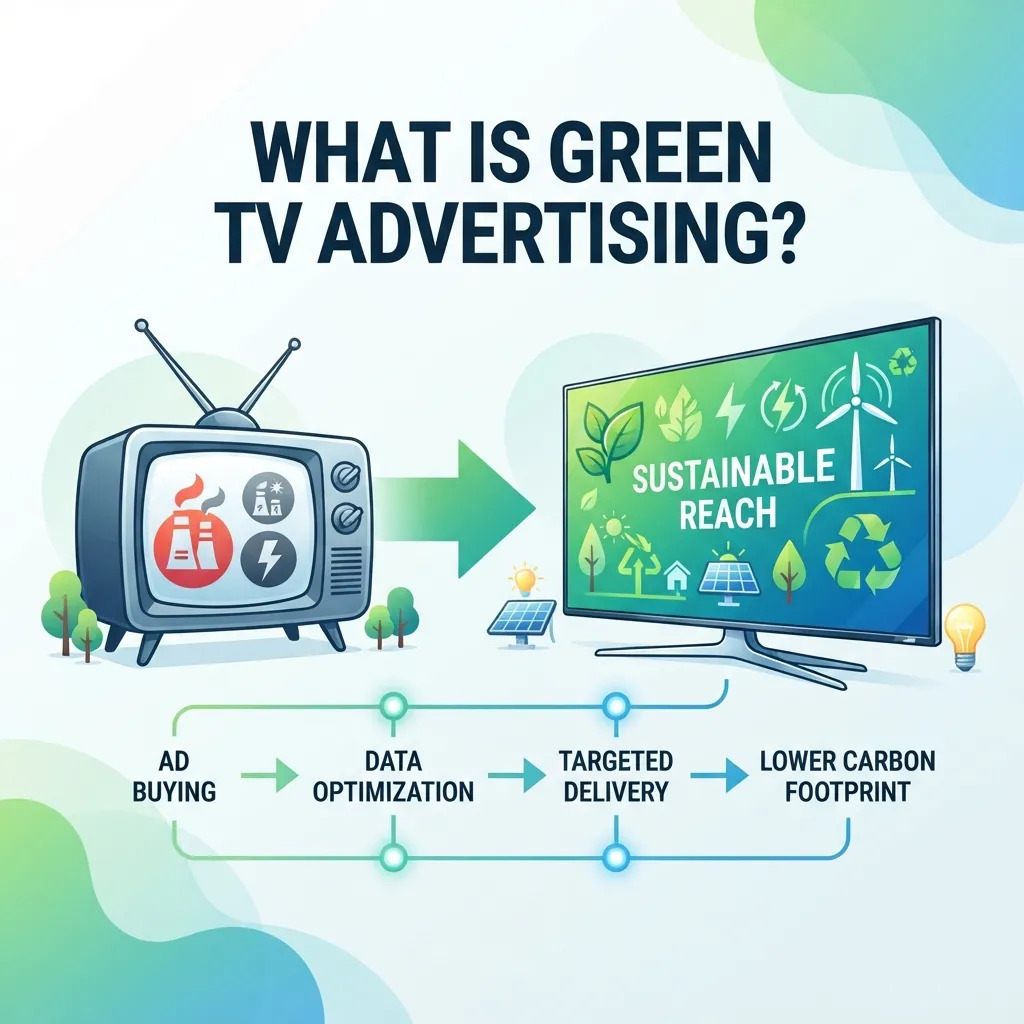
What Is Green TV Advertising?
Green TV advertising refers to television advertising practices that take environmental considerations into account during campaign planning and production.
A traditional TV commercial may involve script development, location scouting, set construction, equipment transportation, filming, editing, post-production, and distribution. Each stage can create opportunities to use resources more efficiently.
A sustainable approach looks at these stages as a complete workflow. Instead of focusing only on the final advertisement, advertisers consider how the campaign is created and whether unnecessary resource use can be reduced.
For example, a production team might reuse props from previous campaigns, reduce printing, select a location that requires less travel, or use digital communication instead of physical documentation.
Why Is Sustainable TV Advertising Becoming Important?
Environmental responsibility has become an important consideration for many businesses. Companies are increasingly examining not only their products and services but also how their marketing activities are produced.
Advertising agencies and production companies can contribute to these efforts by considering sustainability during campaign development.
Green production can also encourage teams to think more carefully about efficiency. Reducing unnecessary materials or travel may support environmental goals while potentially simplifying certain production processes.
However, sustainability should not be treated as a purely promotional concept. Effective green advertising requires genuine changes in the way campaigns are planned and produced.
Sustainable Production Planning
Planning is one of the most important areas for reducing unnecessary resource consumption.
A poorly organized production may require additional shooting days, repeated transportation, extra materials, or unnecessary equipment use. Better scheduling can help avoid these issues.
Before production begins, teams can review:
Shooting locations
Number of production days
Transportation requirements
Equipment requirements
Materials and props
Catering and waste management
Printing requirements
Remote collaboration opportunities
This type of planning allows production teams to identify areas where resources can be reduced before filming starts.
Reducing Physical Waste
Television advertising production can involve a variety of physical materials. Sets, props, packaging, printed documents, promotional materials, and temporary installations may all contribute to production waste.
Where practical, advertisers can reuse existing materials rather than purchasing new ones for every campaign.
Set materials can sometimes be stored for future projects. Props may be reused or donated. Printed documents can be replaced with digital versions.
Recycling is another option, but reducing unnecessary material use in the first place can be an even more practical approach.
Improving Energy Efficiency
Energy is another consideration for television production.
Studios, lighting equipment, cameras, computers, editing systems, and other production technology can require electricity throughout the campaign process.
Production teams can explore energy-efficient equipment and lighting options where suitable. Turning off equipment when it is not required and planning production schedules efficiently can also help avoid unnecessary energy use.
The exact environmental impact will depend on the size and type of production, so sustainability strategies should be adapted to each campaign rather than applied as a fixed formula.
Reducing Unnecessary Travel
Travel can be another significant part of advertising production.
A campaign may require teams to travel between offices, studios, filming locations, and other production sites. Equipment and materials may also need transportation.
Better location planning can help reduce unnecessary movement. Production teams can select locations that allow multiple scenes to be filmed in one area or combine activities during the same trip.
Remote meetings can also replace some in-person discussions during pre-production and post-production.
When travel is necessary, planning it efficiently can help reduce unnecessary journeys.
Using Digital Workflows
Digital technology provides another opportunity for greener advertising operations.
Traditional campaigns may involve printed scripts, storyboards, schedules, approval documents, contracts, and other paperwork. Many of these materials can now be handled digitally.
Cloud-based collaboration allows creative teams, clients, agencies, and production partners to review files and provide feedback without relying on physical documents.
Digital workflows can also make project management more convenient while reducing paper consumption.
Choosing Sustainable Production Partners
A brand's sustainability efforts can extend beyond its internal team.
Production companies, advertising agencies, studios, suppliers, transportation providers, and other partners can all influence the environmental footprint of a campaign.
Before selecting a partner, advertisers can consider whether the company has responsible production practices, waste-management procedures, energy-efficiency measures, or other sustainability initiatives.
Working with partners that understand environmental considerations can make it easier to maintain consistent standards across a campaign.
Communicating Green Advertising Claims
Sustainability communication requires accuracy.
If a company describes its advertising campaign as environmentally responsible, the claim should be based on actual practices. Broad statements without supporting information can create confusion.
Instead, brands can communicate specific actions. For example, they may explain that they reduced physical materials, reused production resources, limited unnecessary travel, or implemented digital workflows.
Specific information gives audiences a clearer understanding of what sustainability means within the campaign.
The Role of Creativity in Green TV Advertising
Sustainable advertising does not have to limit creativity.
Creative teams can develop concepts that require fewer physical resources while still delivering a strong message. Digital production techniques, carefully selected locations, and efficient storytelling can sometimes reduce the need for large physical sets.
The most effective approach depends on the campaign objective, audience, budget, and creative direction.
Sustainability should therefore be considered alongside creativity rather than treated as something that works against it.
How Technology Can Support Sustainable Campaigns
Modern technology can make certain aspects of advertising production more efficient.
Digital collaboration platforms can reduce physical meetings and paperwork. Virtual production techniques may reduce the need for some physical locations or sets in suitable projects. Cloud-based review systems can simplify communication between distributed teams.
Technology is not automatically sustainable, however. The environmental impact of digital tools depends on how they are used, the infrastructure involved, and the overall production process.
The goal should be to select technology that genuinely improves efficiency and reduces unnecessary resource use.
Building a Practical Green TV Advertising Strategy
Brands that want to introduce sustainable advertising practices can begin with a simple review of their existing workflow.
First, identify the stages that consume the most resources. Next, determine which activities can be reduced, reused, digitized, or planned more efficiently.
A practical strategy may include:
-
Setting sustainability objectives before production.
Reducing unnecessary printing and physical materials.
Reusing props and production resources.
Planning locations to minimize travel.
Using digital collaboration wherever practical.
Considering energy-efficient production equipment.
Selecting responsible suppliers and production partners.
Communicating environmental claims accurately.
Reviewing the campaign process after completion.
Identifying improvements for future productions.
These steps can be adjusted depending on the scale and requirements of each campaign.
Measuring Progress
Sustainability efforts become easier to improve when brands track relevant activities.
Depending on the production, teams might monitor material usage, travel, printing, waste, energy consumption, or other measurable factors.
The purpose of measurement is not necessarily to create a complicated reporting system. Even a basic review can help identify where improvements were successful and where additional changes may be possible.
Over time, this information can help production teams develop more consistent sustainability practices.
Green TV Advertising and Brand Reputation
A company's approach to sustainability can influence how its broader marketing activities are perceived.
However, brands should avoid treating environmental messaging as a substitute for genuine action. Consumers can become skeptical when sustainability claims are disconnected from actual practices.
A more responsible approach is to make realistic improvements first and then communicate those efforts clearly.
This creates a stronger connection between the campaign message and the way the campaign was produced.
Conclusion
Green TV advertising offers a practical way for advertisers to consider environmental responsibility without abandoning the reach and creative potential of television.
From production planning and material selection to travel, energy use, digital collaboration, and partner selection, there are multiple areas where campaigns can become more resource-conscious.
Sustainability does not require every campaign to follow exactly the same process. Instead, advertisers can evaluate their individual production workflow and identify realistic opportunities to reduce unnecessary waste and resource consumption.
For a more detailed look at practical approaches to sustainable television advertising, read the complete guide: Green TV Advertising: Eco-Friendly Campaign Strategies.
Frequently Asked Questions
1. What is green TV advertising?
Green TV advertising is the practice of incorporating environmentally responsible considerations into television advertising planning, production, and related campaign activities.
2. How can advertisers make TV production more sustainable?
Advertisers can reduce unnecessary materials, reuse production resources, minimize avoidable travel, use digital workflows, consider energy-efficient equipment, and work with responsible production partners.
3. Does green TV advertising mean using only eco-friendly materials?
No. Green advertising is broader than material selection. It can include production planning, transportation, energy use, waste reduction, digital collaboration, and partner selection.
4. Can digital workflows support sustainable advertising?
Yes. Digital documents, online approvals, remote meetings, and cloud-based collaboration can reduce the need for certain physical materials and unnecessary travel.
5. How should brands communicate green advertising practices?
Brands should use accurate and specific information about the actions they have actually taken. Environmental claims should not be exaggerated or unsupported.
6. Is sustainable TV advertising suitable for small businesses?
Yes. Sustainability practices can be adjusted according to the size and budget of a campaign. Smaller advertisers can start with simple steps such as reducing printing, reusing materials, planning travel efficiently, and using digital collaboration.
Final Thoughts
Green TV advertising is not about changing every traditional advertising practice overnight. It is about identifying practical opportunities to make campaign production more efficient and environmentally responsible.
As advertising continues to evolve, sustainable production can become a useful consideration for brands, agencies, and production teams looking to create campaigns with both audience impact and responsible resource use.
Explore the full resource here: Green TV Advertising: Eco-Friendly Campaign Strategies.