Complete Guide to Building a Handyman App Like Uber
-

- Published Updated
- 65 views
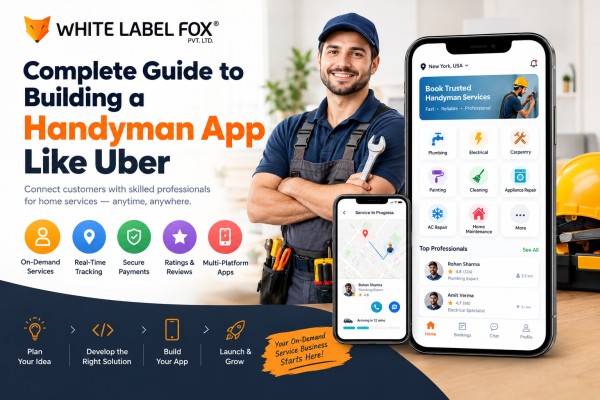
The on-demand economy has changed how customers access everyday services. From plumbing and electrical repairs to cleaning, painting, appliance maintenance, and carpentry, people now expect professional services to be available quickly and conveniently.
This shift has created new opportunities for startups and entrepreneurs looking to build digital home-service businesses. A handyman app like uber can connect customers with nearby professionals, simplify service bookings, support scheduling, and create a centralized marketplace for multiple home services.
For businesses entering this market, understanding the business model, essential features, customer expectations, and launch strategy is important. This guide explains how entrepreneurs can build an effective on-demand handyman platform and create a strong foundation for long-term growth.
What Is an On-Demand Handyman App?
An On-Demand Handyman App is a digital platform that connects customers with professionals who provide household and maintenance services. Instead of searching for individual service providers, customers can use one platform to discover services, select professionals, schedule appointments, and manage bookings.
The concept is similar to ride-hailing platforms, where customers request rides and nearby drivers fulfill them. In the home-service industry, the same marketplace approach connects customers with skilled professionals.
A handyman app like uber can support several service categories, including:
- Plumbing
- Electrical services
- Home cleaning
- Painting
- Carpentry
- Appliance repair
- Furniture assembly
- Gardening
- Pest control
- General maintenance
Businesses can start with selected categories and expand their service portfolio based on customer demand.
How Does Uber for Handyman Work?
An Uber for Handyman platform generally connects three major participants: customers, service professionals, and the business administrator.
Customer Experience
Customers can create profiles, explore service categories, select professionals, choose appointment times, book services, receive updates, and provide ratings after completion.
The booking process should remain simple so customers can request a service without unnecessary steps.
Professional Experience
Service providers can manage their profiles, availability, service requests, appointments, and job status. They can receive requests from customers, accept suitable jobs, view service details, and navigate to the customer's location.
A rating and review system can also help professionals establish credibility on the platform.
Business Management
The business owner needs centralized control over the marketplace. Administrative capabilities can help manage customers, professionals, service categories, bookings, reviews, transactions, and overall platform activity.
This structure allows entrepreneurs to manage a growing service marketplace more efficiently.
Essential Features for a Handyman App Like Uber
The success of an on-demand marketplace depends heavily on its customer experience. Entrepreneurs should prioritize practical features that make booking and service management convenient.
1. Service Categories
Customers should be able to quickly identify the service they need. Clear categories can make navigation easier and help users find the right professional.
2. Professional Profiles
Professional profiles can display service information, experience, ratings, reviews, availability, and other relevant details. This helps customers make informed decisions before booking.
3. Location-Based Matching
Location-based matching can help connect customers with available professionals in their service area. This can improve convenience and reduce unnecessary travel for service providers.
4. Booking and Scheduling
Customers may need immediate assistance or want to schedule a service for a future date. Flexible booking options can support both requirements.
5. Real-Time Notifications
Notifications can keep customers and professionals informed about booking confirmations, appointment changes, service status, and other important updates.
6. Payments
A convenient payment experience is essential for a digital marketplace. Businesses can support suitable payment methods based on their target market and customer preferences.
7. Ratings and Reviews
Reviews provide useful feedback for customers and businesses. A transparent rating system can help establish trust while encouraging professionals to maintain consistent service quality.
Advanced Features to Improve the User Experience
Once the core marketplace is established, businesses can introduce additional features to improve engagement and operational efficiency.
Personalized service recommendations can help customers discover relevant services. Automated reminders can reduce missed appointments, while promotional campaigns can encourage repeat bookings.
Businesses can also introduce referral programs, loyalty features, multilingual support, multiple service areas, recurring bookings, and smart professional matching.
These capabilities can make an Uber like app for handyman services more useful as the marketplace grows.
How to Build an On-Demand Handyman Platform
Launching a successful home-service platform requires more than simply creating an application. Entrepreneurs should first establish a clear business strategy.
Step 1: Research the Target Market
Identify the geographical market, customer needs, competitors, and most requested services. Understanding local demand can help businesses select the right service categories.
For international expansion, businesses should also consider local languages, payment preferences, service expectations, and regulations.
Step 2: Select Service Categories
Decide which services will be available during the initial launch. A focused selection can make marketplace management easier while allowing the business to understand customer demand.
Additional services can be introduced as the platform grows.
Step 3: Plan the Customer Journey
Map the complete journey from service discovery to booking, professional arrival, completion, payment, and review.
Each step should be simple, clear, and convenient for customers.
Step 4: Build a Professional Network
A successful marketplace needs reliable service professionals. Businesses should establish suitable onboarding and verification processes and provide clear service information to customers.
Step 5: Choose a Suitable Development Approach
Entrepreneurs can develop a platform from scratch or use a ready-made solution.
A handyman script can provide commonly required marketplace functionality and allow businesses to customize the platform according to their brand, services, target customers, and market.
Step 6: Launch and Improve
After launching, businesses should monitor bookings, customer feedback, service completion, reviews, and other performance indicators.
Continuous improvement can help businesses identify customer preferences and improve the overall service experience.
Why Entrepreneurs Choose Handyman Apps Like Uber
The home-service industry includes many recurring customer requirements. People regularly need professionals for maintenance, repairs, cleaning, installation, and property improvement.
A digital marketplace can bring these fragmented services together under one platform.
Entrepreneurs can use the model to:
- Offer multiple home services
- Connect independent professionals with customers
- Expand across different locations
- Create recurring service opportunities
- Build a recognizable service brand
- Add new categories as demand increases
A business can begin with a specific location or service category and gradually expand its marketplace.
How to Make Your Platform Stand Out
Competition in the home-service market makes customer experience an important consideration. Offering multiple services alone may not be enough.
Focus on Trust
Professional profiles, ratings, reviews, verification, and transparent service information can help customers feel more comfortable when booking professionals.
Simplify the Booking Process
Customers should be able to find a service and complete a booking with minimal effort. A clear booking flow can reduce friction and improve usability.
Support Flexible Scheduling
Some customers need immediate assistance, while others prefer appointments at a specific time. Supporting different booking requirements can help serve a wider audience.
Maintain Service Quality
The quality of professionals directly affects customer satisfaction. Businesses should monitor reviews, complaints, service performance, and customer feedback.
Expand According to Demand
Instead of adding every possible service, businesses can use customer data and market feedback to identify the categories and locations worth expanding into.
Opportunities With Uber for Home Services
The Uber For Home Services model can be adapted to different markets because household maintenance is a recurring requirement.
For example, a business may initially focus on cleaning and appliance repair, while another may concentrate on plumbing, electrical work, and property maintenance.
Entrepreneurs can also develop specialized platforms for residential customers, property managers, commercial businesses, or real-estate operators.
This flexibility makes the model suitable for both focused service businesses and broader multi-service marketplaces.
Choosing the Right Development Partner
Selecting an experienced development partner is an important step when launching an on-demand marketplace. Entrepreneurs should evaluate experience with marketplace platforms, customization capabilities, scalability, support, and understanding of service-based businesses.
Reviewing previous projects and available features can help businesses understand whether a solution matches their requirements.
The ideal platform should be flexible enough to support different service categories, business models, locations, and customer requirements.
Conclusion
The increasing demand for convenient home services has created opportunities for entrepreneurs to build digital marketplaces connecting customers with skilled professionals. A handyman app like uber can simplify service discovery, booking, scheduling, communication, and professional management through one platform.
Essential features such as service categories, professional profiles, location-based matching, scheduling, notifications, payments, and ratings can create a convenient experience for customers and service providers.
Entrepreneurs can also use a ready-made solution to establish their business model and adapt it to their target market. Whether the goal is to serve one city or expand across multiple regions, a well-planned platform can provide a strong foundation for entering the on-demand service industry.
Working with an experienced clone app development company can help startups and entrepreneurs turn their home-service marketplace idea into a scalable digital business.
Frequently Asked Questions
1. What is a handyman app like Uber?
A handyman app like uber is an on-demand marketplace that connects customers with professionals offering services such as plumbing, cleaning, electrical repairs, painting, carpentry, and maintenance.
2. What services can an Uber for Handyman Services App offer?
An Uber for Handyman Services App can support plumbing, electrical work, cleaning, painting, carpentry, appliance repair, gardening, pest control, furniture assembly, and other household services.
3. Can I launch a handyman platform in multiple locations?
Yes. An on-demand marketplace can support multiple cities and service areas. Businesses can initially focus on one market and expand according to customer demand and professional availability.
4. What features are important in an On-Demand Handyman Services App?
Important features include service discovery, professional profiles, booking, scheduling, location-based matching, notifications, payments, ratings and reviews, customer communication, and centralized marketplace management.
5. Can a handyman platform be customized?
Yes. A ready-made platform can be customized according to a business's branding, service categories, target audience, geographical market, and operational requirements. This allows entrepreneurs to create a platform aligned with their specific business model.