The Difference Between a High-Mileage Car and a Worn-Out Car
-

- Published Updated
- 1,753 views
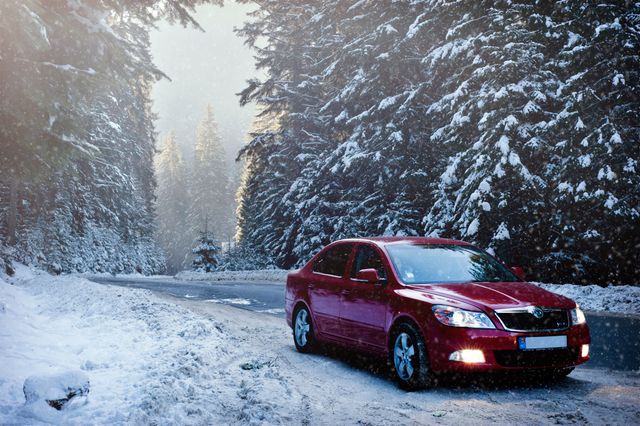
A car showing 240,000 kilometres on the odometer can still be perfectly usable.
Another car with 130,000 kilometres can be sitting in a driveway with a dead transmission, rusted brake lines, a leaking engine and a repair bill that makes the owner suddenly very interested in walking.
So, what happened?
The first car has high mileage.
The second may be worn out.
Those terms are often used as though they mean the same thing, but they describe two different aspects of a vehicle's life. Mileage tells you how far the vehicle has travelled. Wear tells you what that use has done to the vehicle and whether its major systems still have enough useful life left to make ownership practical.
That distinction becomes particularly important with older vehicles. A high odometer reading should make you inspect a car more carefully, but it should not automatically send the vehicle to the scrapyard.
High Mileage Is a Number. Wear Is a Condition.
The simplest way to understand the difference is this:
High mileage describes distance. Worn out describes condition.
If a vehicle has travelled 200,000 kilometres, it has accumulated substantial use. That does not tell you whether it was maintained properly.
Consider two cars with the same 200,000-km reading.
One has received regular oil changes, transmission servicing, cooling-system maintenance, brake work, suspension repairs and rust prevention. Major components that wore out were replaced when necessary.
The other owner kept postponing maintenance. The engine oil was changed only when the car started making strange noises. The suspension is original. The transmission occasionally slips. The exhaust rattles. The underside is covered in corrosion.
Both vehicles have 200,000 km.
Their remaining useful lives could be dramatically different.
This is why mileage should be treated as one piece of evidence, rather than a final judgment.
Why Kilometres Alone Cannot Tell You How Worn a Car Is
An odometer measures distance, but cars experience stress in many different ways.
A kilometre driven on a highway at a steady speed isn't necessarily equivalent to a kilometre spent crawling through city traffic.
Think about what happens during urban driving:
- The engine repeatedly starts from cold.
- The vehicle accelerates and brakes frequently.
- The transmission changes gears more often.
- The brakes experience repeated heat cycles.
- Suspension components deal with potholes, speed bumps and rough roads.
- The engine may spend considerable time idling.
- Short trips may prevent the engine and exhaust system from reaching ideal operating conditions.
Now compare that with a vehicle that spends much of its life travelling long highway distances.
It may accumulate hundreds of thousands of kilometres, but the engine can spend long periods operating at a relatively stable temperature and speed.
That doesn't make highway mileage harmless. It simply demonstrates why the type of driving matters alongside the number on the odometer.
What Actually Wears Out on a High-Mileage Car?
A car doesn't become worn out because one component reaches a particular kilometre number.
Different parts age at different rates.
Some are affected mainly by mileage. Others are affected by time, temperature, corrosion, driving conditions or lack of maintenance.
Understanding these differences gives you a much better idea of what “high mileage” really means.
1. The Engine
The engine is obviously one of the first components people think about.
But an engine doesn't simply have a universal expiration point.
Its condition depends on lubrication, operating temperature, maintenance, driving habits and previous repairs.
Over time, internal components such as piston rings, bearings, seals and timing components can experience wear.
An older engine may begin showing symptoms such as:
- Increased oil consumption
- Blue or excessive exhaust smoke
- Oil leaks
- Reduced compression
- Rough idling
- Loss of power
- Persistent knocking or unusual mechanical noise
- Repeated overheating
An engine with high mileage but good compression, stable oil pressure and proper maintenance can be very different from one that is already showing several of these symptoms.
That's why simply saying “the car has 250,000 km, so the engine is finished” is misleading.
2. The Transmission Can Change the Equation Quickly
A transmission can become one of the biggest financial considerations on an older vehicle.
Automatic transmissions contain numerous internal components that experience repeated friction, heat and hydraulic or electronic control.
Manual transmissions have their own wear points, particularly the clutch and related components.
Warning signs can include:
- Delayed engagement
- Slipping
- Harsh shifting
- Shuddering
- Difficulty selecting gears
- Unusual transmission noises
- Fluid leaks
- Transmission warning lights
A vehicle may still run with a transmission problem for a while, but that doesn't necessarily mean it is sensible to keep driving it indefinitely.
If an older vehicle needs a major transmission repair while also suffering from rust and other mechanical problems, the overall ownership calculation can change dramatically.
3. Suspension Wear Is Often Hidden Until It Becomes Noticeable
Suspension components have a difficult job.
They constantly deal with bumps, potholes, road imperfections, vehicle weight and repeated movement.
Over time, components such as shocks, struts, control-arm bushings, ball joints, tie rods and other suspension parts can wear.
You may notice:
- Excessive bouncing
- Uneven tire wear
- Vehicle pulling to one side
- Clunking over bumps
- Poor steering response
- Excessive body movement when braking or cornering
This is particularly relevant to older vehicles that have spent years driving on rough roads.
A car can have a perfectly healthy engine while its suspension is becoming increasingly expensive to maintain.
4. Brakes Wear Through Use, Not Simply Age
Brake components don't care much about the odometer by itself.
Their wear depends heavily on driving conditions.
A vehicle driven primarily in dense urban traffic may use its brakes much more frequently than one that spends long periods on highways.
Brake pads and rotors are normal wear items, but older vehicles can also develop problems involving:
- Brake calipers
- Brake lines
- Brake hoses
- Parking-brake mechanisms
- Corrosion around brake components
In areas where winter road salt is common, corrosion can become an additional concern.
That is one reason an older Canadian vehicle needs more than a simple mileage check.
5. Rust Can Turn an Otherwise Repairable Car Into a Difficult One
For Canadian vehicles, rust deserves its own discussion.
Salt and moisture can gradually attack the body and undercarriage. Surface corrosion may initially look like a cosmetic annoyance, but corrosion in important structural or mechanical areas is a different matter.
Potential trouble spots can include:
- Rocker panels
- Wheel arches
- Subframes
- Suspension mounting points
- Brake lines
- Fuel lines
- Exhaust components
- Undercarriage structures
This creates an interesting situation.
A 180,000-km vehicle with serious structural corrosion may be less practical to repair than a 260,000-km vehicle with a solid body and well-maintained mechanical systems.
The odometer cannot tell you that.
An inspection can.
Age and Mileage Are Two Different Clocks
One of the most overlooked ideas in vehicle ownership is that a car has two different aging processes.
The first is mileage.
The second is time.
A vehicle can accumulate relatively few kilometres and still develop age-related problems.
Rubber seals harden.
Plastic becomes brittle.
Fluids deteriorate.
Gaskets age.
Electrical connections corrode.
Rubber hoses can deteriorate.
Weather seals become less effective.
The battery and charging system can experience age-related issues.
This is why a 15-year-old car with 100,000 km should not automatically be considered lightly used.
It has fewer kilometres, but it has still spent 15 years exposed to heat, cold, moisture, vibration and time.
The Canadian Winter Factor
A vehicle operating in Canada has another challenge that shouldn't be ignored: repeated temperature changes.
Winter can affect vehicles in several ways.
Cold temperatures make engine oil thicker during startup, place additional demand on batteries and can make rubber components less flexible.
Road salt introduces another problem: corrosion.
Then there are potholes.
Freeze-thaw cycles can contribute to damaged roads, and repeated impacts can accelerate wear in tires, wheels, steering and suspension components.
None of this means every Canadian high-mileage vehicle is worn out.
It means environment matters when interpreting mileage.
A vehicle's history can sometimes tell you more than the odometer.
Highway Mileage vs. City Mileage
This is one of the most useful distinctions when evaluating a used or aging vehicle.
Suppose Vehicle A has 230,000 km and spent much of its life travelling between cities.
Vehicle B has 150,000 km but spent most of its life in stop-and-go urban traffic.
It would be inaccurate to declare one automatically healthier based solely on mileage.
Vehicle B may have experienced considerably more braking, idling, acceleration and repeated short trips.
Vehicle A may have accumulated more distance but experienced fewer cycles of certain types of mechanical stress.
This is why experienced buyers often ask:
“Where and how was the vehicle driven?”
rather than only asking:
“How many kilometres does it have?”
Maintenance History Can Be More Valuable Than a Low Odometer
A maintenance record gives context to mileage.
Imagine a vehicle with 210,000 km and records showing:
- Regular engine oil changes
- Cooling-system maintenance
- Brake replacements
- Suspension repairs
- Transmission servicing where applicable
- Tire replacements
- Battery replacements
- Scheduled inspections
Now imagine another vehicle with 145,000 km but no maintenance records and multiple unresolved mechanical symptoms.
The second car may have fewer kilometres, but you have much less information about how it got there.
This is why maintenance history can be such a valuable indicator.
A high-mileage car that has consistently been repaired as components wore out can remain useful for a long time.
How to Tell When High Mileage Is Becoming “Worn Out”
There is no universal kilometre figure at which a vehicle becomes worn out.
Instead, look for a pattern of deterioration.
One repair is not necessarily a death sentence.
Older cars need repairs.
Replacing a battery, alternator, brake pads or suspension component doesn't automatically mean the vehicle has reached the end of its life.
Several major problems at once are different.
Suppose an older vehicle needs:
- A transmission
- Major suspension work
- Structural rust repair
- Brake-line replacement
- Significant engine work
Now the question becomes less about whether each repair is technically possible and more about whether the total investment makes sense.
That's the point where an owner needs to look at the vehicle as a whole.
Watch the Repair Pattern, Not Just the Repair Bill
A common mistake is looking at each repair separately.
“It's only $500.”
Then another $700 appears.
Then $900.
Then $1,500.
None of those repairs individually seems catastrophic.
But the vehicle doesn't receive its bills individually. The owner does.
If repair costs continue accumulating while the vehicle's reliability decreases, the economics of ownership can change.
This is particularly important when major components are approaching the end of their service life at the same time.
What Is a “Worn-Out” Car Really?
A worn-out car isn't necessarily one that cannot move.
A vehicle can still start, drive and technically pass a basic test while being economically worn out.
For example, an owner might have a vehicle that:
- Runs but consumes significant oil
- Has severe corrosion underneath
- Requires frequent repairs
- Has unreliable electrical systems
- Needs major suspension work
- Has poor brakes
- Has a failing transmission
- Has little resale demand
- Requires repairs worth more than the owner wants to invest
The vehicle still moves.
But its useful value to the owner may have dropped substantially.
That is an important distinction.
Mechanical operation and economic usefulness are not always the same thing.
When Repairing a High-Mileage Car Still Makes Sense
High mileage doesn't automatically mean “sell it.”
Repairing an older vehicle can make sense when the underlying structure and major systems remain healthy.
For example, replacing a worn alternator on a high-mileage car is a very different decision from replacing an engine and transmission in a heavily rusted vehicle.
Consider:
Overall condition + expected repair costs + remaining useful life + replacement cost
That combination provides a much more useful picture than mileage alone.
If spending $1,000 keeps a reliable older vehicle on the road for another year, that may be reasonable for some owners.
If spending $5,000 only fixes the latest problem while several other major failures are waiting behind it, the decision becomes considerably harder.
When Keeping the Car Can Become More Expensive Than Replacing It
There is another hidden cost: downtime.
A vehicle that repeatedly breaks down can interfere with work, family responsibilities and daily transportation.
You may pay for:
- Towing
- Rental vehicles
- Emergency repairs
- Diagnostic fees
- Parts
- Labour
- Missed time
Eventually, reliability itself becomes part of the vehicle's value.
A cheap old car isn't necessarily cheap if it repeatedly leaves you stranded.
What Happens When the Vehicle Is Truly at the End of Its Useful Life?
When repairs no longer make practical sense, an owner has several possible paths.
A vehicle might still have value through usable components, recyclable metals or salvageable parts.
This is where the role of a scrap car buyer can become relevant.
The value of an end-of-life vehicle isn't necessarily determined by its ability to drive. Depending on the vehicle and market conditions, factors such as its weight, make and model, condition, reusable components and prevailing scrap-metal prices can influence what it is worth.
That is why a car with a dead engine isn't automatically worthless.
The vehicle may have reached the end of its life as transportation without reaching the end of its life as a source of recoverable material.
The Odometer Is Only the Beginning
When evaluating an older car, don't stop at the mileage.
Look at:
Mileage: How far has it travelled?
Age: How many years has it spent exposed to weather and mechanical stress?
Maintenance: Was it serviced consistently?
Driving pattern: Highway, city, short trips or mixed use?
Rust: Is corrosion cosmetic or structural?
Mechanical condition: Are the engine and transmission healthy?
Safety: Are brakes, steering and suspension reliable?
Repair history: Are repairs occasional or becoming constant?
Future costs: What is likely to require attention next?
Replacement cost: Would keeping the vehicle cost less than finding another reliable form of transportation?
These questions turn a simple mileage check into an actual assessment of the vehicle.
High Mileage Doesn't Mean High Risk by Itself
A high-mileage vehicle deserves closer inspection, but the odometer shouldn't be treated like a countdown timer.
A well-maintained 250,000-km vehicle may still have useful years ahead of it.
A neglected 120,000-km vehicle may already be approaching the end of its practical life.
The difference comes down to what happened between those kilometres.
Maintenance, driving conditions, corrosion, age, mechanical wear and repair costs all tell part of the story.
So the next time someone says, “That car has too many kilometres,” there is a better question to ask:
Too many kilometres for what condition?
That is where the real difference between a high-mileage car and a worn-out car begins.