Elevators for Homes: Features, Dimensions, Benefits & Buying Guide
-
- Published Updated
- 2,837 views
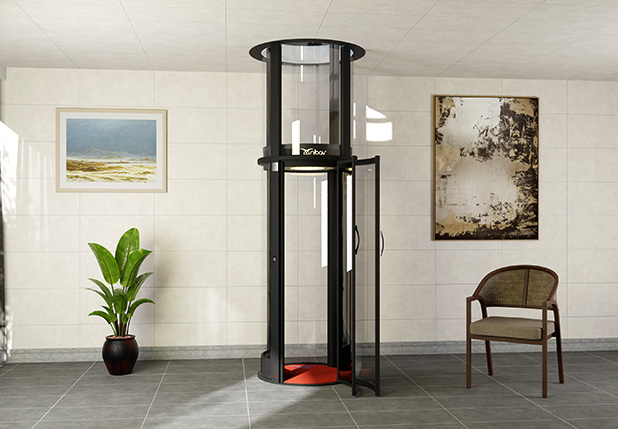
A home elevator is no longer limited to large luxury villas or high-end residences. Today, elevators for homes are becoming an increasingly practical solution for villas, duplexes, bungalows, multi-storey houses, and modern residential properties. They provide convenient movement between floors while improving accessibility, comfort, and the overall value of a home.
Modern residential elevators are available in compact designs that can be installed even where space is limited. Among the different technologies available, air-driven or vacuum home elevators are particularly suitable for homeowners looking for a compact, elegant, and energy-efficient solution.
What Are Elevators for Homes?
Elevators for homes, also known as home elevators, residential elevators, or home lifts, are elevators specifically designed for private residential use. Unlike commercial elevators, they generally have a smaller footprint, lower passenger capacity, and designs that integrate with residential architecture.
A modern home elevator can be installed in a newly constructed house or added to an existing property as part of a renovation or retrofit project. Depending on the model, installation may require considerably less structural preparation than a conventional elevator.
For example, Nibav's air-driven home elevators use pneumatic technology and are designed around compact, self-supporting structures. Current models offer capacities ranging from approximately 210 kg to 240 kg, depending on the configuration.
Why Choose a Home Elevator?
Installing an elevator inside your home can provide several advantages beyond simply moving between floors.
1. Easy Multi-Floor Accessibility
Stairs can become inconvenient when carrying groceries, luggage, furniture, or other household items. A residential elevator provides comfortable access between floors without requiring repeated stair climbing.
It can also make a multi-storey home more convenient for different generations of the family.
2. Useful for Elderly Family Members
A home elevator can make it easier for older family members to access bedrooms, living areas, terraces, and other floors. It can also support homeowners who want to design their property for long-term accessibility.
3. Compact Installation
One of the biggest advantages of modern home elevators is their ability to work within relatively small spaces. Some pneumatic models are designed without a conventional deep pit and can use a self-supporting shaft structure.
For example, the Nibav Series III Standard has an external shaft diameter of 935 mm and an internal cabin diameter of 749 mm.
4. Stylish Residential Design
A home elevator does not necessarily have to look like a commercial lift. Modern residential elevators can incorporate panoramic cabins, curved profiles, premium finishes, lighting, and customized interiors.
The result can be a functional mobility solution that also becomes an architectural feature of the home.
Key Features of Modern Elevators for Homes
When selecting a residential elevator, homeowners should evaluate more than just price. Technology, dimensions, capacity, safety, installation requirements, and long-term usability are equally important.
1. Panoramic 360-Degree Cabin
Panoramic cabins provide visibility around the elevator and allow natural light into the cabin. This can make the elevator feel more open compared with conventional enclosed lift cabins.
Nibav home elevators use transparent polycarbonate structures designed to provide panoramic visibility while maintaining structural strength.
2. Air-Driven Technology
Vacuum or pneumatic home elevators use differences in air pressure to move the cabin vertically. This eliminates the need for some traditional mechanical components associated with conventional elevator systems.
The technology can provide smooth movement and requires zero power during descent according to Nibav's product information.
3. Zero-Pit Installation
Traditional elevators can require excavation for a pit and additional structural preparation. Certain residential elevator technologies are designed for pit-less installation, making them particularly useful for existing houses.
This can reduce the amount of civil work required during installation.
4. No Separate Machine Room
A residential elevator can be designed without a conventional machine room, helping homeowners preserve valuable floor space.
Some Nibav configurations integrate the motor into the elevator's head unit, eliminating the need for a separate machine room.
5. Energy-Efficient Operation
Energy consumption is an important consideration for a lift installed in a private home. Nibav states that its air-driven home elevators operate on single-phase power and consume approximately 3.7 kVA while ascending, with zero power consumption during descent.
6. Safety Features
Safety should always be one of the primary considerations when purchasing an elevator for a home.
Modern home elevator systems can include features such as:
- Emergency alarm
- Emergency descent
- Telephone or communication system
- Cabin lighting
- Ventilation fan
- Child safety controls
- Door locking systems
- Fault detection
- Battery backup, depending on model
The exact safety package varies according to the elevator model and manufacturer.
7. Quiet Operation
A home elevator should operate without creating excessive noise that could disturb family members. Nibav's current product information lists operating noise levels around 50–60 dB for certain systems, depending on configuration.
8. Modern Interior Options
Homeowners can select different colours, finishes, lighting options, flooring, handles, and other interior elements depending on the elevator model.
Premium residential elevators can therefore be coordinated with the home's interior design.
Home Elevator Dimensions
Dimensions are one of the most important factors to check before purchasing a home elevator. The required space depends on the model, cabin size, shaft diameter, travel height, and number of floors.
Here is an example of the dimensions available across Nibav home elevator models:
| Model | Cabin Diameter | External Shaft/Cylinder Diameter | Capacity | Maximum Travel |
|---|---|---|---|---|
| Series III Standard | 749 mm | 935 mm | 210 kg | 13,500 mm |
| Series III Max | 1,160 mm | 1,343 mm | 240 kg | 13,500 mm |
| Series IV Standard | 830 mm | 933 mm | 210 kg | 13,500 mm |
| Series IV Max | 1,240 mm | 1,363 mm | 240 kg | 13,500 mm |
| Series V Standard | 830 mm* | 933 mm* | 210 kg* | Up to 13,500 mm* |
| Series V Max | 1,240 mm* | 1,363 mm* | 240 kg | Up to 13,500 mm* |
*Dimensions and specifications can vary by configuration; confirm the final technical specification during the site assessment. Current Nibav specifications list 1,000 mm clear space for several standard configurations and 1,430 mm for Max configurations.
For example, the Series III Standard provides a 749 mm internal cabin diameter, 935 mm external shaft diameter, 1,950 mm cabin height, and a 508 mm clear door opening.
The Series IV Standard provides an 830 mm cabin diameter, 933 mm external cylinder diameter, and requires approximately 1,000 mm of clear space.
What Dimensions Should You Check?
Before installation, homeowners should evaluate:
- Available floor area
- Cabin diameter
- External shaft diameter
- Door opening
- Floor-to-floor height
- Total travel height
- Headroom
- Landing space
- Number of stops
- Electrical requirements
A professional site assessment is recommended because the available space and structural conditions can determine which elevator model is appropriate.
How Many People Can a Home Elevator Carry?
Residential elevators are generally designed for smaller passenger capacities than commercial elevators.
For example, Nibav's current range includes models rated at 210 kg and 240 kg. The 210 kg configurations are generally positioned for approximately two passengers, while larger 240 kg models provide additional cabin space and can accommodate approximately three to four people depending on the model.
If wheelchair accessibility is important, a larger cabin should be considered. Nibav's Max configurations are specifically listed with larger cabins and wheelchair accessibility.
Where Can Home Elevators Be Installed?
A residential elevator can potentially be positioned in several areas of a property, including:
- Inside the living room
- Near the staircase
- Beside the entrance
- Between bedrooms
- In a central atrium
- In an external balcony area
- Adjacent to an existing staircase
- Inside a newly constructed elevator space
The ideal location depends on the house layout, available floor area, structural conditions, and the desired entry and exit points.
Home Elevator for New Homes vs Existing Homes
One major advantage of modern residential elevators is installation flexibility.
New Construction
For a new home, the elevator can be incorporated into the architectural design from the beginning. The architect can reserve the required footprint and landing areas while planning the electrical and structural requirements.
Existing Homes
For an existing house, a compact pit-less elevator can be particularly useful because homeowners may not want extensive demolition or structural modifications.
A professional site assessment should determine whether the selected elevator can be installed at the preferred location.
Things to Consider Before Buying an Elevator for Your Home
Before choosing a residential elevator, compare the following:
1. Space:
Measure the available footprint and check the manufacturer's required clear space.
2. Capacity:
Select a capacity based on the number of passengers and whether wheelchair accessibility is required.
3. Technology:
Compare pneumatic, hydraulic, traction, and other elevator technologies.
4. Safety:
Check emergency systems, door locks, alarms, communication systems, and applicable certifications.
5. Power Consumption:
Understand the elevator's electrical requirements and expected energy consumption.
6. Installation:
Ask whether the lift requires a pit, machine room, major structural modifications, or special electrical infrastructure.
7. Maintenance:
Consider the manufacturer's maintenance requirements, service network, spare-parts availability, and warranty.
8. Design:
Choose a cabin and exterior finish that complements your home's architecture.
Conclusion
Elevators for homes combine accessibility, convenience, safety, and modern design to make multi-storey living easier. With compact residential elevator technologies now available, homeowners do not necessarily need a large dedicated elevator shaft or machine room.
When selecting a home elevator, focus on the complete solution rather than price alone. Cabin dimensions, external footprint, load capacity, travel height, safety features, energy consumption, installation requirements, and after-sales service should all be evaluated.
For homeowners looking for a compact and contemporary solution, Nibav's air-driven home elevators offer models ranging from compact 210 kg configurations to larger 240 kg Max models, with options designed for different residential requirements.
A proper site assessment is ultimately the best way to determine the right elevator size and configuration for a particular home. https://www.nibavlifts.com/