How Anti Lock Brakes Improve Vehicle Safety and Control
-
- February 23rd, 2026
- 1,233 views
Anti lock brakes are a vehicle safety feature designed to prevent wheel lock-up during hard braking, helping drivers maintain steering control and reducing the likelihood of crashes. This technology is common on modern passenger vehicles and interacts with other electronic safety systems to improve stability in a variety of road conditions.
- Anti lock brakes reduce wheel lock-up and help maintain steering control during emergency stops.
- They improve braking performance on wet, icy, or loose surfaces and complement other systems like electronic stability control.
- Regulatory testing by agencies such as the National Highway Traffic Safety Administration (NHTSA) and research from the Insurance Institute for Highway Safety (IIHS) inform safety recommendations.
Key benefits of anti lock brakes
Anti lock brakes offer several measurable benefits that contribute to road safety. By modulating brake pressure at each wheel, the system reduces the chance of wheel lock-up, which preserves lateral traction and allows the driver to steer while braking. The most commonly reported advantages include shorter stopping distances on many surfaces, improved directional stability, and a lower risk of skidding-related crashes.
How anti lock brakes work
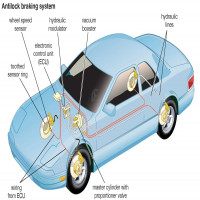
An anti-lock braking system (ABS) uses wheel speed sensors, a hydraulic modulator, and an electronic control unit. When sensors detect that one or more wheels are decelerating too quickly (indicating impending lock-up), the controller rapidly pulses brake pressure to that wheel. Pulsing occurs many times per second to maintain tire traction. This modulation helps tires continue rolling rather than sliding, preserving steering input and helping the vehicle follow the intended path.
Safety outcomes and evidence
Studies and crash statistics indicate that anti lock brakes reduce certain types of crashes. Research from traffic safety organizations, including the Insurance Institute for Highway Safety (IIHS), shows reductions in fatal single-vehicle crashes and fewer loss-of-control incidents when ABS is present alongside other safety systems. Regulatory agencies such as the National Highway Traffic Safety Administration track equipment effectiveness and recall data to inform consumers and manufacturers.
Performance in different conditions
Wet and rainy roads
On wet pavement, anti lock brakes often shorten stopping distances compared with locked-wheel braking because rolling tires maintain better contact and directional control.
Snow and ice
On loose surfaces like deep snow or certain icy patches, ABS may not always produce shorter stopping distances than skilled threshold braking (controlled manual pumping). However, ABS generally helps drivers avoid loss of control and steering lock, which reduces collision risk in most real-world scenarios.
Gravel and dirt
On some very loose surfaces, ABS can slightly increase stopping distance because locked wheels can build up a wedge of material in front of the tire. Despite this, the steering control benefits of ABS usually outweigh the marginal distance trade-off for most drivers and situations.
Maintenance, limitations, and common misconceptions
Anti lock brakes require regular brake system maintenance like any other braking technology. Common misconceptions include the idea that ABS always reduces stopping distances under every condition or that it eliminates the need for safe following distances and attentive driving. ABS is a driver-assist technology, not a substitute for defensive driving practices. Fault indicators on the instrument cluster alert drivers to system malfunctions; when illuminated, normal braking still works but ABS functions may be disabled.
Regulation, testing, and recommended standards
Vehicle safety regulators and independent testing organizations evaluate anti lock braking systems through standardized tests and crash analyses. U.S. federal standards and agency guidance have influenced ABS adoption, while organizations such as the IIHS publish comparative test results. For official information and regulatory guidance on anti-lock braking systems, consult the National Highway Traffic Safety Administration resource pages for equipment standards and safety research.
Choosing a vehicle and long-term considerations
When comparing vehicles, ABS presence is now a common baseline for safety equipment. Many manufacturers combine ABS with traction control and electronic stability control to create layered protections that address different loss-of-control scenarios. Over a vehicle's lifespan, maintaining brake fluid, pads, rotors, and wheel sensors helps ensure the ABS remains functional and effective.
Conclusion
Anti lock brakes provide clear safety and control advantages in emergency braking situations by preventing wheel lock-up and preserving steering ability. While performance can vary by surface and driving conditions, ABS contributes to fewer loss-of-control incidents and complements other active safety systems. Regular maintenance and an understanding of system limits help drivers derive the greatest benefit.
FAQ
What are the main benefits of anti lock brakes?
The main benefits include improved steering control during emergency braking, reduced risk of skidding, and generally shorter stopping distances on wet or slippery roads. ABS also works as part of a suite of electronic aids to improve overall vehicle stability.
Do anti lock brakes reduce stopping distance on ice?
On ice, ABS may not always shorten stopping distance compared with skilled manual braking techniques, but it helps maintain steering control and reduces the chance of losing directional stability, which can be more critical than marginal differences in stopping distance.
Are anti lock brakes standard on new cars?
Most new passenger vehicles are equipped with anti lock brakes as standard equipment, and regulatory and consumer safety testing has made ABS a common feature across vehicle classes. Checking vehicle specifications and safety reports from recognized testing bodies can confirm equipment lists.
How often should ABS components be inspected?
ABS components should be inspected during routine brake system service intervals. Typical maintenance includes checking brake fluid condition and level, brake pad and rotor wear, and diagnostic checks for wheel sensor or electronic faults if warning lights appear.
Can ABS fail, and how will a driver know?
ABS can fail like any electronic or hydraulic system. A dashboard warning light usually indicates a malfunction. When that light is on, standard braking generally remains available, but ABS assistance may be disabled until a qualified technician repairs the issue.